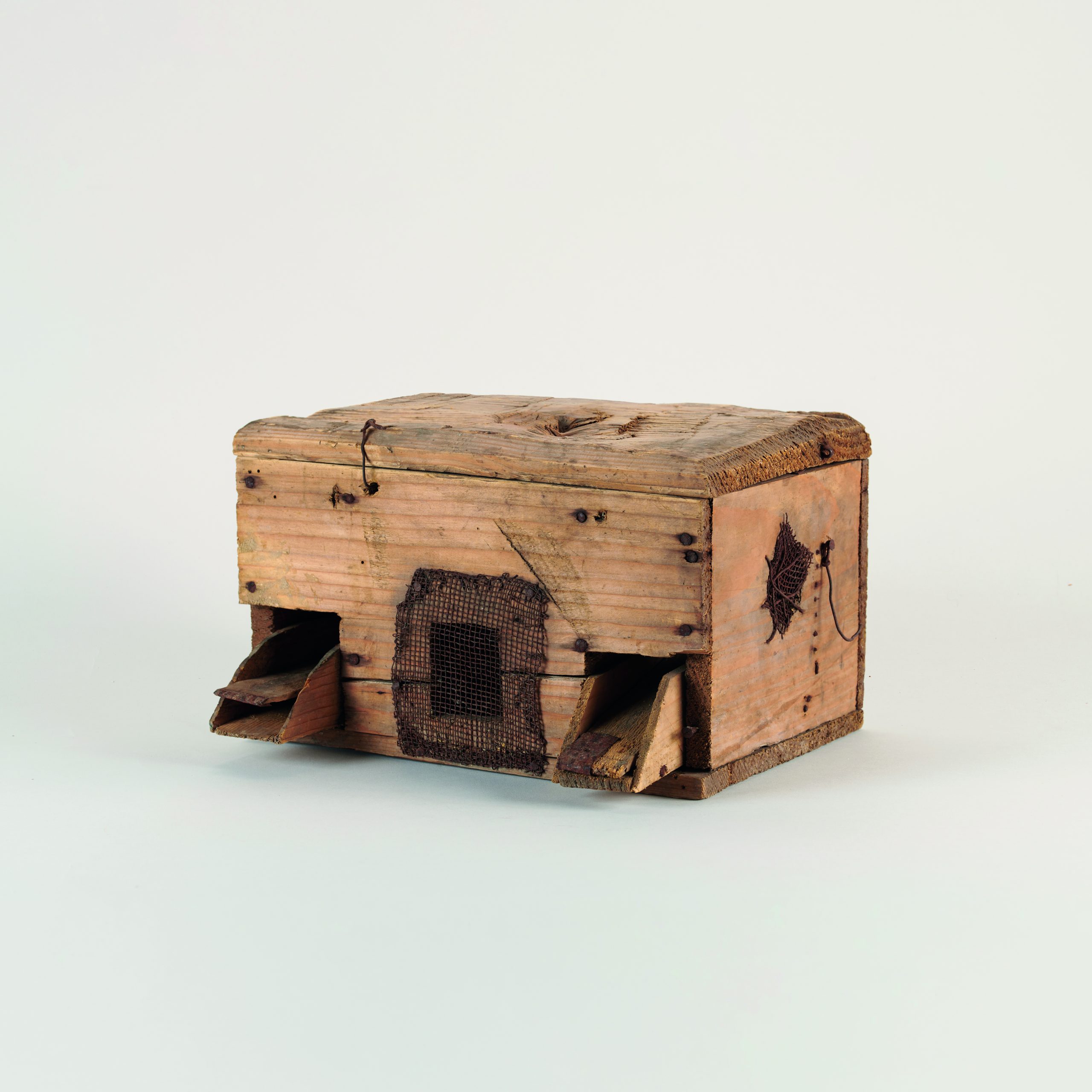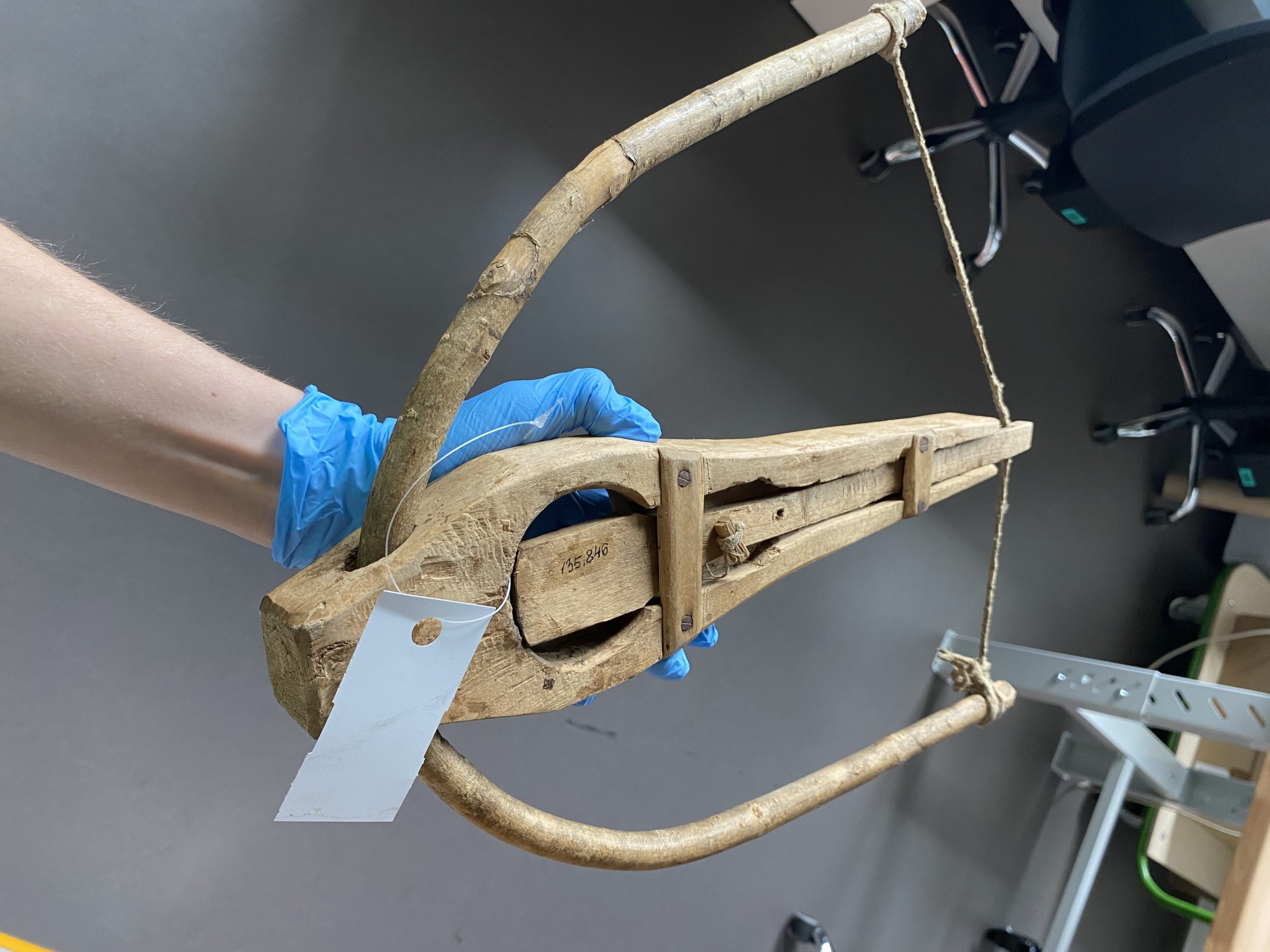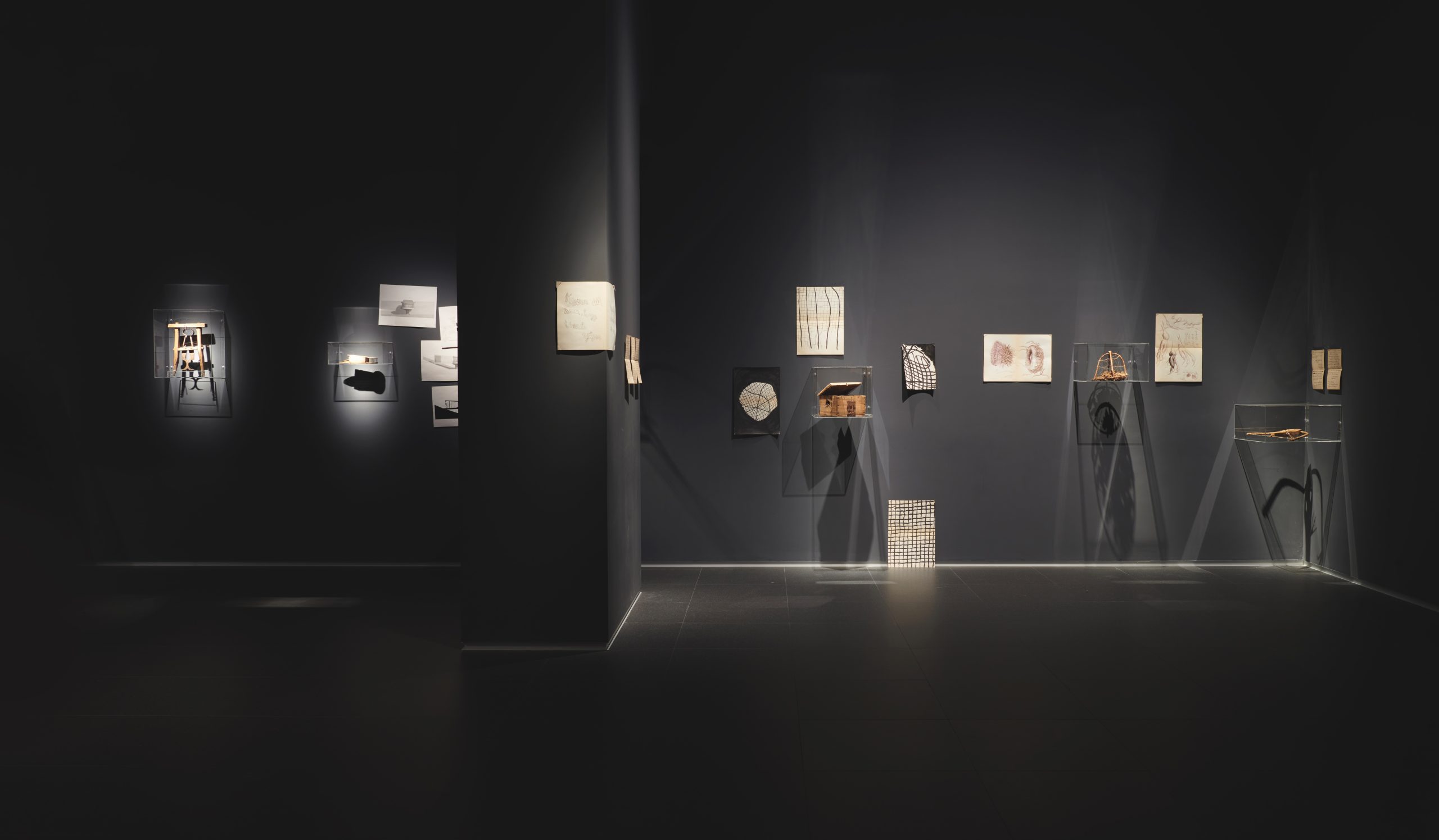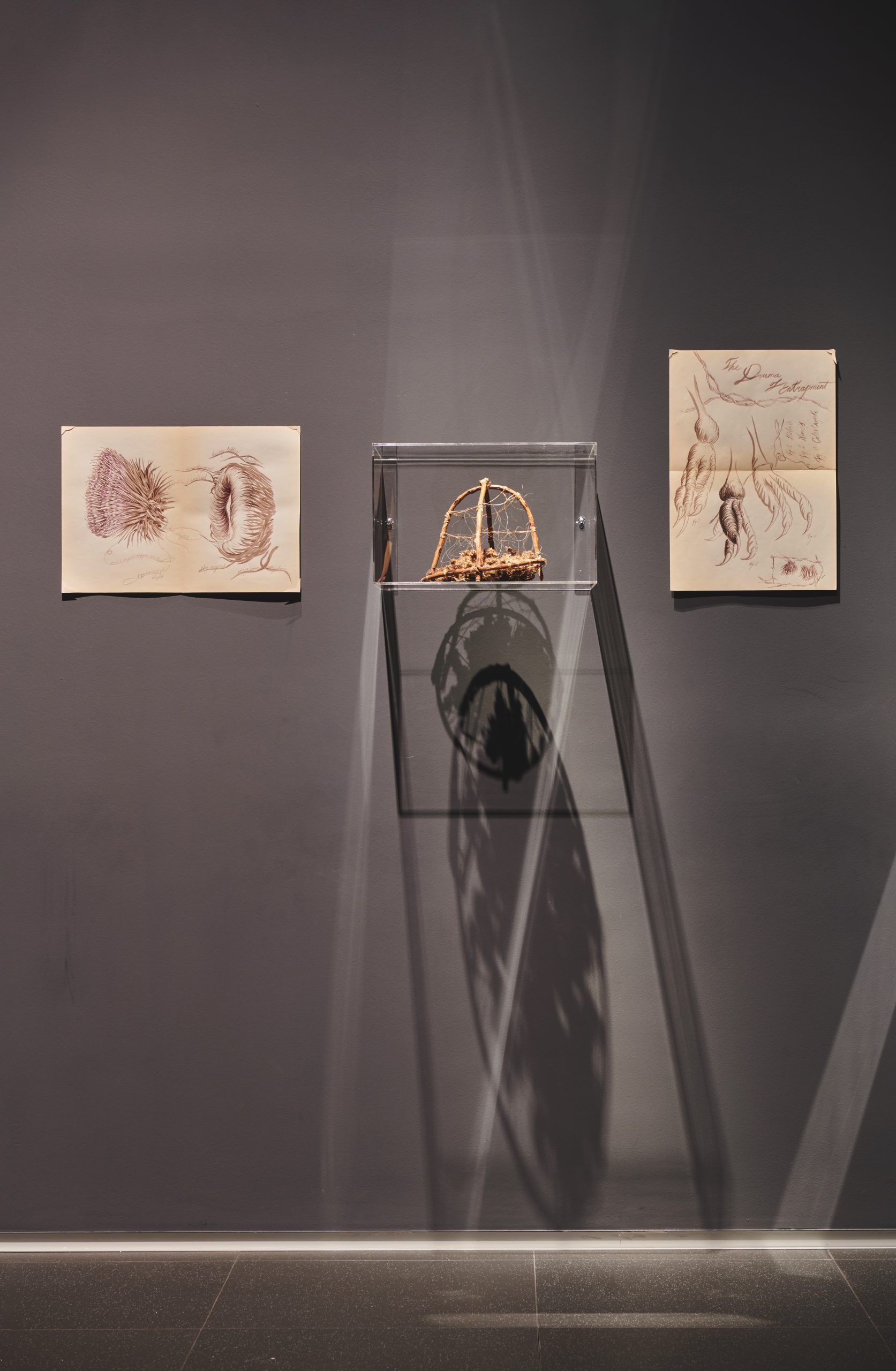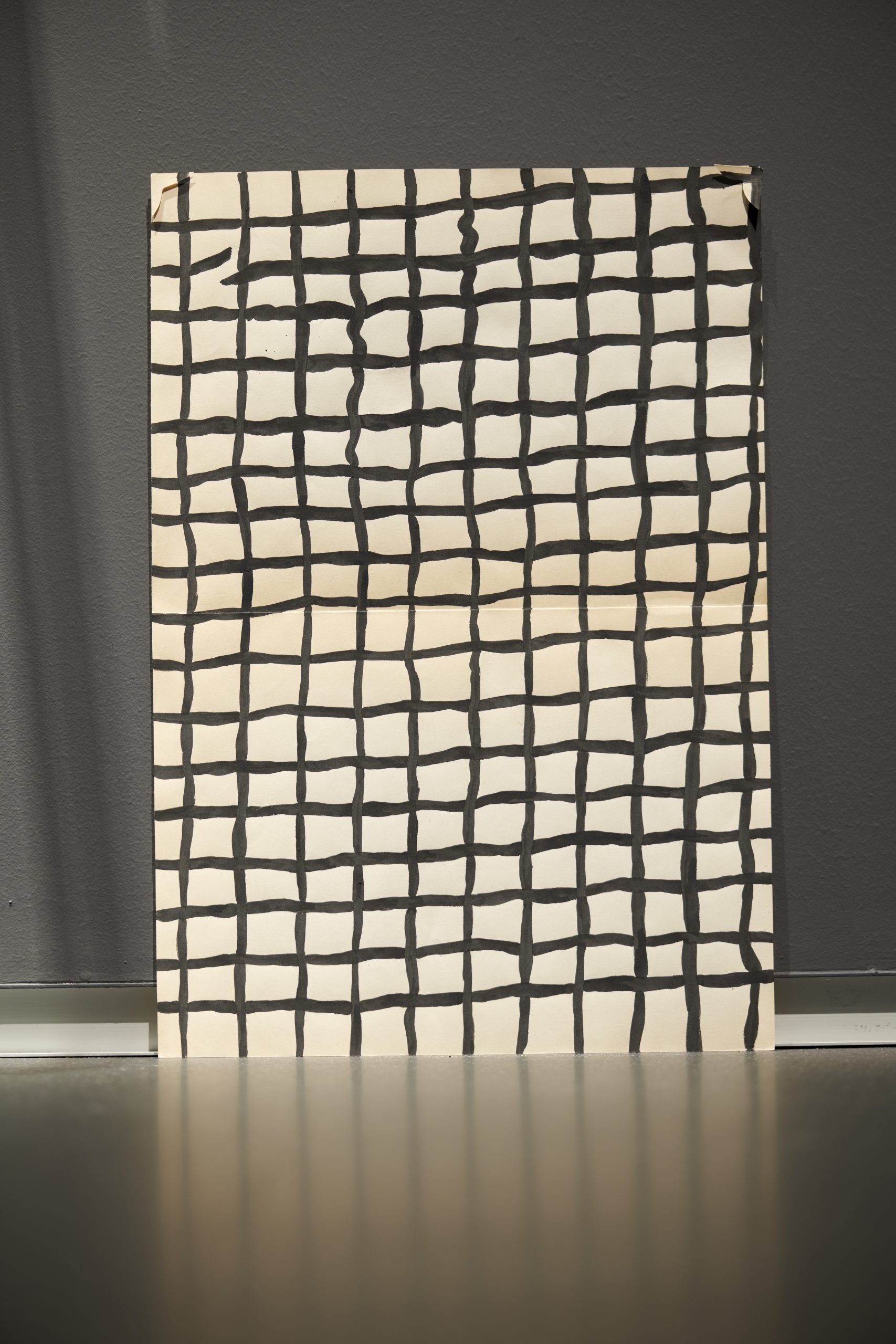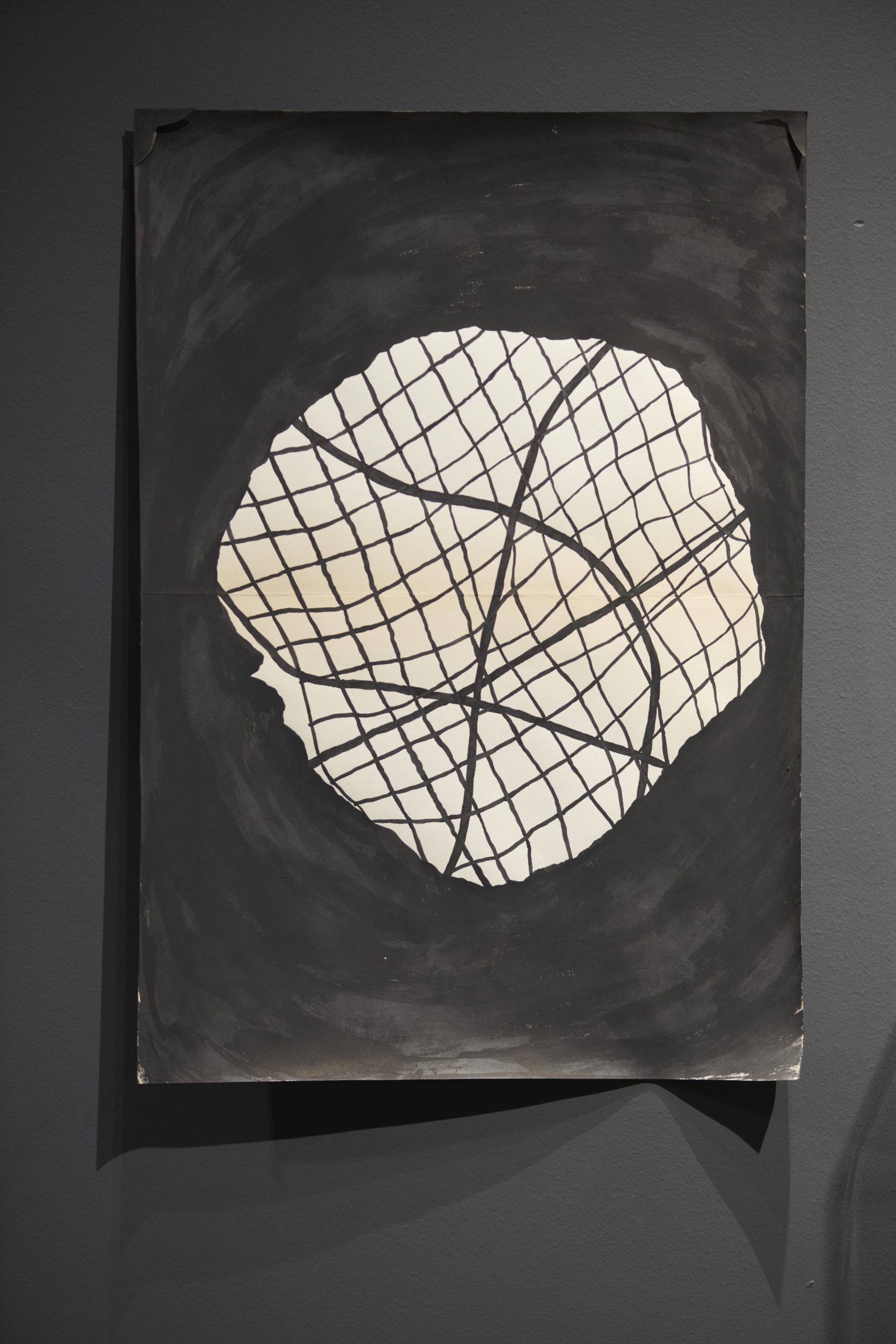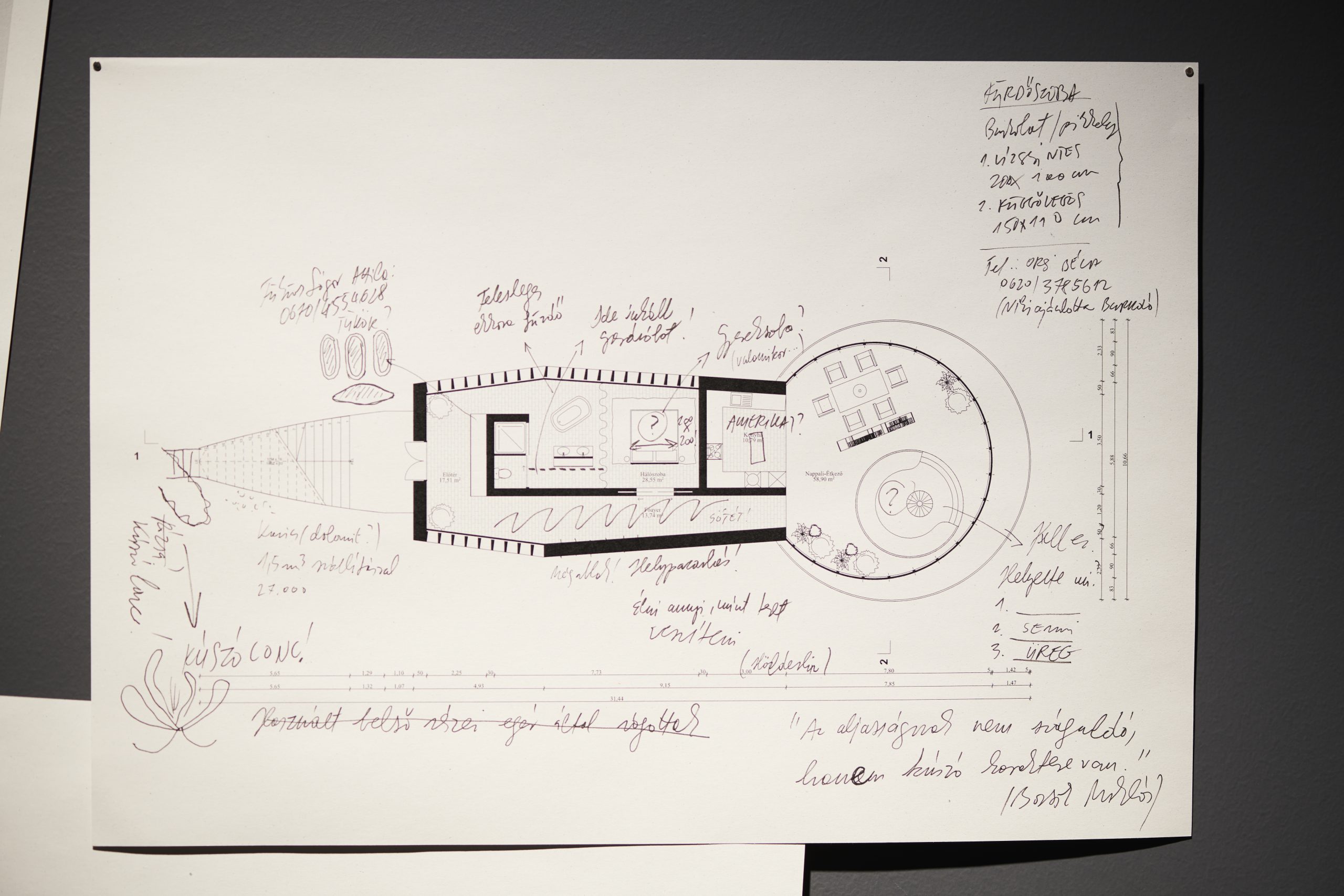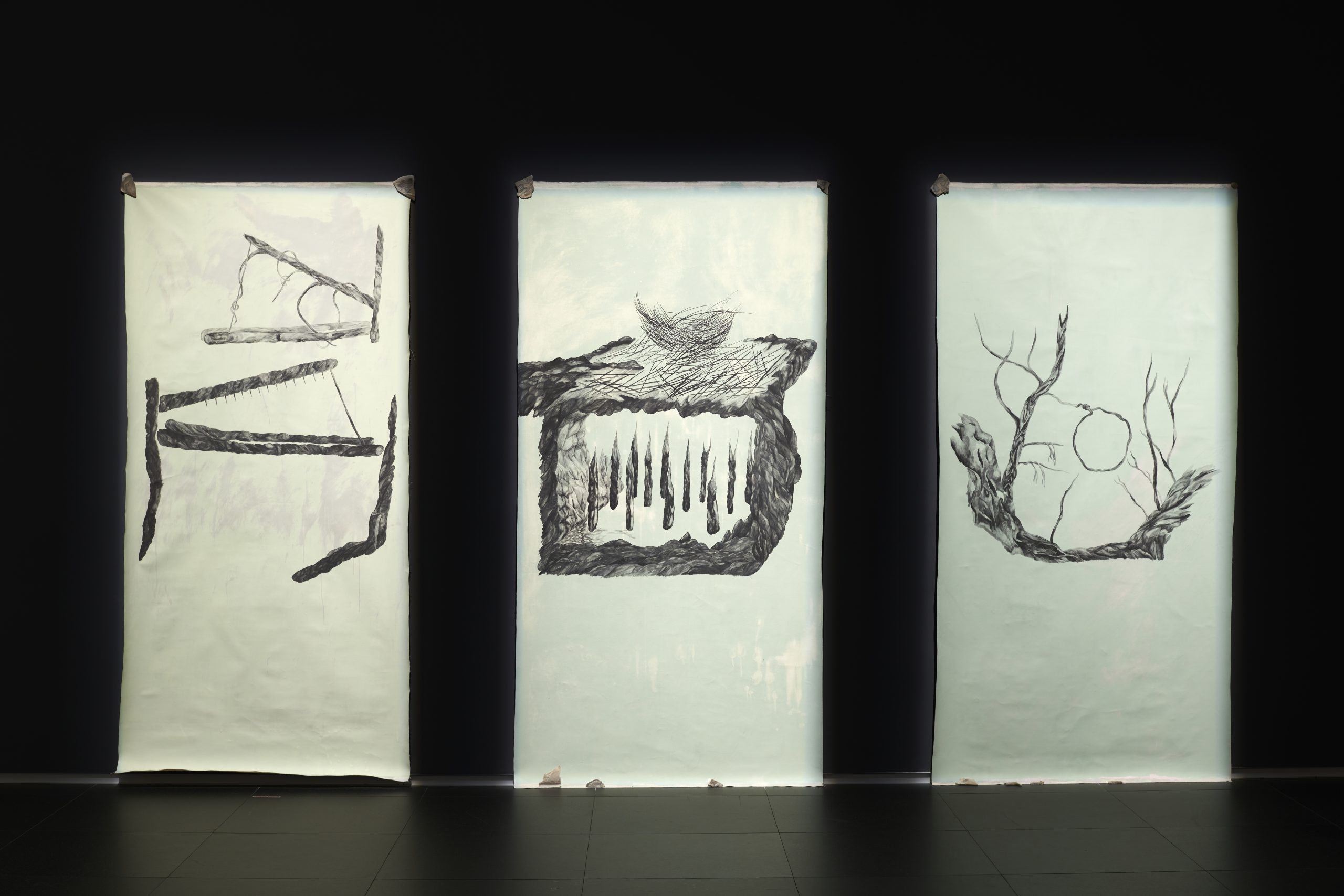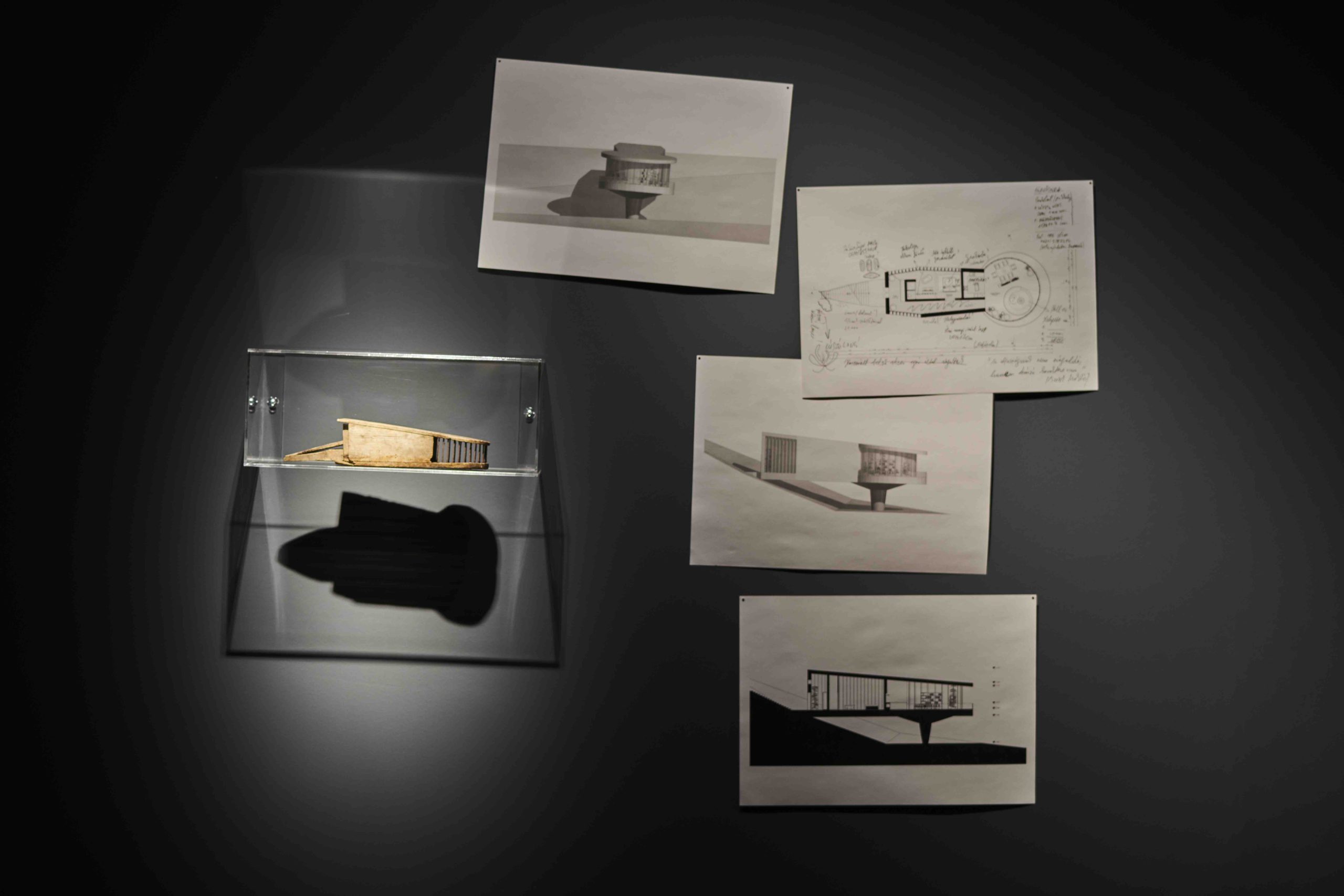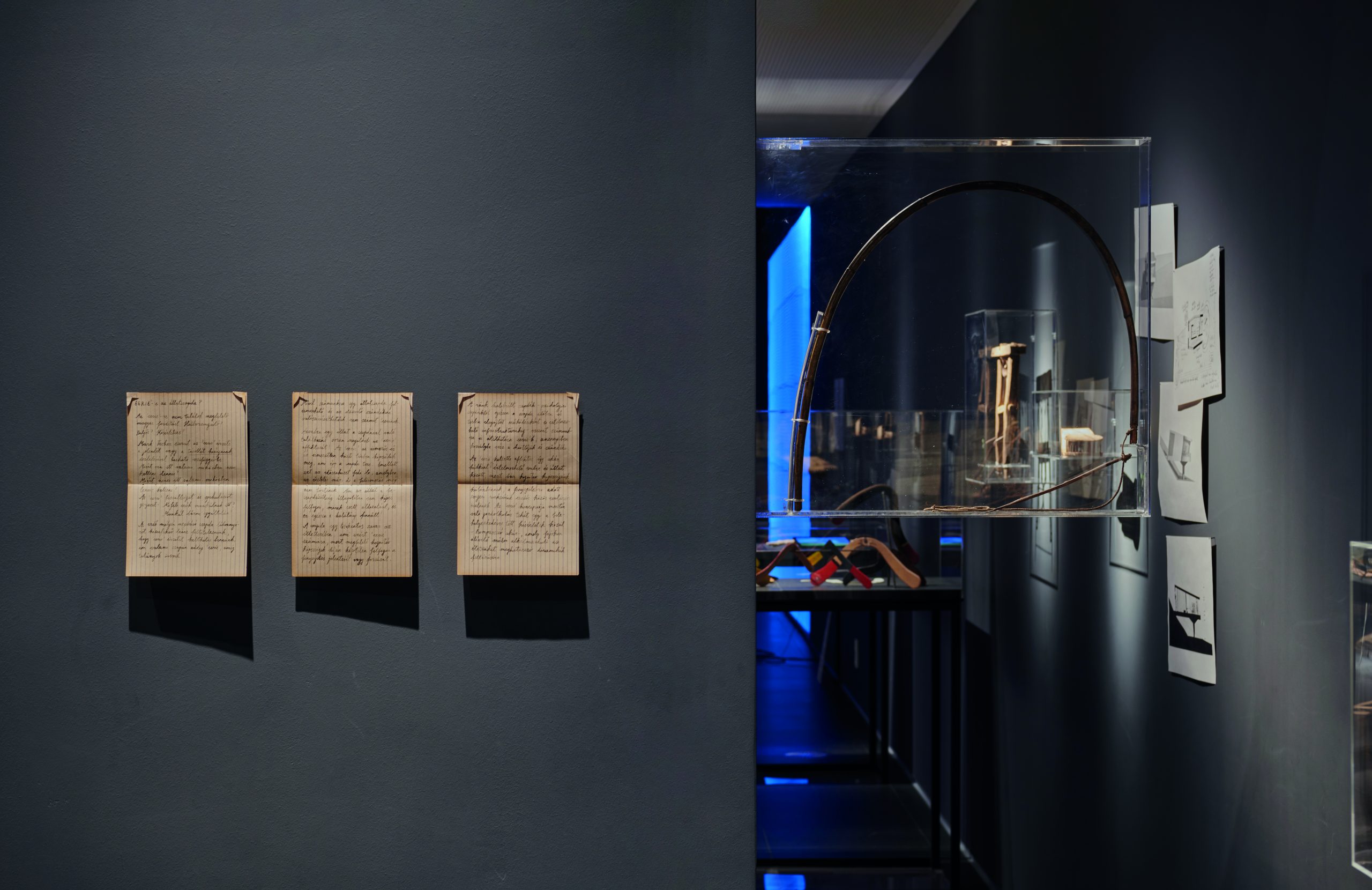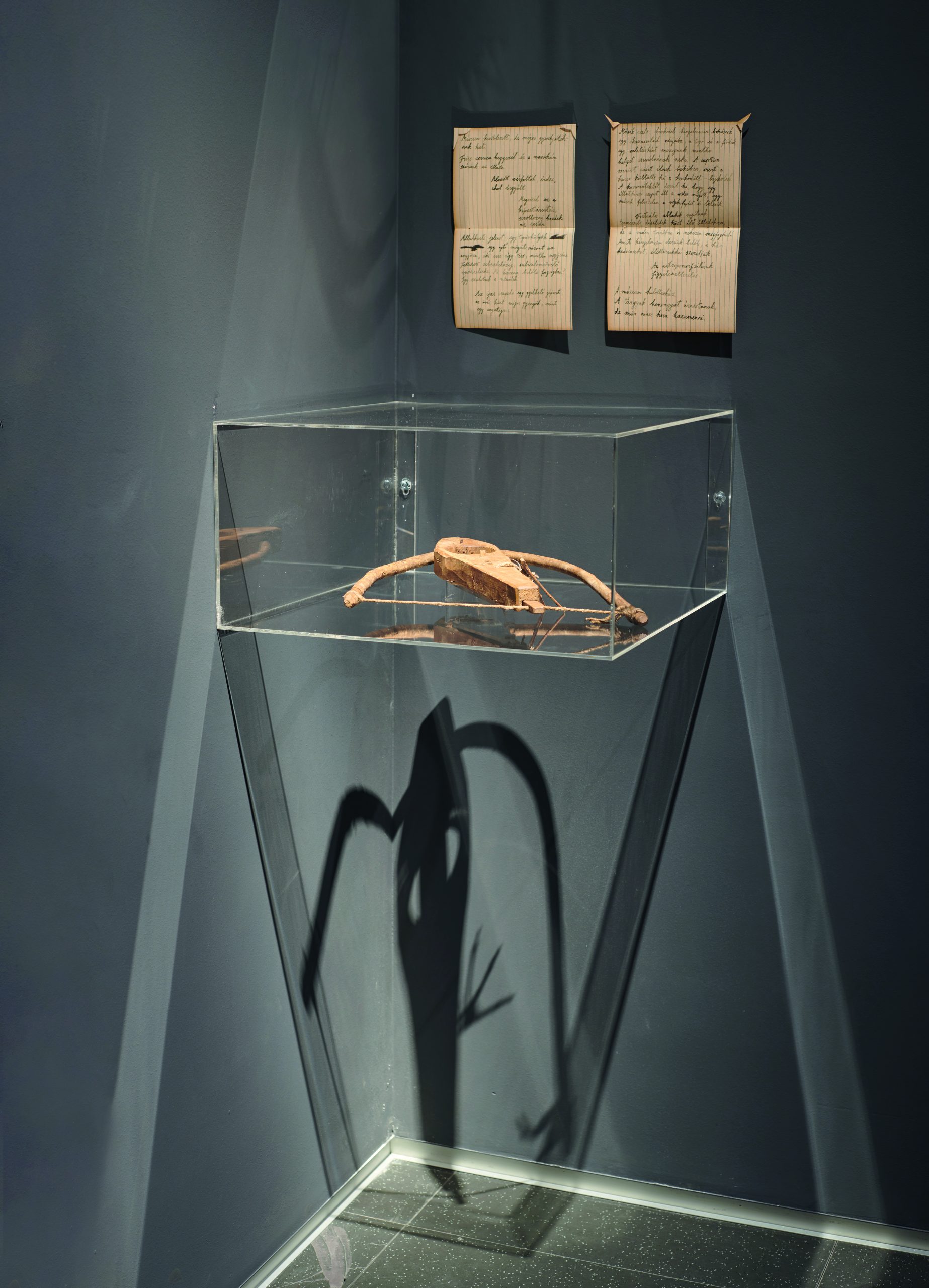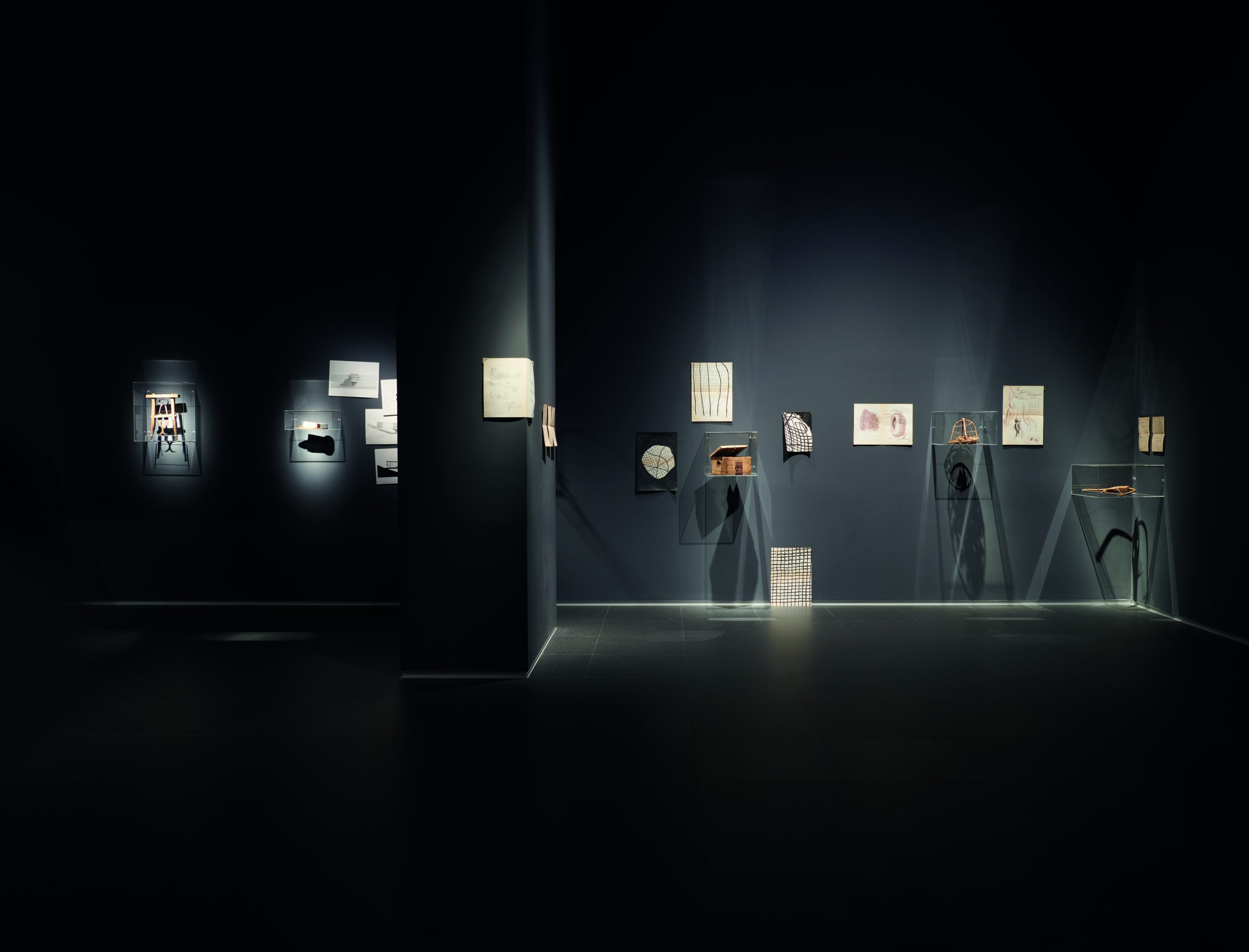
For three years, at the invitation of the museum, I worked together with artists Ádám Albert and Krisztián Kristóf, as well as with museum researchers, through seminars, guided visits to storage spaces, retreats, and intensive discussions. This collaborative process led to the joint development of museum-related themes, contemporary questions, collection objects, and individual artworks. Initially presented as separate artistic installations, these works were later brought together in a single exhibition entitled Suspension of Disbelief. The exhibition brought into dialogue the legibility and illegibility of magical objects and messages; traps and the signs left by entrapped animals; stories of immortals concealed – and concealing themselves – across time and space; the desire for all of this to materialize as museum reality; the suspension of disbelief itself; and the impossibility of ever fully achieving it.
Suspension of disbelief is a concept originating in the realm of theatre, referring to the way an observer deliberately sets aside doubt for the sake of enjoyment or experience: accepting the unrealistic and granting credence to the improbable. In literary texts, suspension of disbelief underpins the presentation of supernatural or fantastical elements as credible – things that appear real but are, in fact, fictional or imagined. The semblance of truth liberates the imagination, temporarily suspending the limits of the medium: as in theatre, where the audience forgets that the spectacle unfolds within an artificially constructed world framed by an open fourth wall; as in a dollhouse; or as in the carefully designed settings of a museum exhibition. What takes place in such spaces is accepted as real for the sake of the experience, as it should be. Of course, this does not preclude the possibility of peering behind the curtain.
Curated by Zsófia Frazon and Gábor Wilhelm.
The Paths Narrowed Into the Hollow
– my contribution to the exhibition
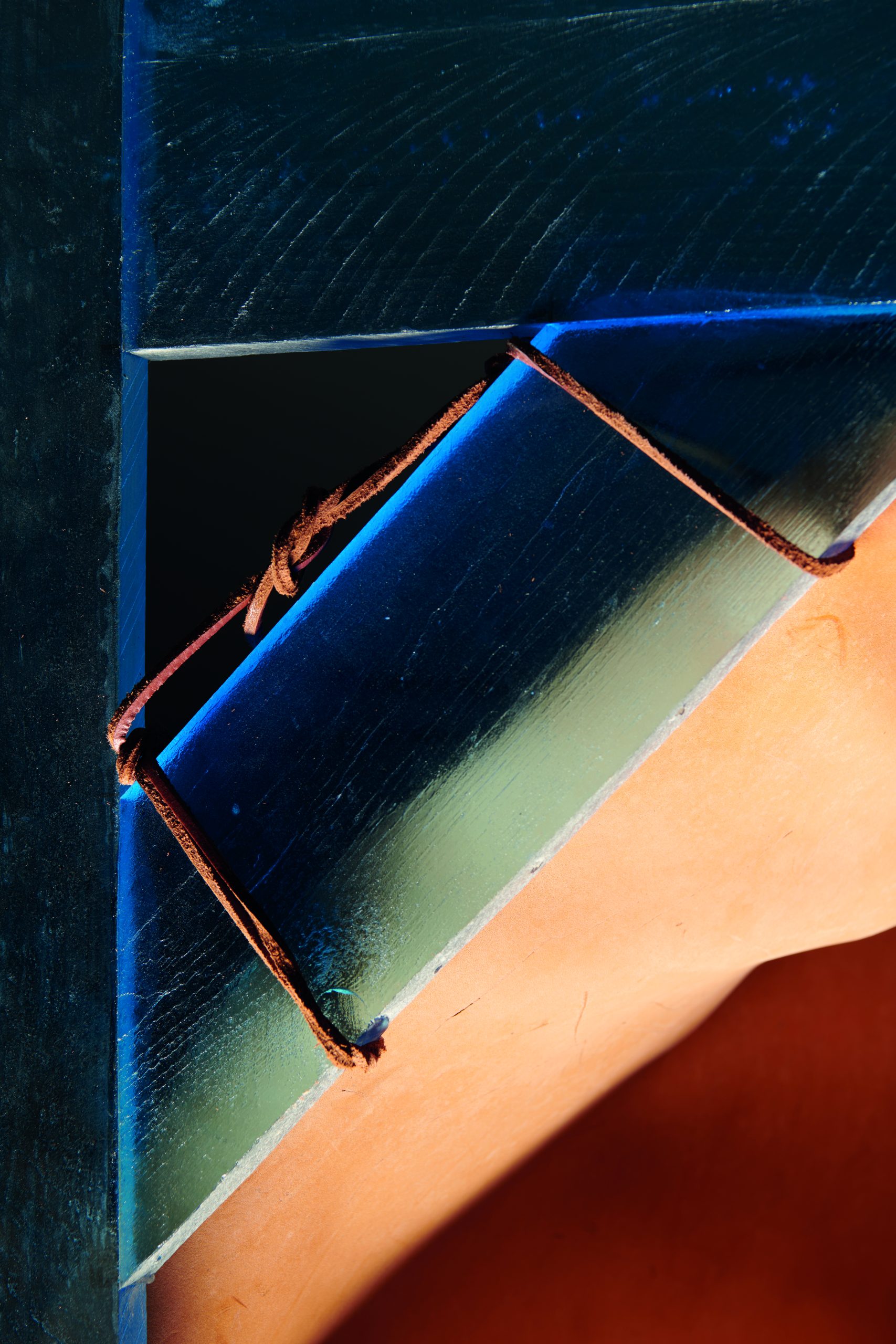
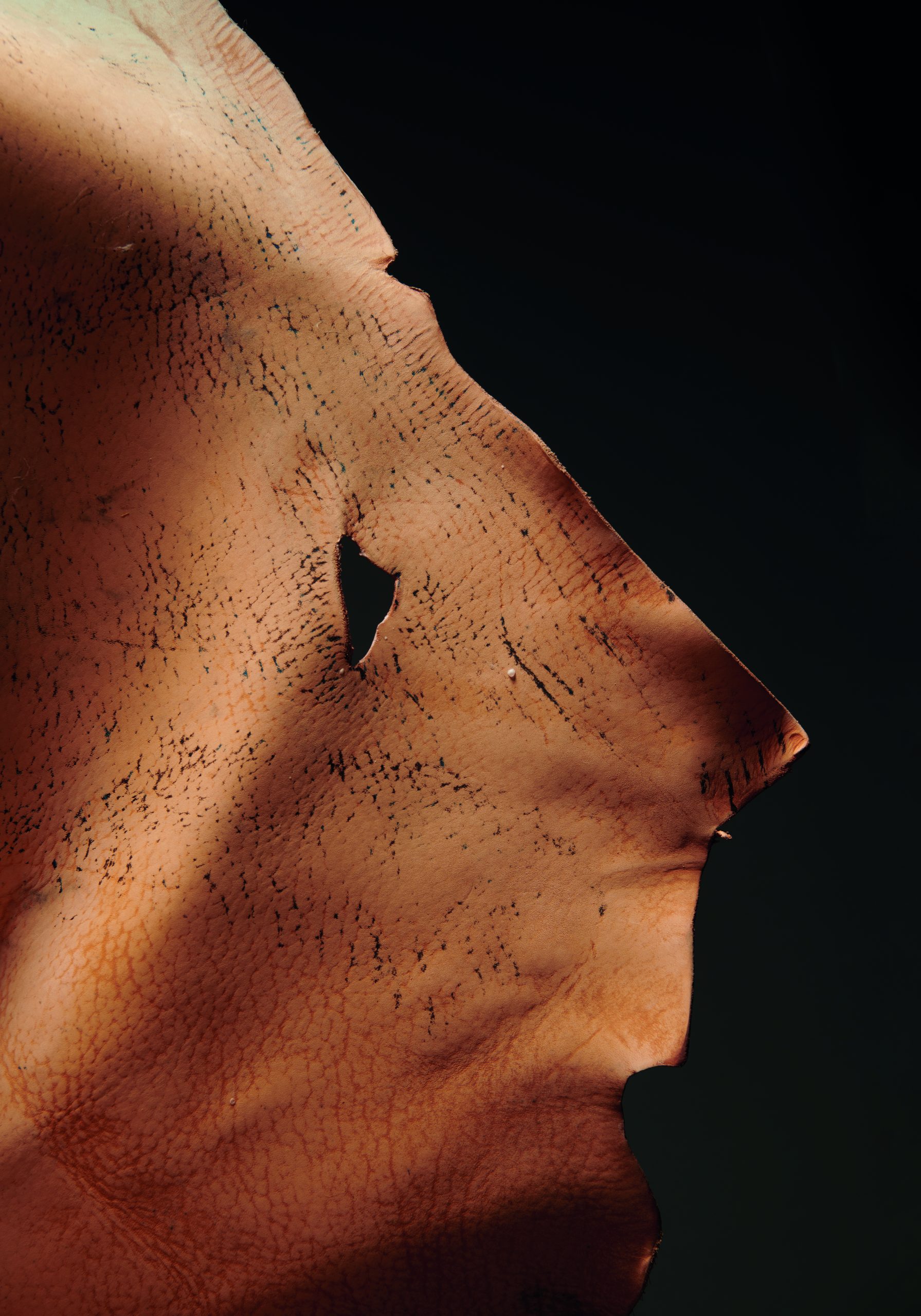
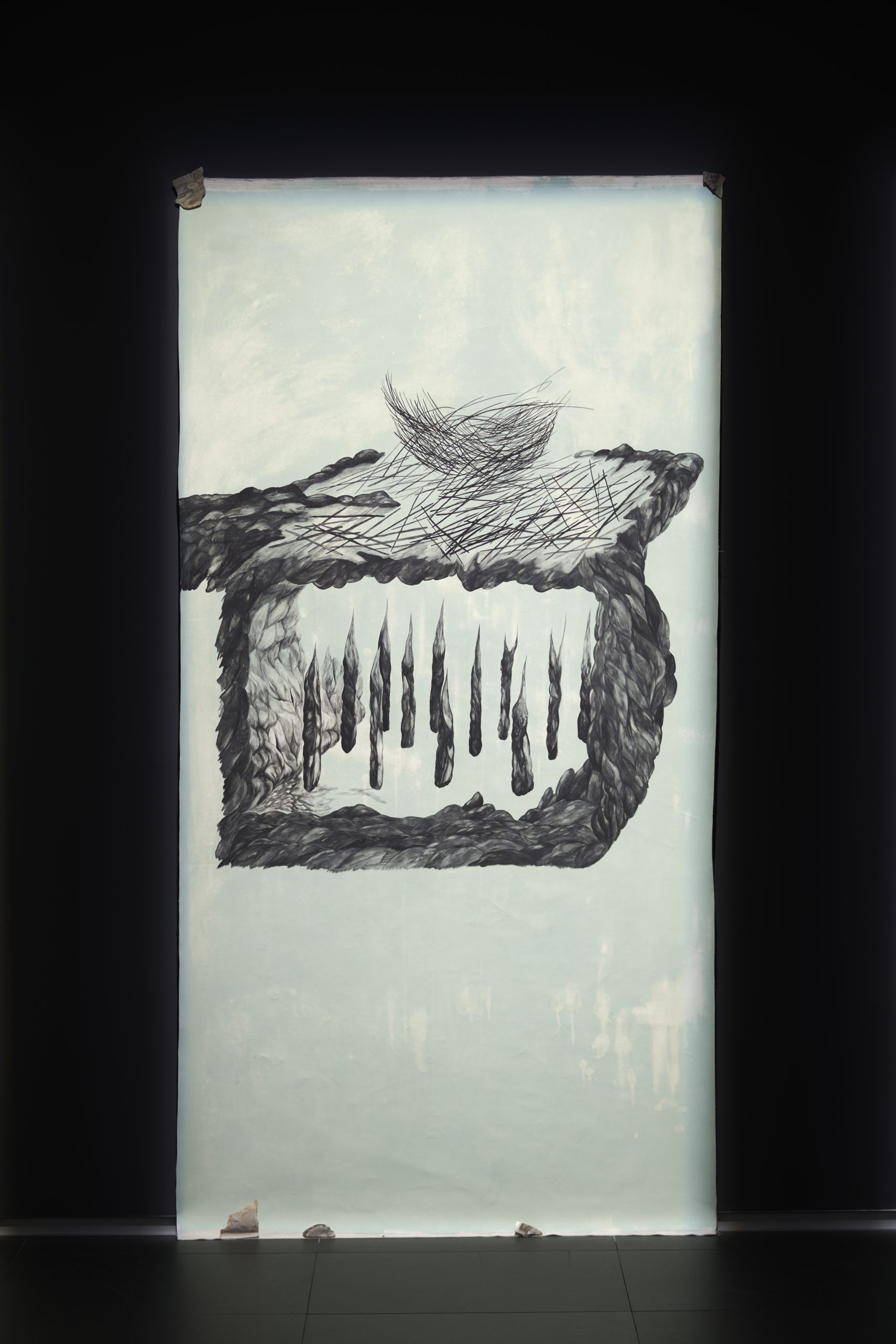
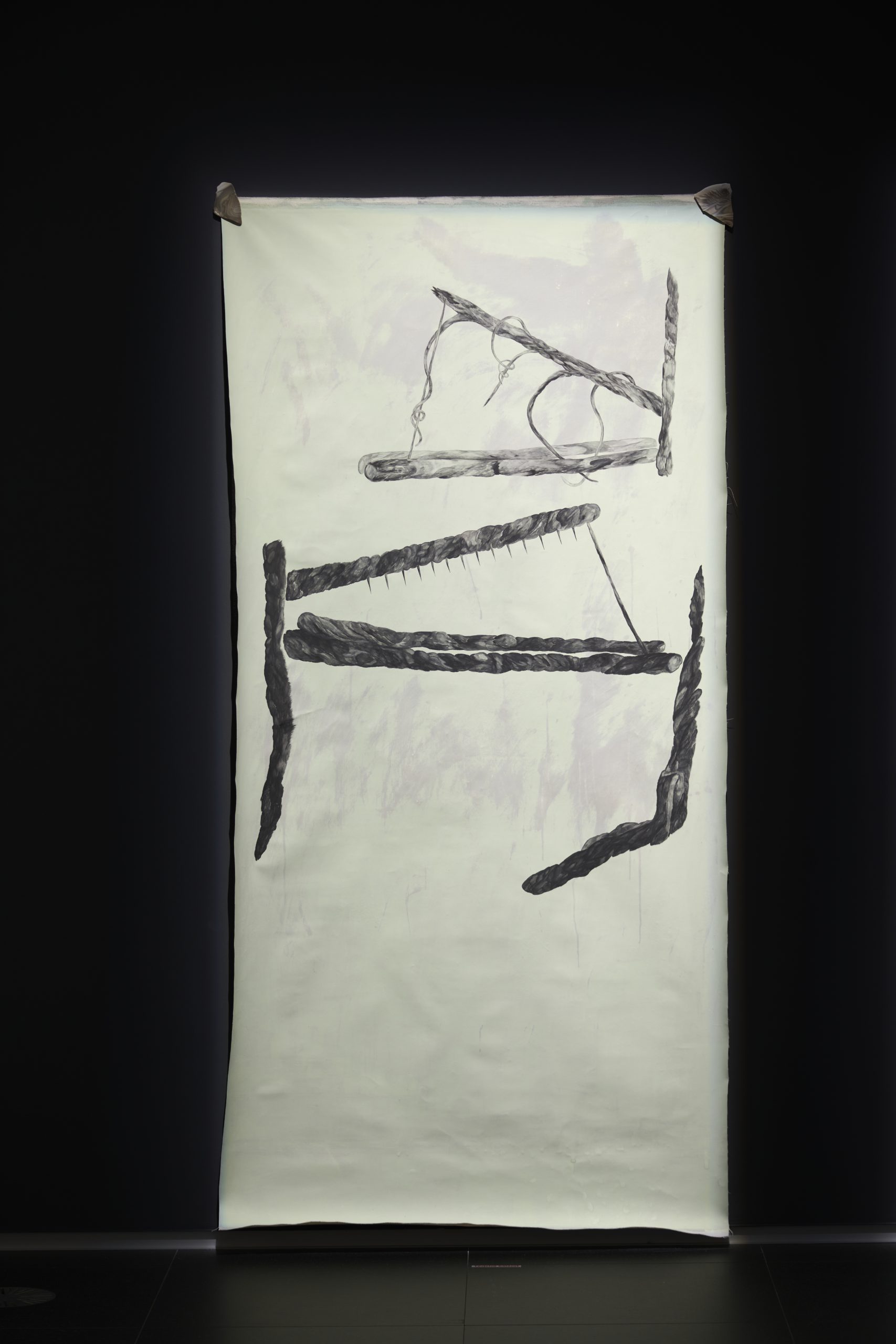
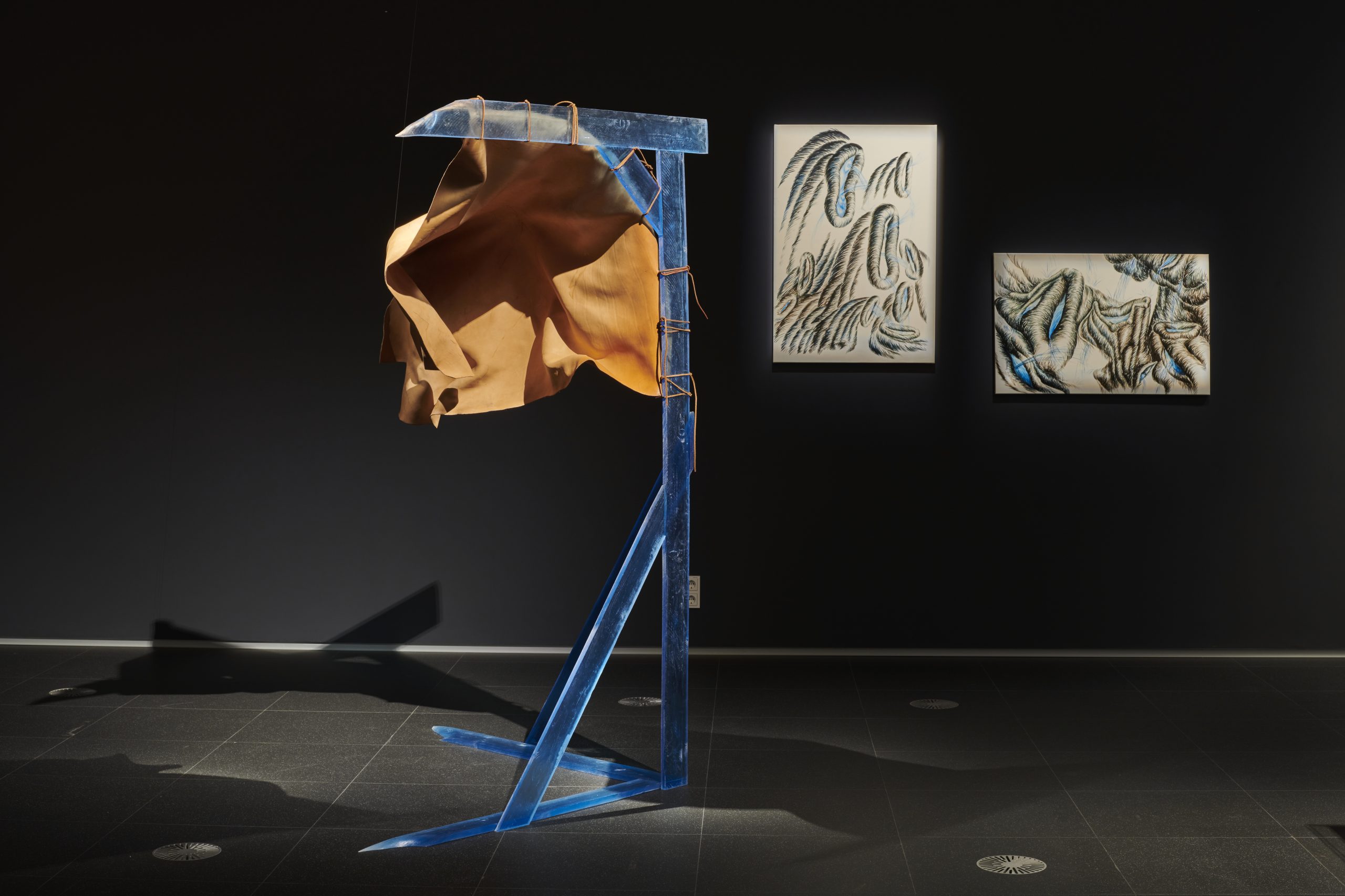
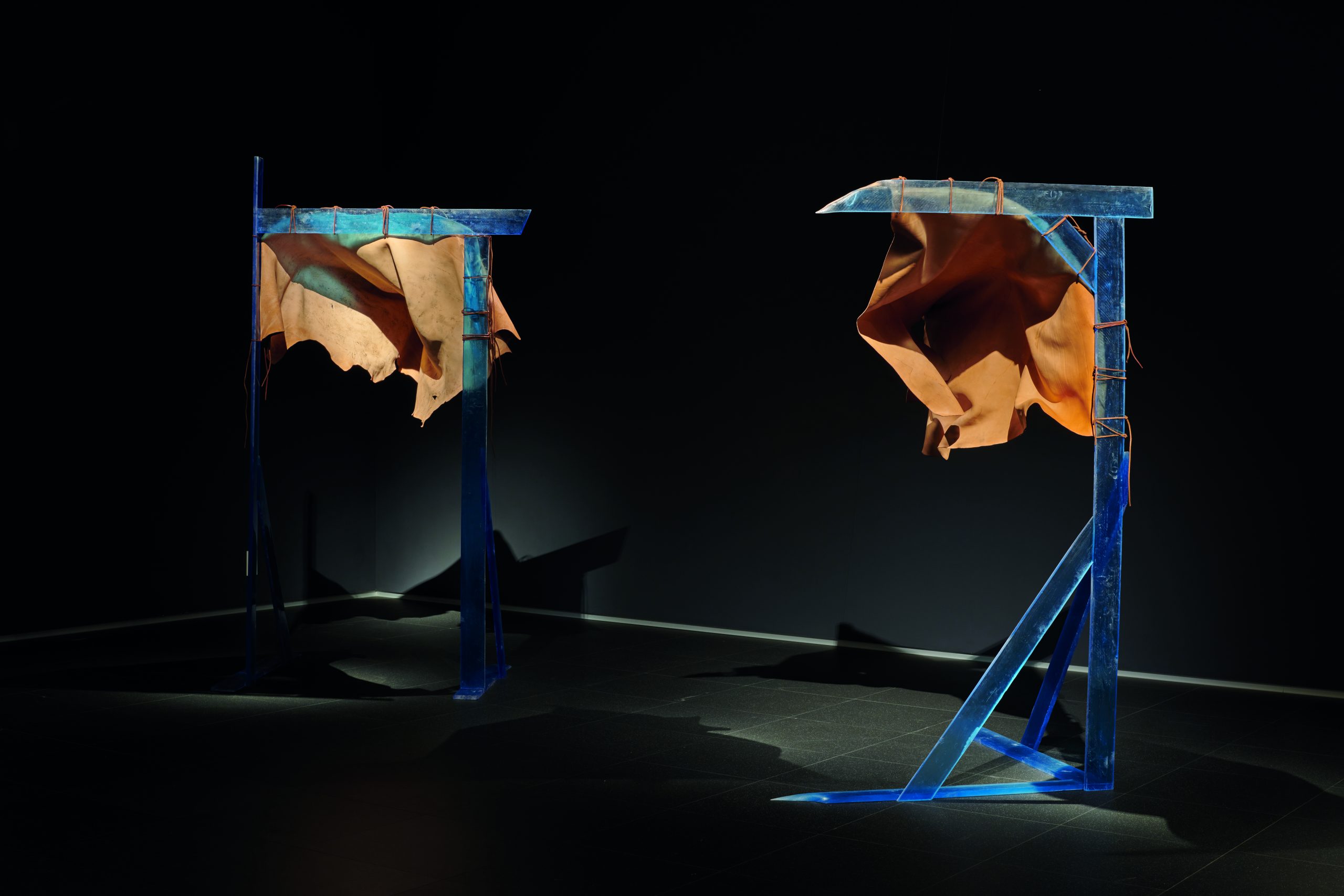
The dramaturgy of All Paths’ fictive museum environment reflected the process of artistic research through which it came into being. Its central elements were translucent blue skinning posts stretched with animal pelts: an experiment in displaying environmental traps within a museum setting, as well as an invitation into a metaphorical space – a dimensional doorway through which to step. The creative antecedents of this spatial structure could be found in narrative landscape paintings in which the openings of nature (vents, hollows, caves) and those of the human body mutually referenced one another.
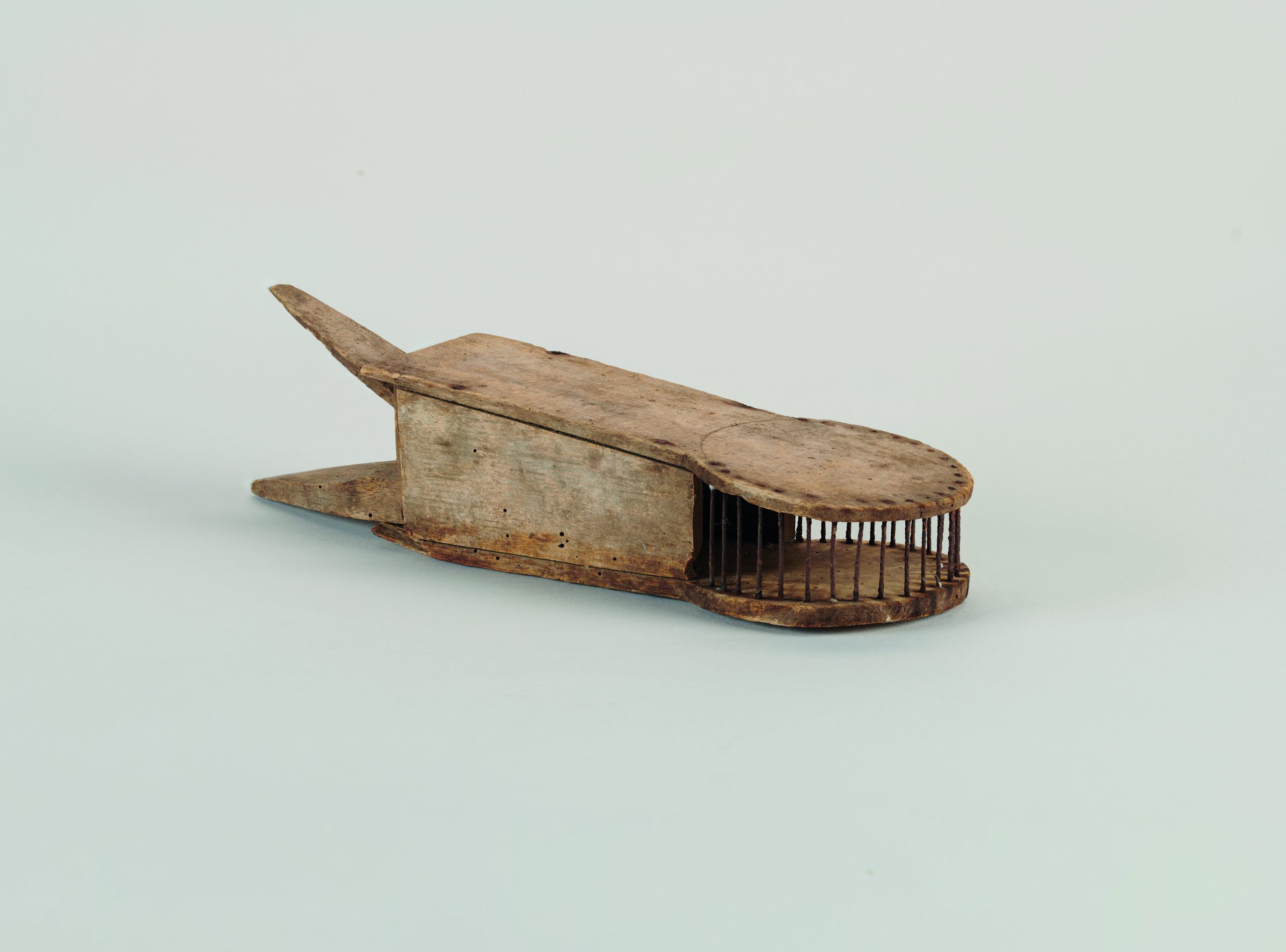
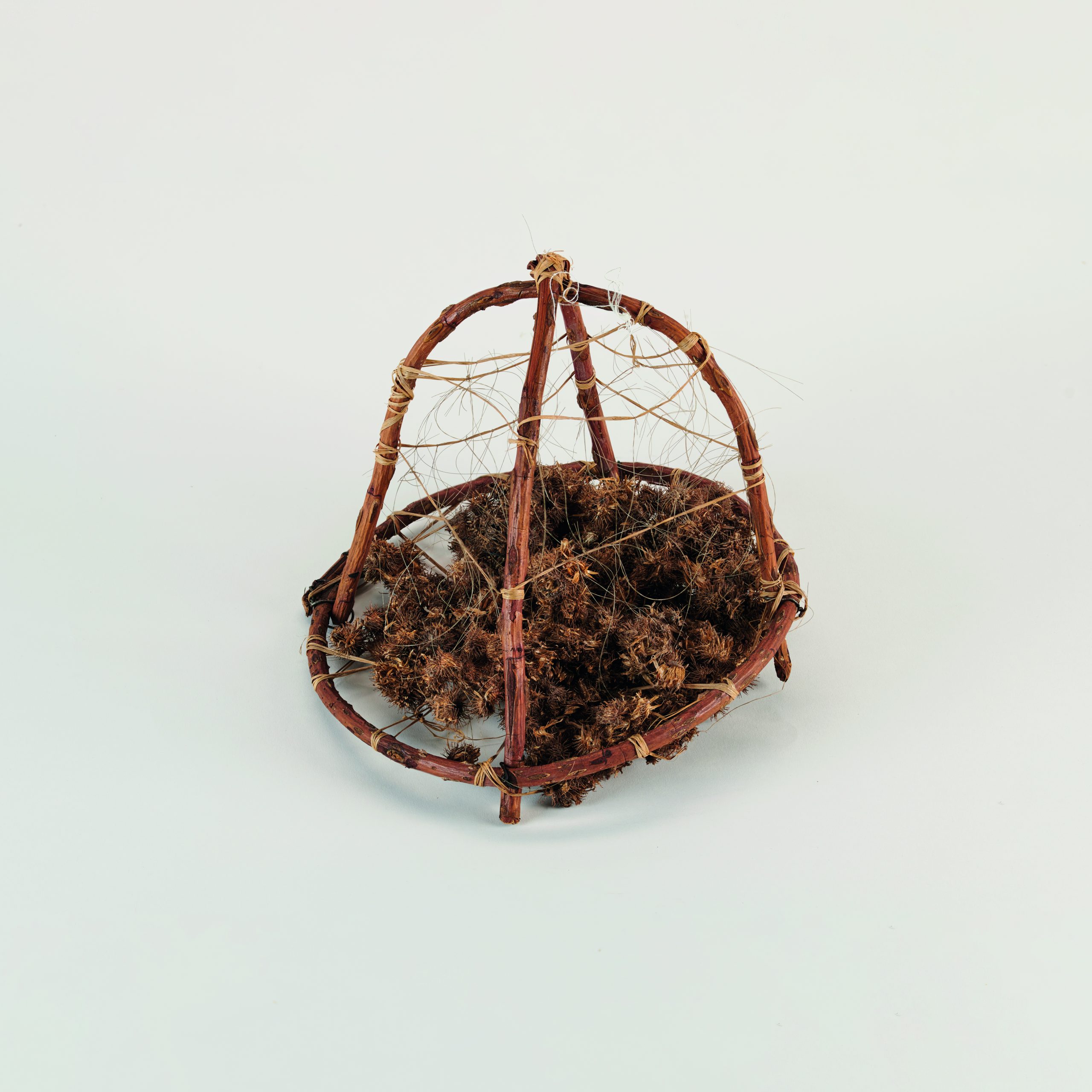
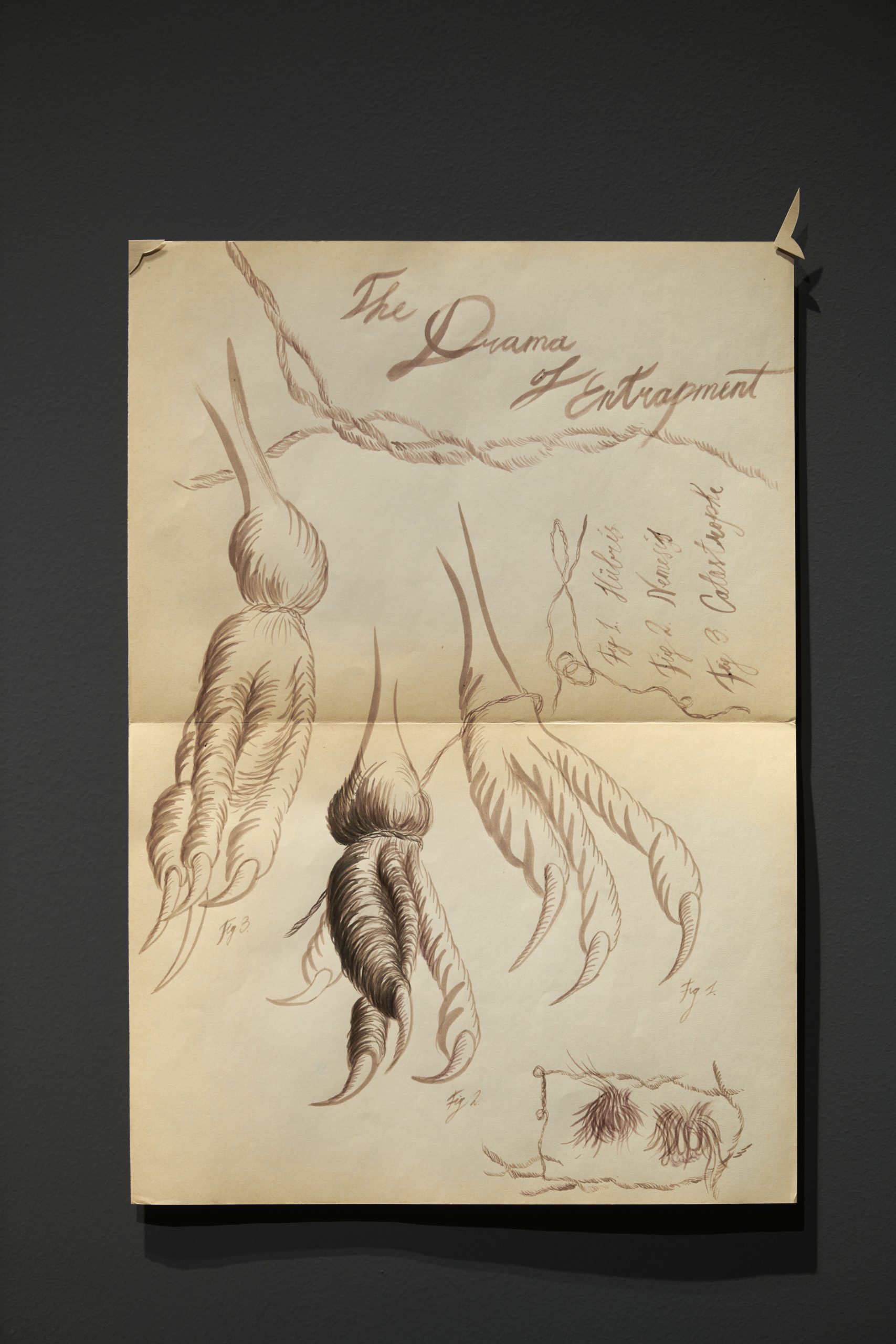
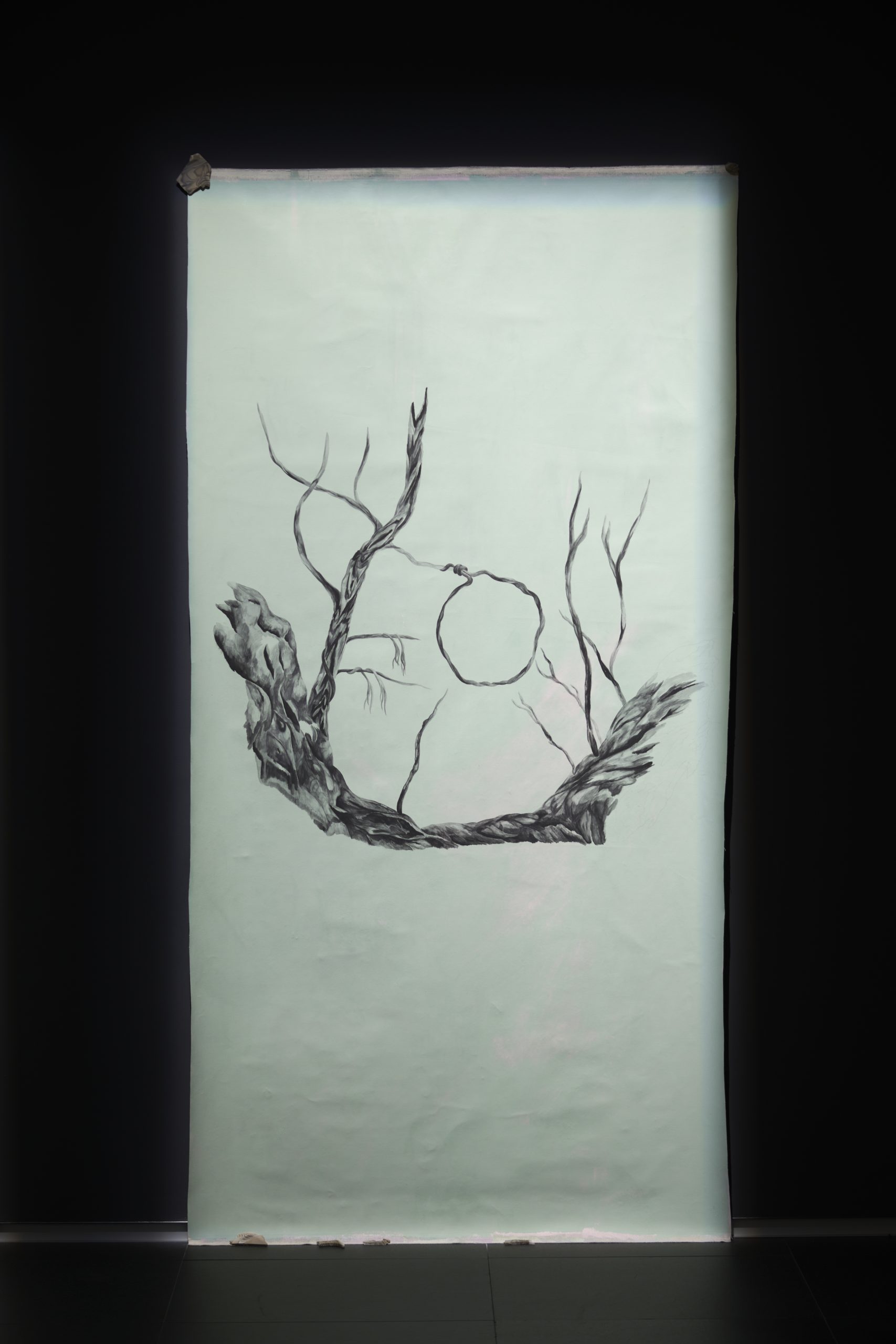
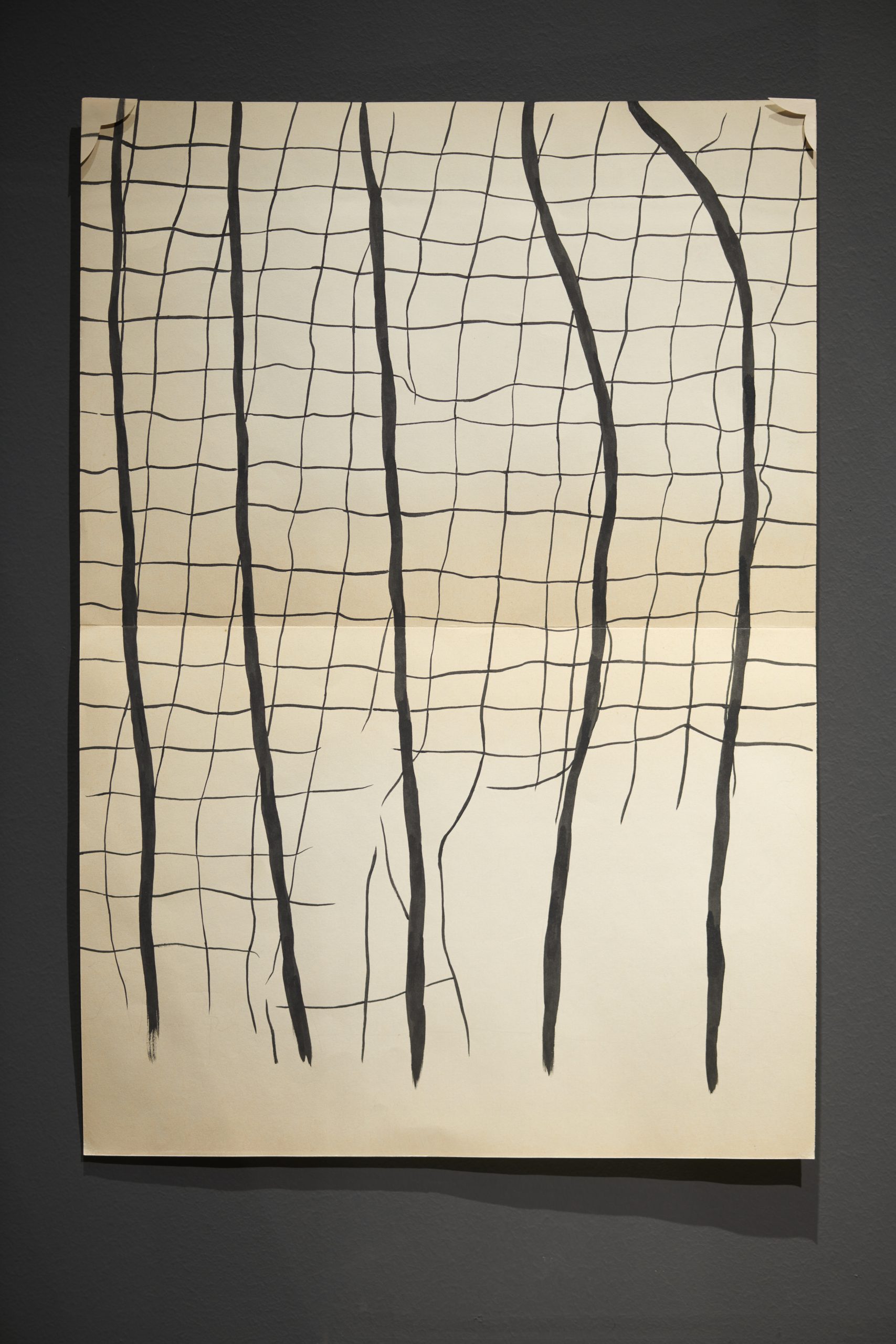
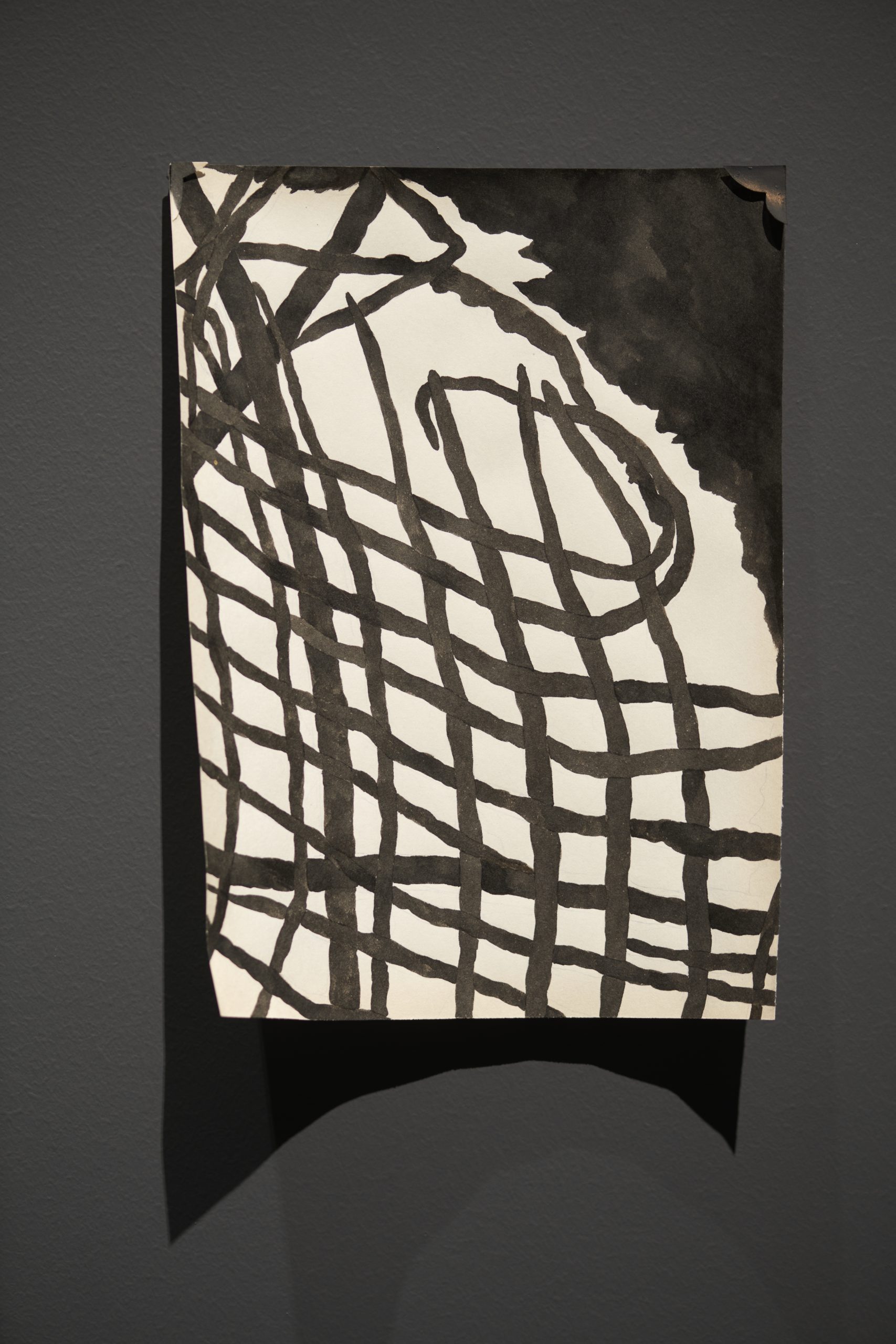
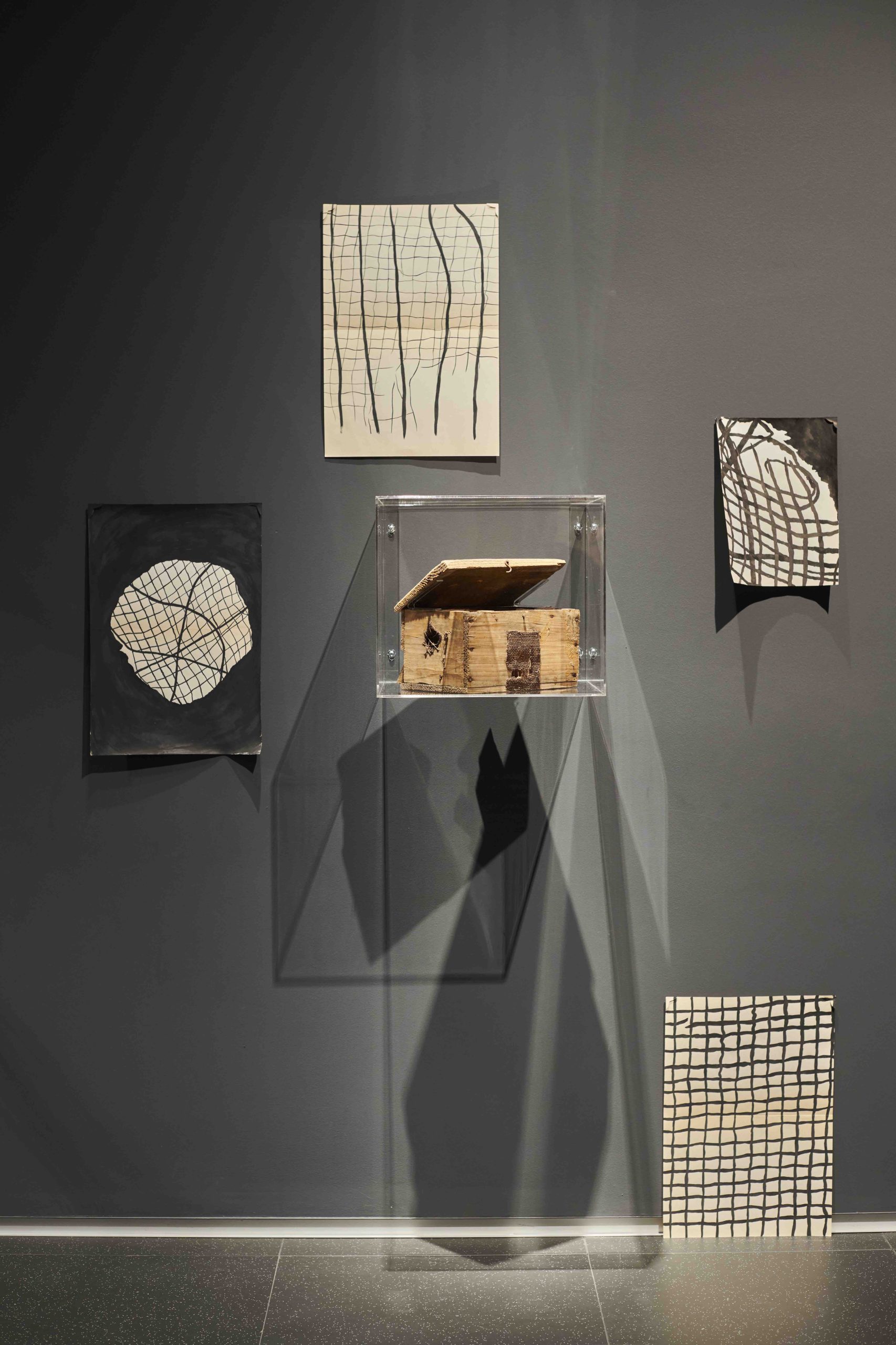
At its centre were artistic renderings of a deadfall, a pitfall, and a snare – three types of trap representing three distinct situations. The paintings captured various stages of activation and deactivation, situations shaped by human intention and mechanical forces.
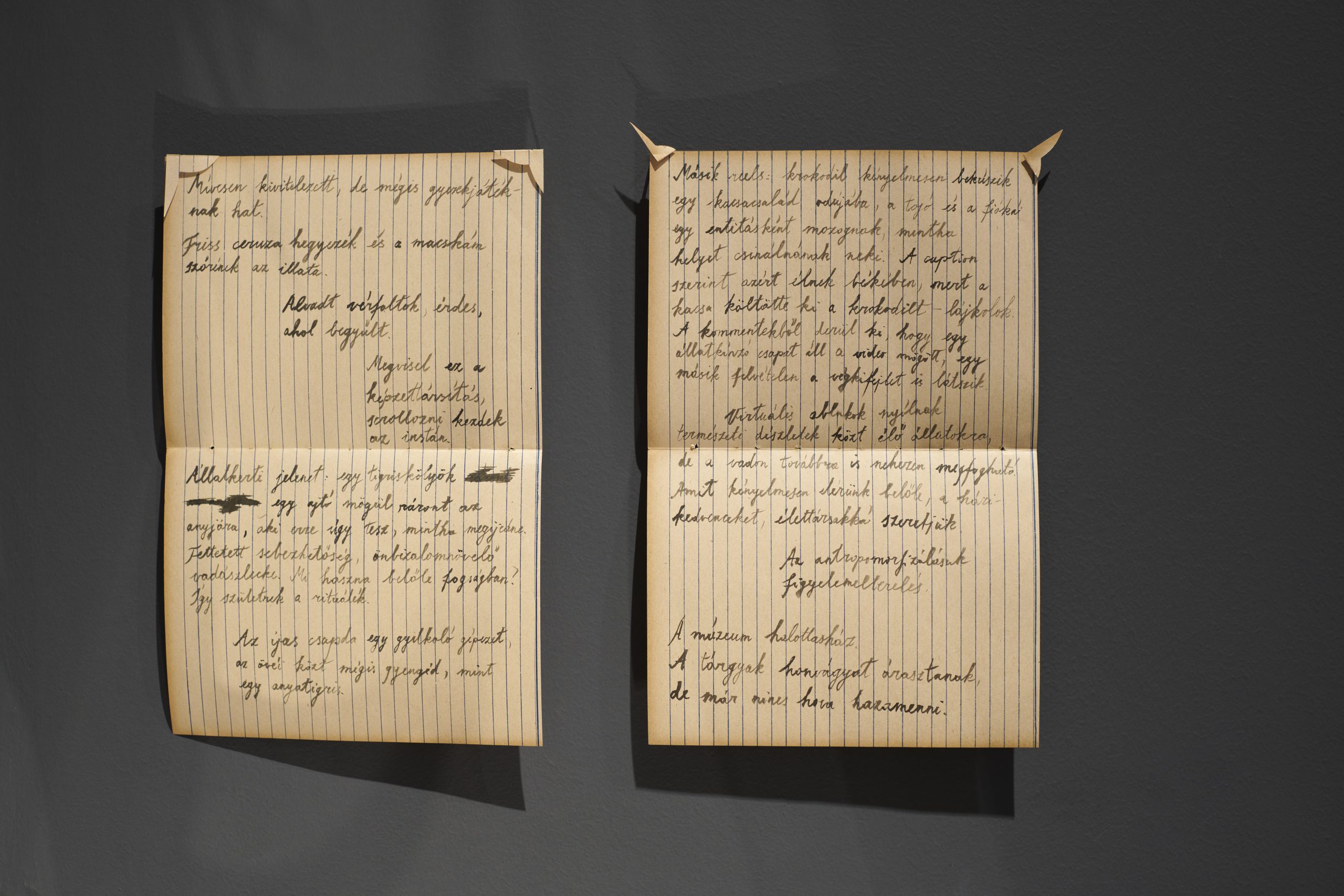
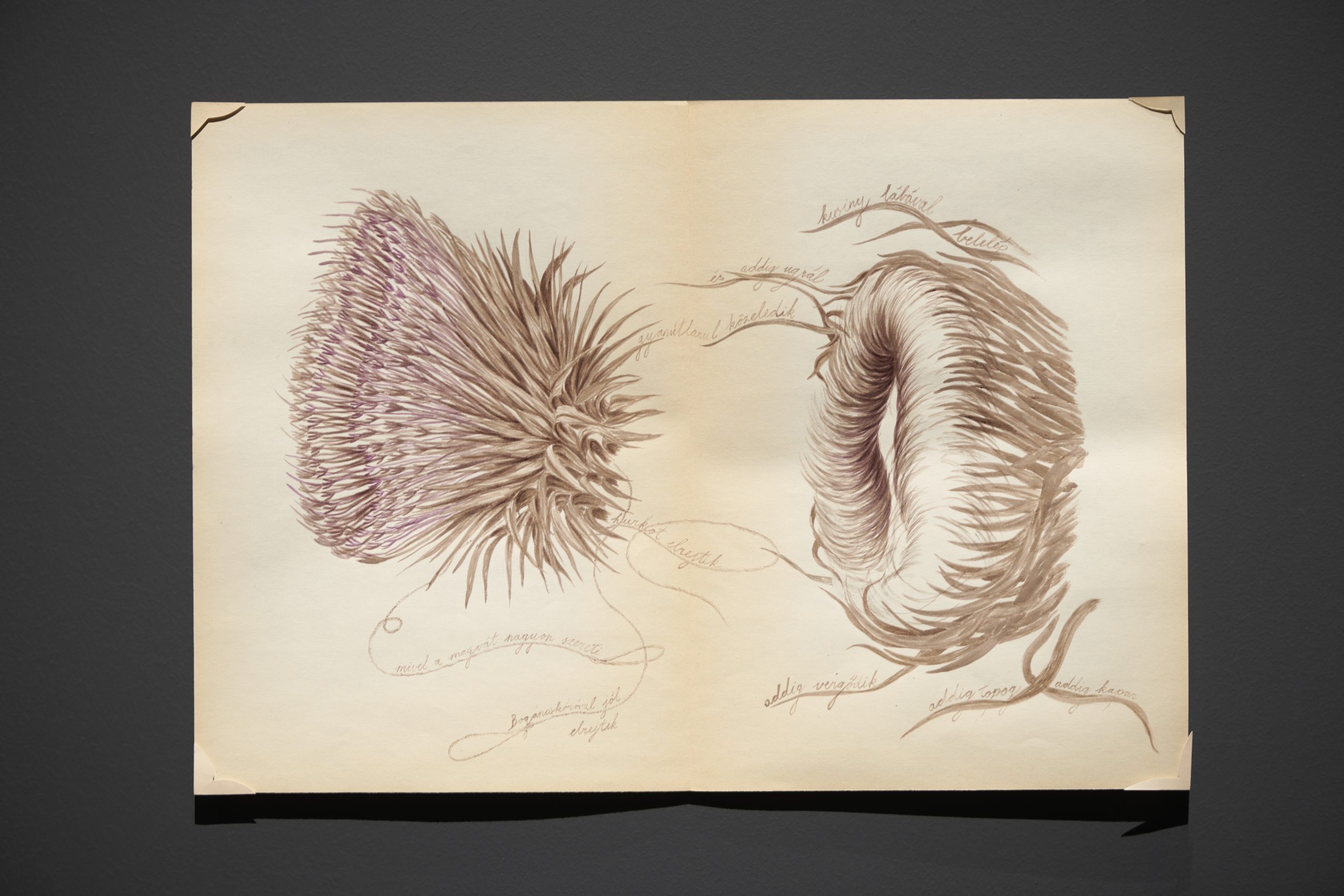
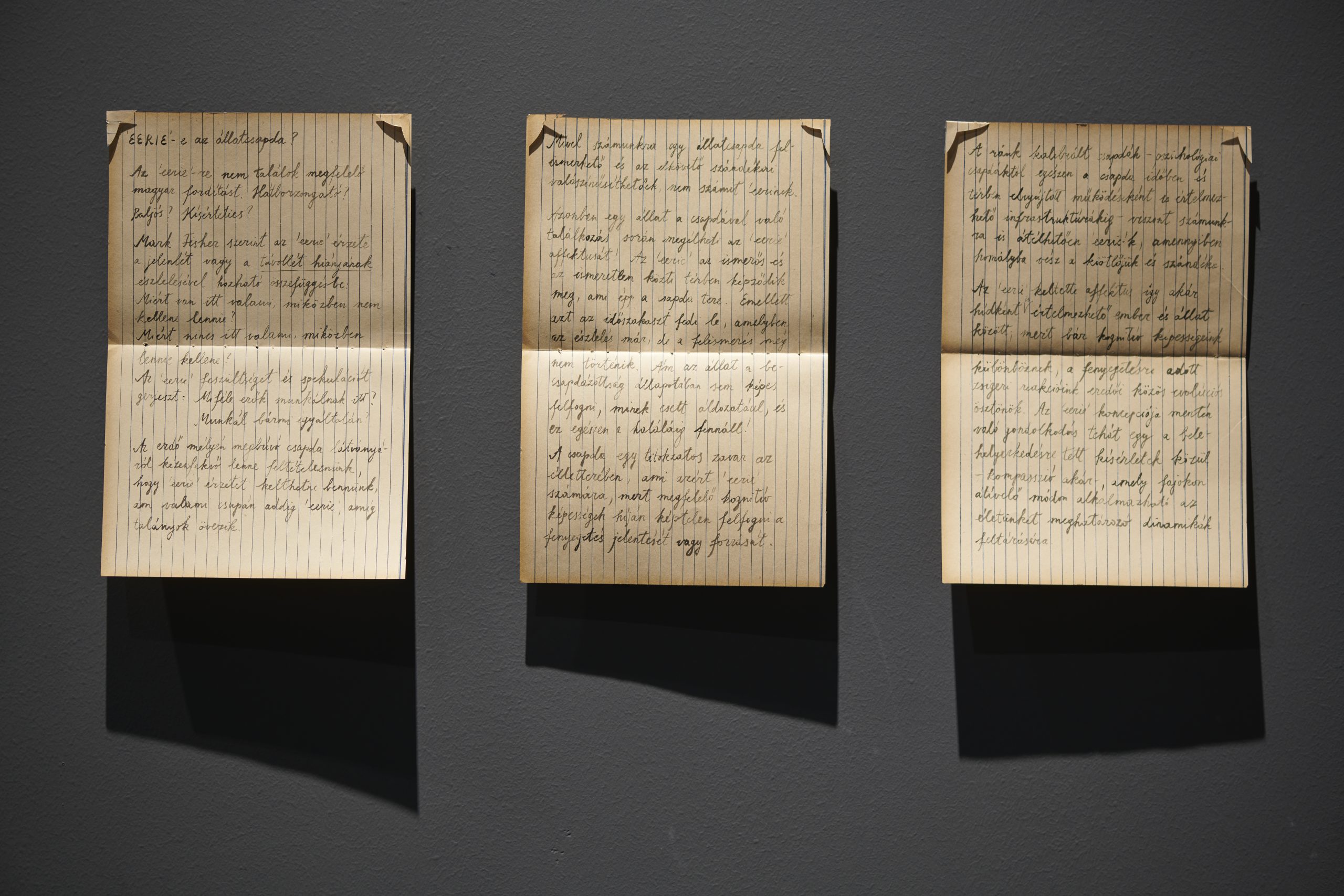
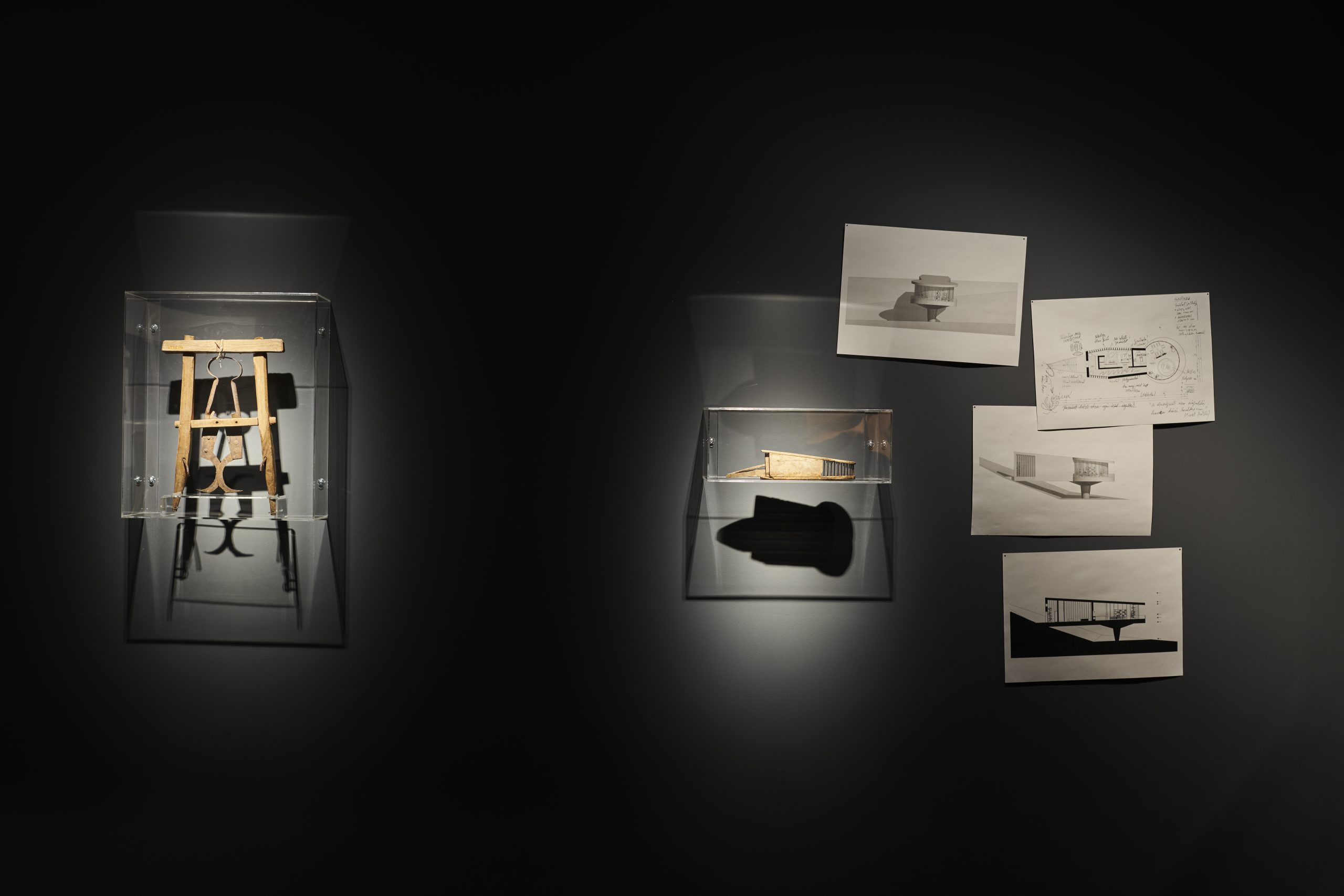
Further layers of meaning emerged through objects from the museum’s own collection. The associative analyses positioned adjacent to the traps constituted an experiment in intrusive placement – an internal gaze situated alongside the external, institutional point of view. These shifting standpoints revealed the universe of traps from the perspective of the prey animal.
The notes, sketches, and extended texts – together with the installation’s unflinching soundtrack – stood as documents of this juxtaposition. In this way, the trap, as a model, directed the viewer beyond the contexts of the museum and the hunt toward the relativity of familiarity – the precarious comfort of home.