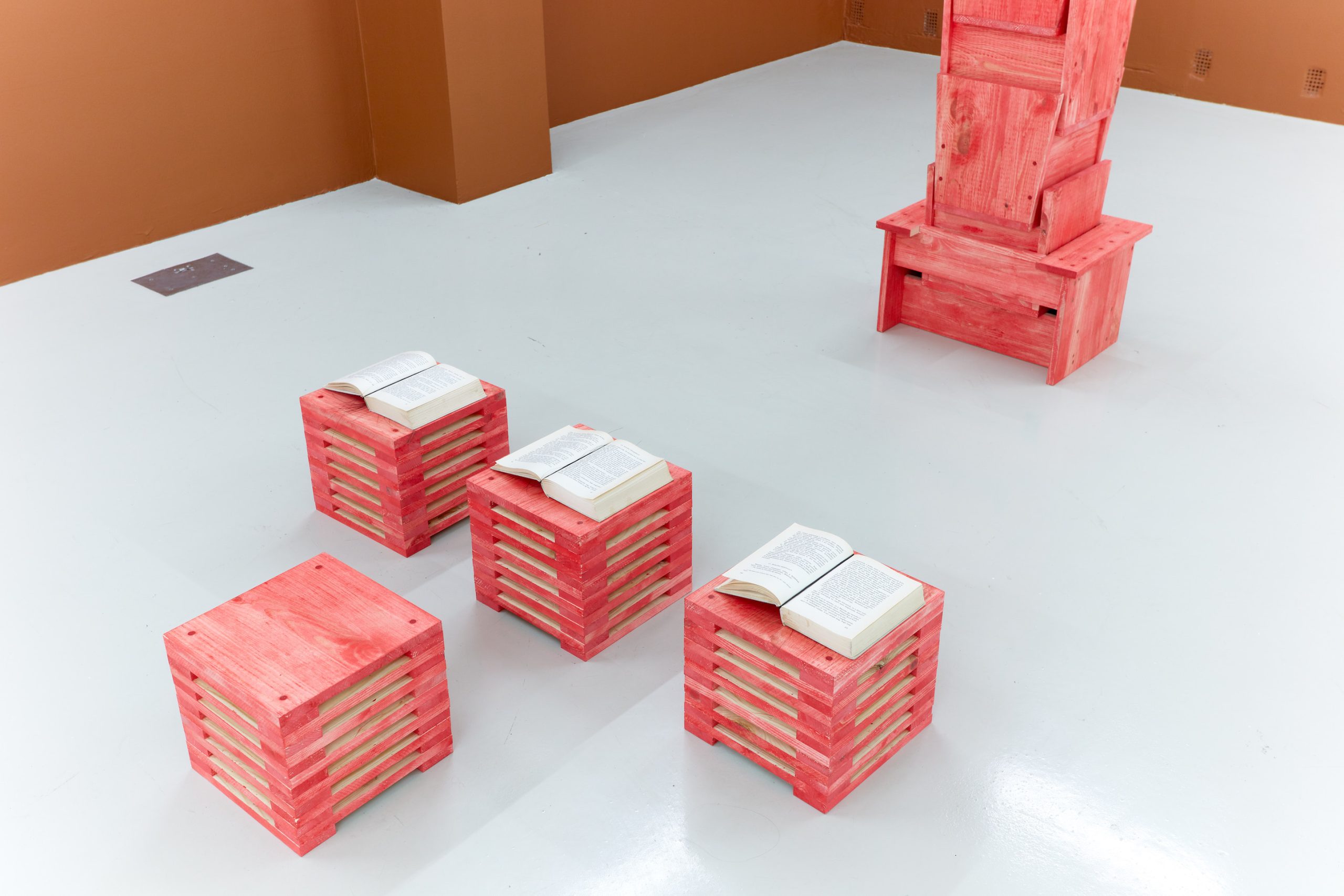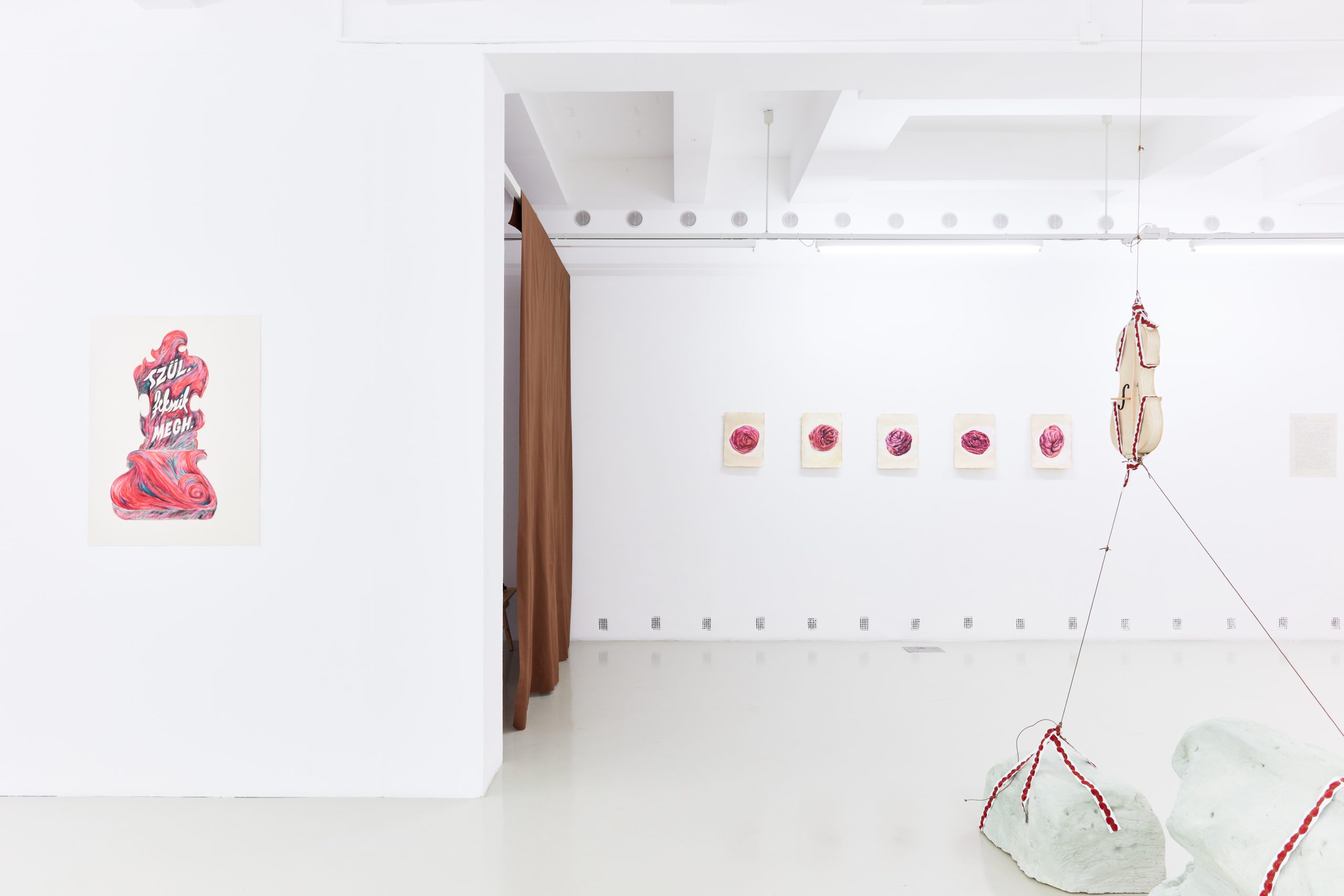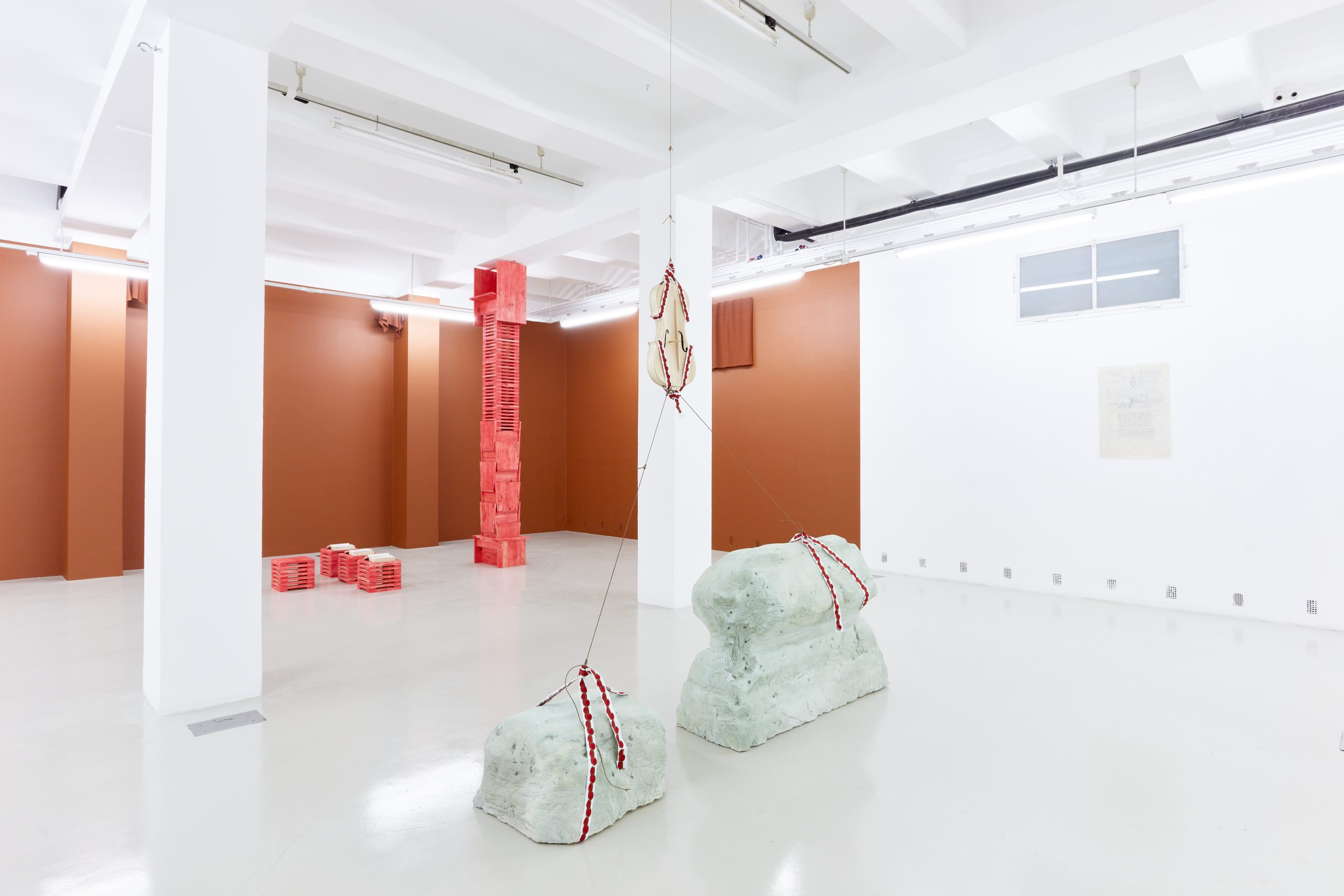
In my solo exhibition, I focused on and stretched the boundaries defined by folk culture.
Looking behind the ideals conveyed by folk music and folk dance, and behind the discursive, symbolic,
and somatically ingrained elements of rural culture, the exhibition attempts to reread these
communal norms from a present perspective.
The installation also explores the chains of meanings folk culture can be embedded in, the extent to
which its boundaries can be widened, and how it can be inhabited by certain individuals and
communities. The exhibition highlights the influences and implications of radical detours of folk
traditions, as well as examples of appropriations of and consensually accepted norms on different
bodies (1. the body of a female folk dancer, 2. the body of a peasant woman, 3. the body perceived as a
fetish object), and thus articulates a multilayered critique that turns towards the archaic to find a way
out of the crisis of the present.
The exhibition can also be regarded as a faction of the hungarofuturist project, a statement event of
hungarofeminism. The hungarofuturist project reverts to the past to detour the future; it seeks the
local in the universal and the shared experience that can withstand divisions. This approach is
associated with a feminist viewpoint that criticizes the structure of the public domain, hegemonic
discourses, and the knowledge concerning the body. Hungarofeminism therefore, maps, distracts, and
expands the somatic and social contact points, giving space to time travel either on the plane of
traumas or in mythical times.
Contributors:
Richárd Kránicz, Balázs Prokk, Orsolya Bajusz, AU Workshop (Dénes Emil Ghyczy, Lukács
Szederkényi), Ildikó Kele, Noémi Varga, Kata Szívós, Alina Vincze, Dávid Erdélyi, Ágnes
Hardi, Ágnes Trappné Simó, Jánosné Trapp, Mihályné Simó
Excerpts from The Book of Women, read by my mother and grandmothers:
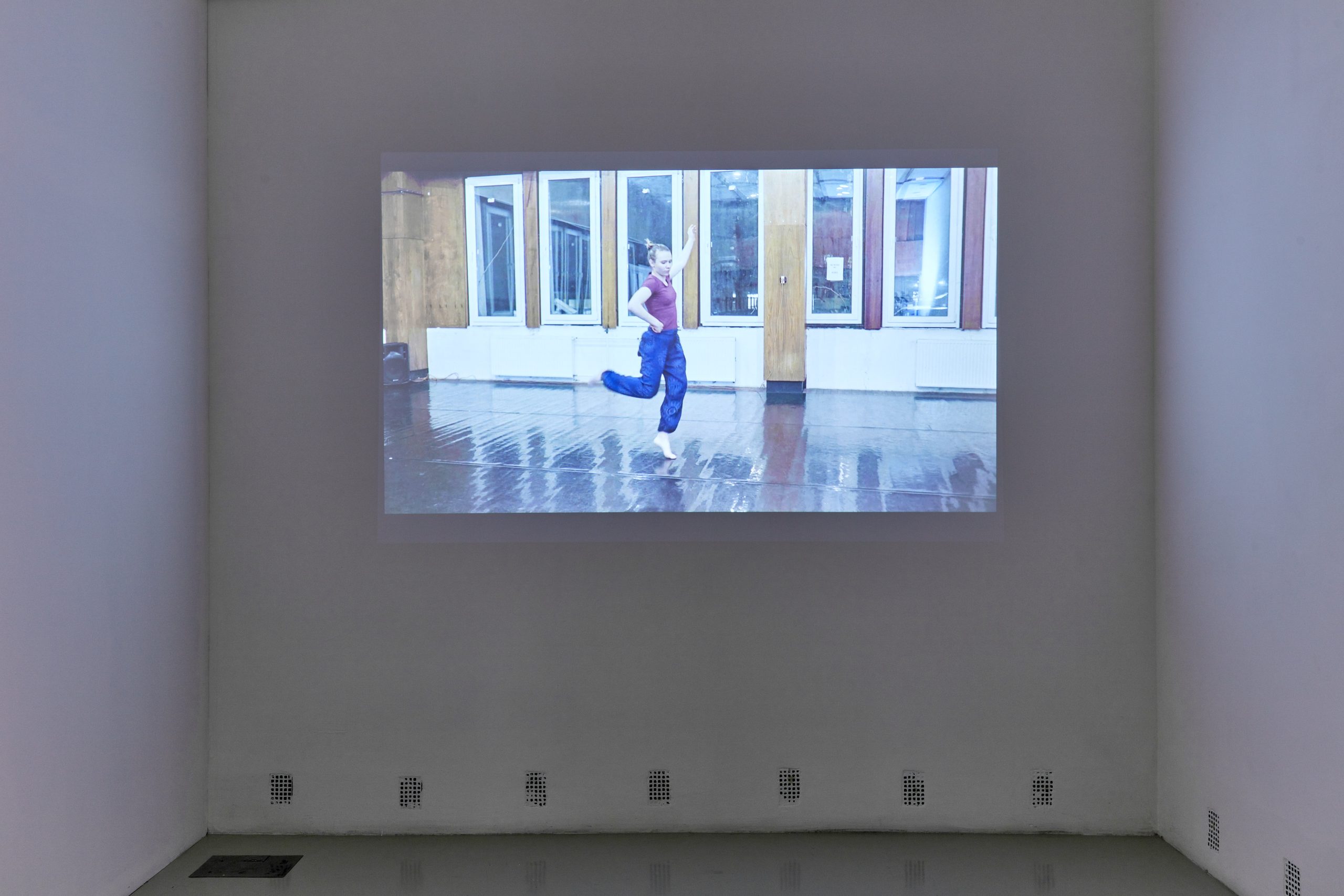
The film is a documentation of the choreography titled Leányos by Kata Szivós, it was directed by Noémi Varga in co-production with me for the exhibition:
Peasants in Atmosphere concert at the closing event:
Interview about the exhibition:
Guided tour:
Articles on the exhibition:
https://archivum.trafo.hu/exhibitions/ne-tegyetek-ream
Excerpt from my doctoral thesis on the exhibition and the accompanying research:
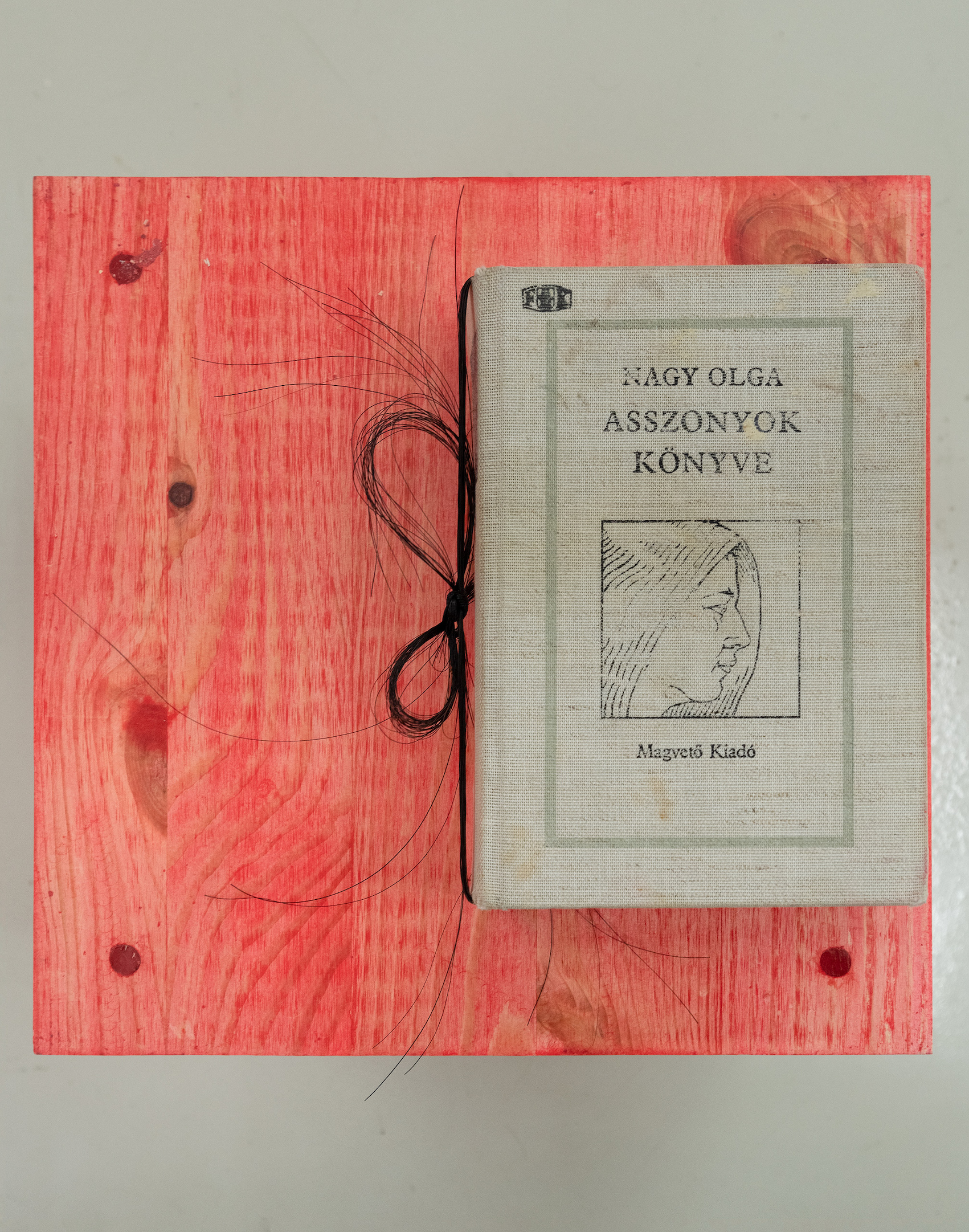
The life stories recorded in The Book of Women – and, more specifically, the trauma narratives affecting women’s bodies within them – thus constituted one of the conceptual starting points of my exhibition. In my reading, the primary point of connection toward the female members of peasant communities became an empathetic opening toward their traumas, that is, an attunement to the temporal register of trauma.
In analyzing the narratives, I was assisted by the philosopher and folk dancer Balázs Prokk, who is himself an active member of the dance-house movement and one of its few internal critical voices. Together we developed what we termed a feminist analysis of “room for manoeuvre.” Balázs was familiar with this method from the phenomenology of religion, and drawing on that model we devised our own interpretive framework through which we analyzed the events of the narratives. The book presents individual life stories of peasant women, shared by the women themselves with the ethnographer during fieldwork conducted between 1975 and 1984 in Cluj and Mureș counties. These confessional texts stand out from traditional folk narratives because of their rawness and relative “uncensored” character, whereas conventional narratives generally conform to the normative expectations of the community. According to Balázs Prokk, the intense personal tone emanating from Olga Nagy’s volume exemplifies a trust that breaks out from the silence of fear, since the sharing of such female experiences was significantly restricted within traditional, predominantly patriarchal communities.
In our research, we examined how much space tradition and social norms allowed women for free movement and self-reflection within the peasant communities of the villages in question, and how much they were able to claim for themselves.
In another of her seminal works, In the Grip of the Law – Peasant Value Systems and Conduct, Olga Nagy formulates the striking claim that members of tradition-governed communities lack an individual perception of reality: everything is communal in nature, and unwritten rules shaping all areas of life determine the lives of individuals. The value system is inherited; people are born into tradition, whose preservation serves the survival and security of the community. Hungarian peasant tradition does not sanctify absolute values; rather, it expresses a collective spirituality formed under particular economic, cultural, and social conditions. Yet it may generate sharply divergent moral codes from village to village and canonize customs that may appear absurd. The traditional, archaic mode of thought does not question what is inherited; thus customs that originally arose from economic or social necessity may persist even when they are no longer necessary and may in fact become obstructive to community life. If the community accepts something, that alone suffices as justification for the individual to accept it, even if personal experience does not confirm it (Nagy 1989, 262–278).
In my research, I sought precisely those cases that diverged from this practice. I examined the space for manoeuvre afforded by tradition in relation to both past and present, foregrounding transgressive attempts and phenomena that I regarded as potential forces capable of redirecting the future. I was primarily interested in the bodies of women who come into contact with tradition, and I structured my exhibition accordingly into three main sections: The Body of the Peasant Woman, The Body of the Female Folk Dancer, and The Fetishized Body.
The Body of the Peasant Woman
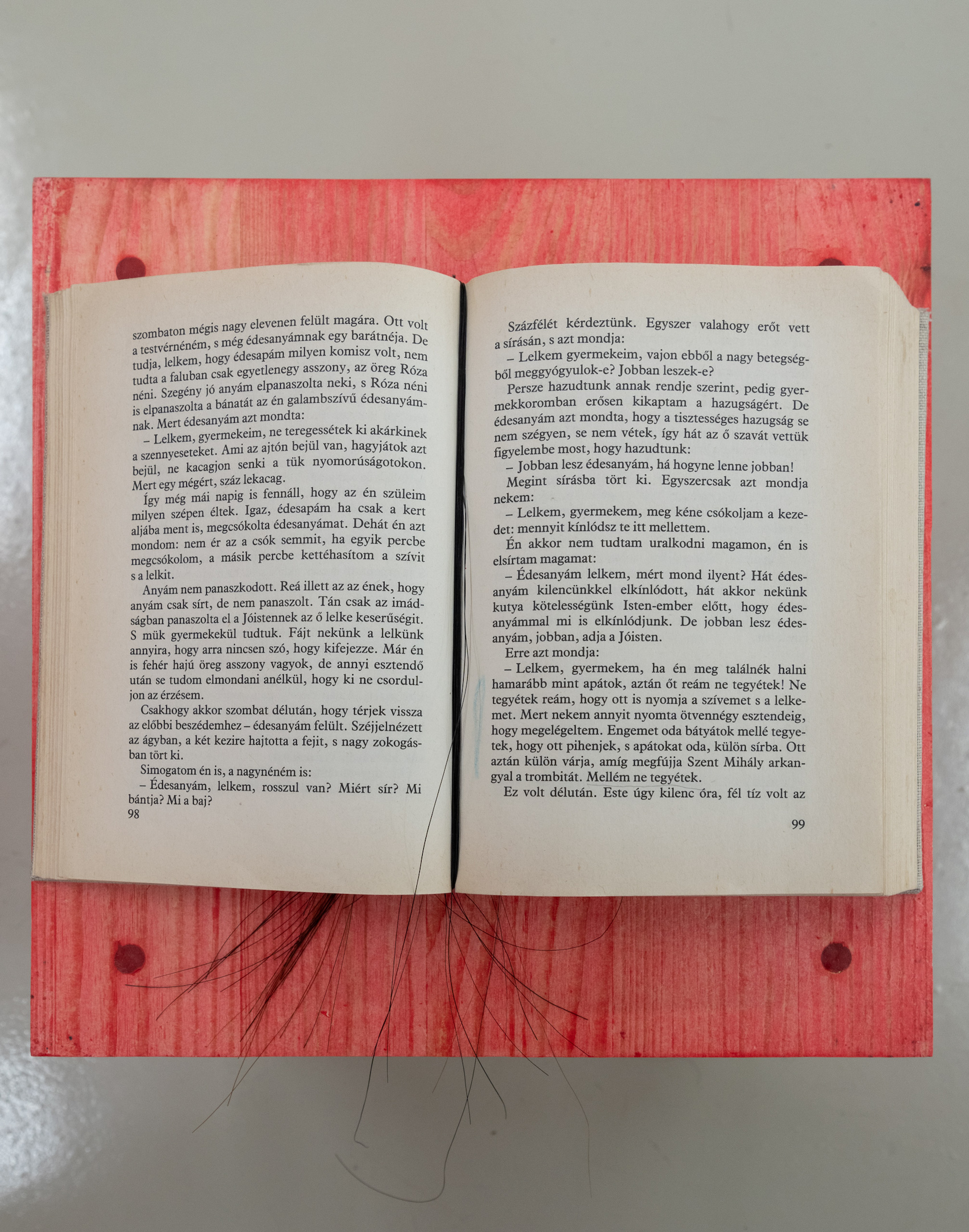
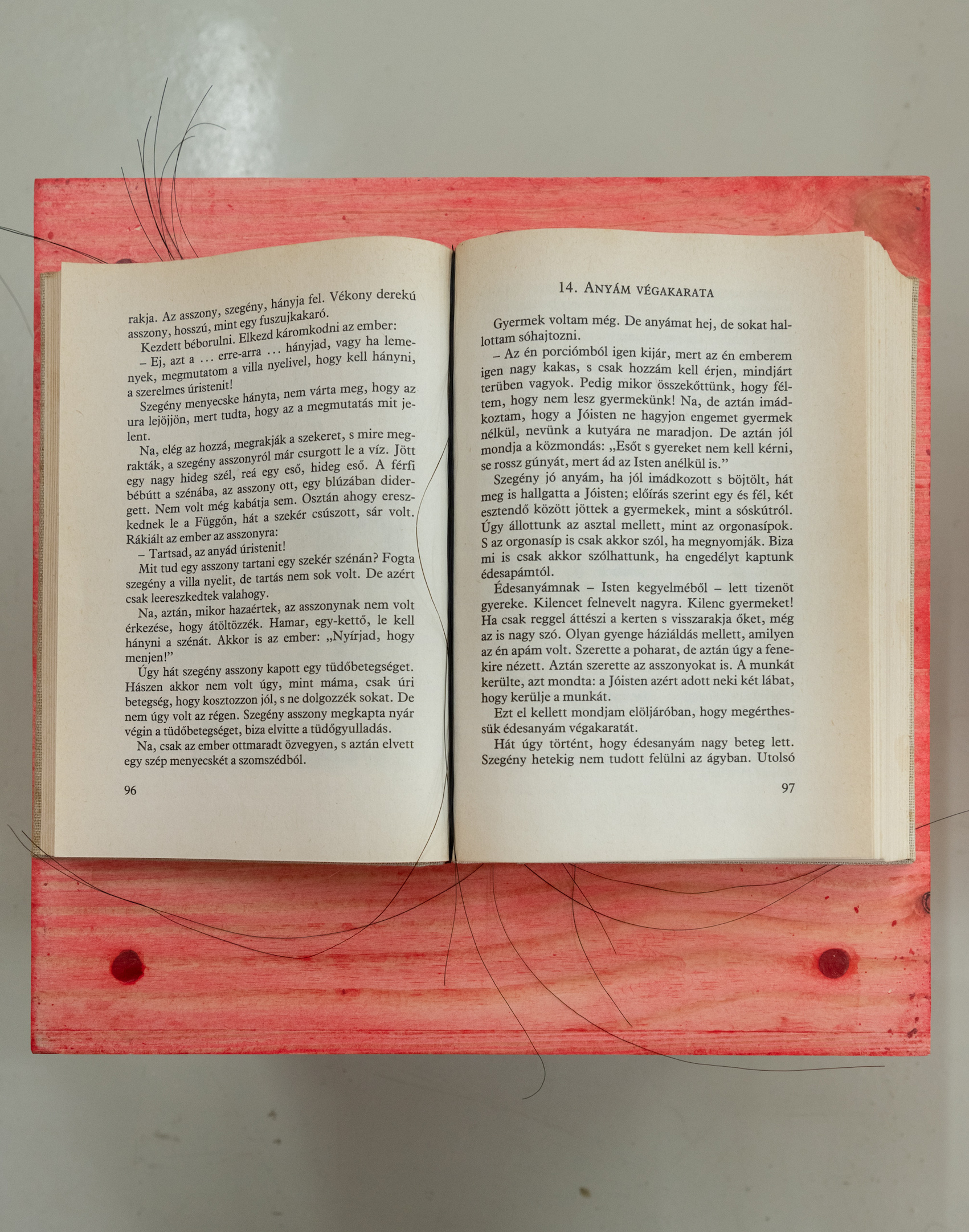
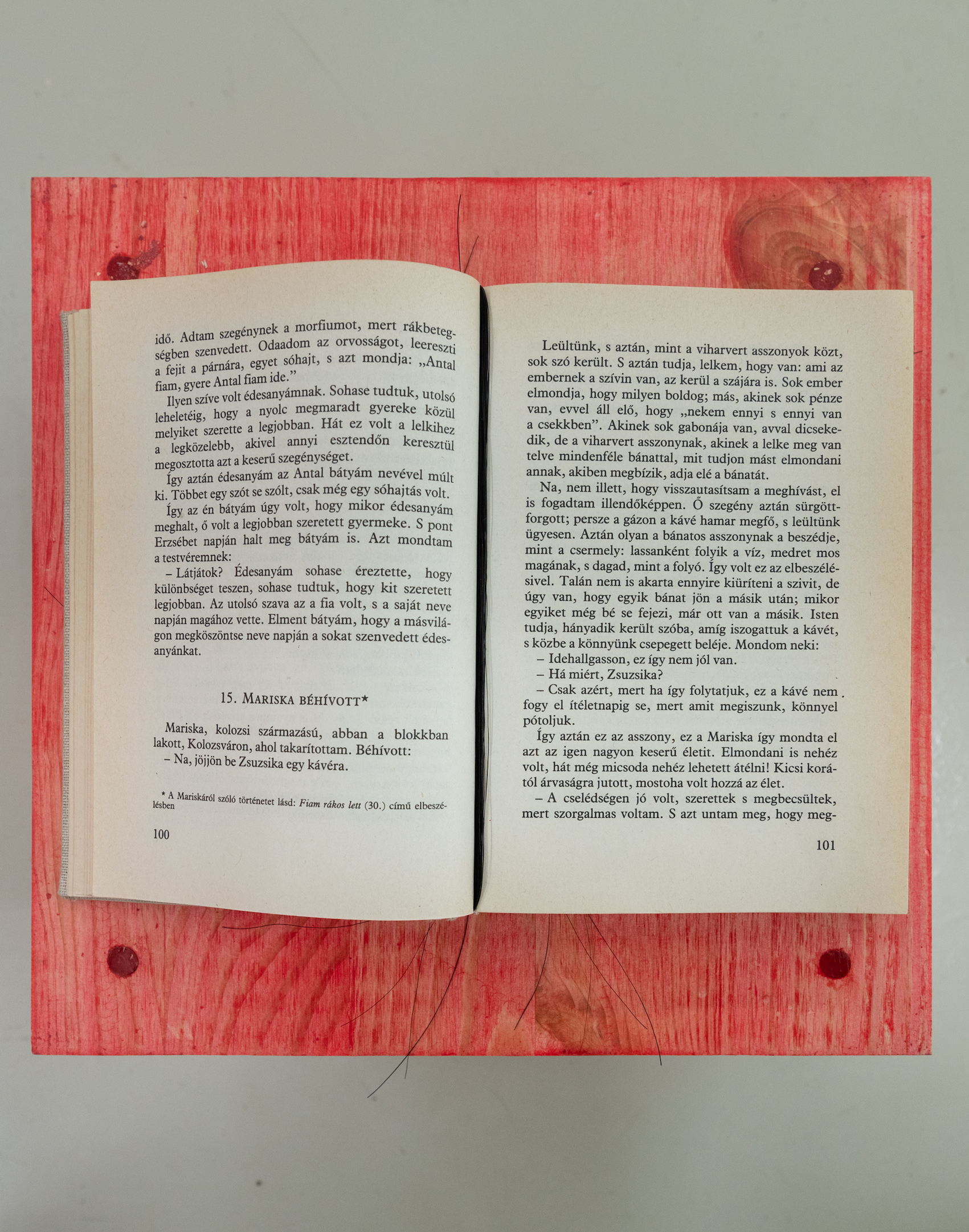
Of the ninety stories included in The Book of Women, I selected “My Mother’s Last Wish” (Nagy 1988, 97–100), recorded from György Zsuzsánna of Kolozs, as the framing narrative for the installation representing the past. This confessional text recounts the life of a woman whose room for manoeuvre was among the narrowest: she bore fifteen children to a violent and tyrannical husband, and on her deathbed bid farewell to her nine surviving adult children with the following words:
“My soul, my child, if I should die before your father, do not lay him upon me. Do not lay him upon me, so that he may not press upon my heart and my soul there as well.”
In this statement she testified to the fact that she could hardly hope for self-determination even in the afterlife. By choosing a fragment of this key sentence as the title of my exhibition, I intended, on the one hand, to amplify the expression of a will resisting oppression, and on the other, to turn it toward myself: “Do not place upon me a mark that does not belong to me.” This skeptical gesture toward my own artistic and research premises had already been detectable in the earlier title Peasants in Atmosphere.
Seventeen family members appear in the story “My Mother’s Last Wish.” To the father and the nine surviving children I connected additional life trajectories drawn from other stories in the anthology, thus offering a fuller picture of the peasant world under examination. From the selected narratives I highlighted those passages in which emancipatory or norm-breaking intentions, acts, or even hesitations following moments of resolve become discernible. I also incorporated excerpts from two contemporary authors whose detached portrayals of peasant life I regard as exemplary: Andrea Tompa (Omerta) and Szilárd Borbély (The Dispossessed). These excerpts were played in the exhibition space in recordings performed by my grandmothers and my mother. While my ancestors were almost exclusively descendants of poor peasant families, their participation primarily served to draw attention to my personal experience that remnants of the normative systems of tradition-preserving peasant communities—such as aversion to difference, fear of public shame, or fear of exclusion—remain present in rural Hungary today.
The installation, supplemented with sound, conveyed the broader message that communities presented to us as models must be viewed together with their conflicts—even at the cost of confronting aspects that may be difficult to face in our own lives.
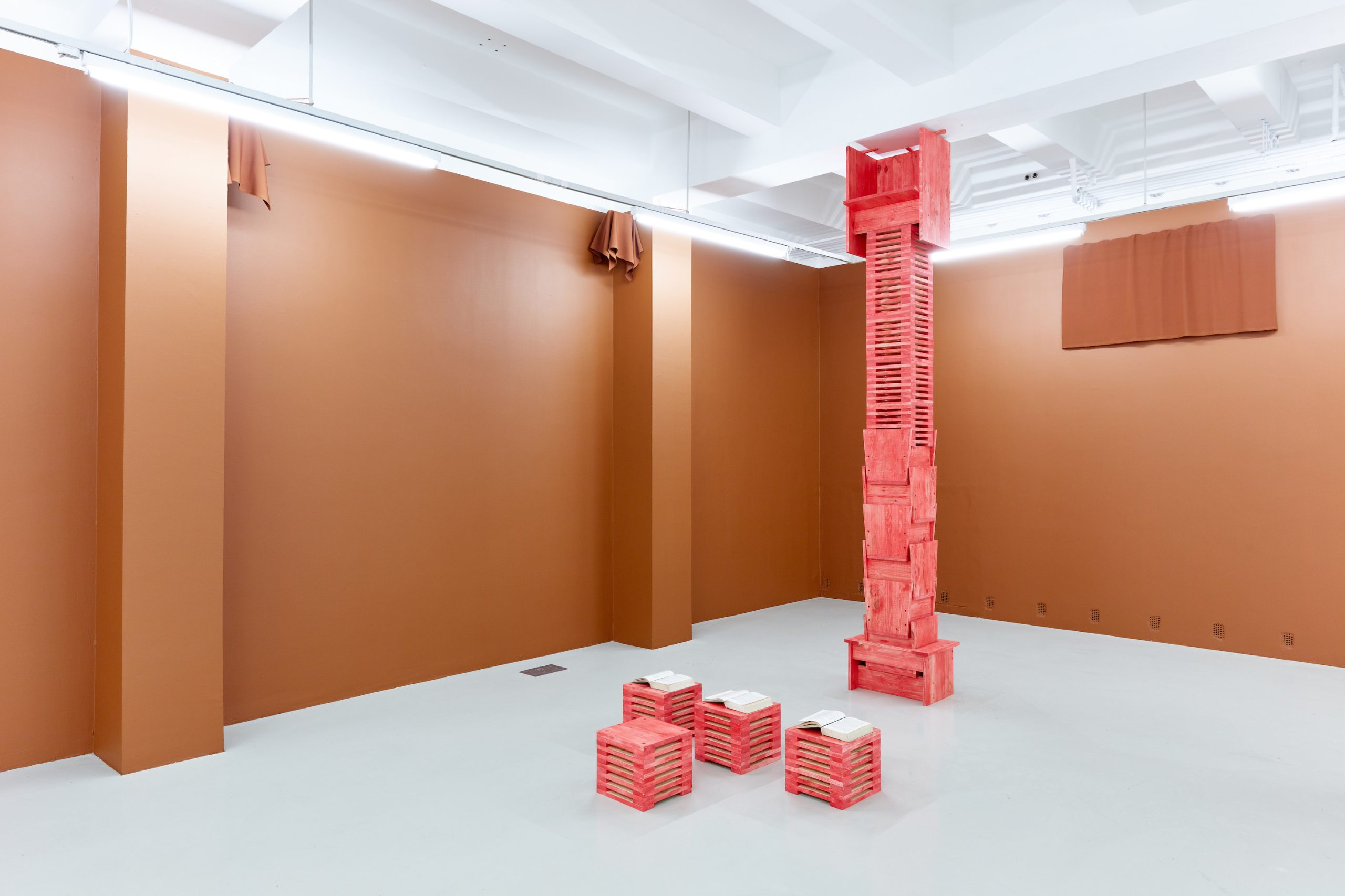
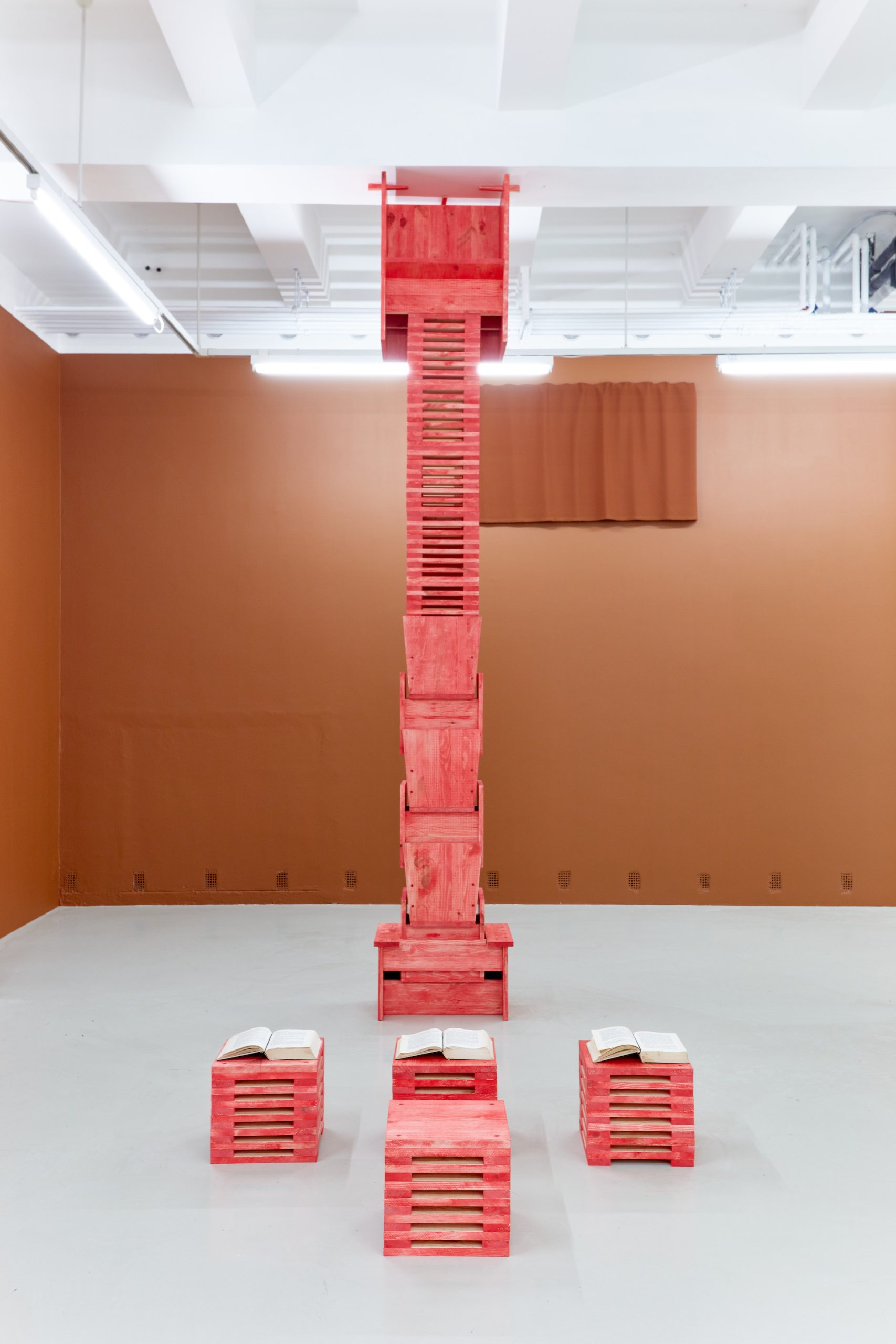
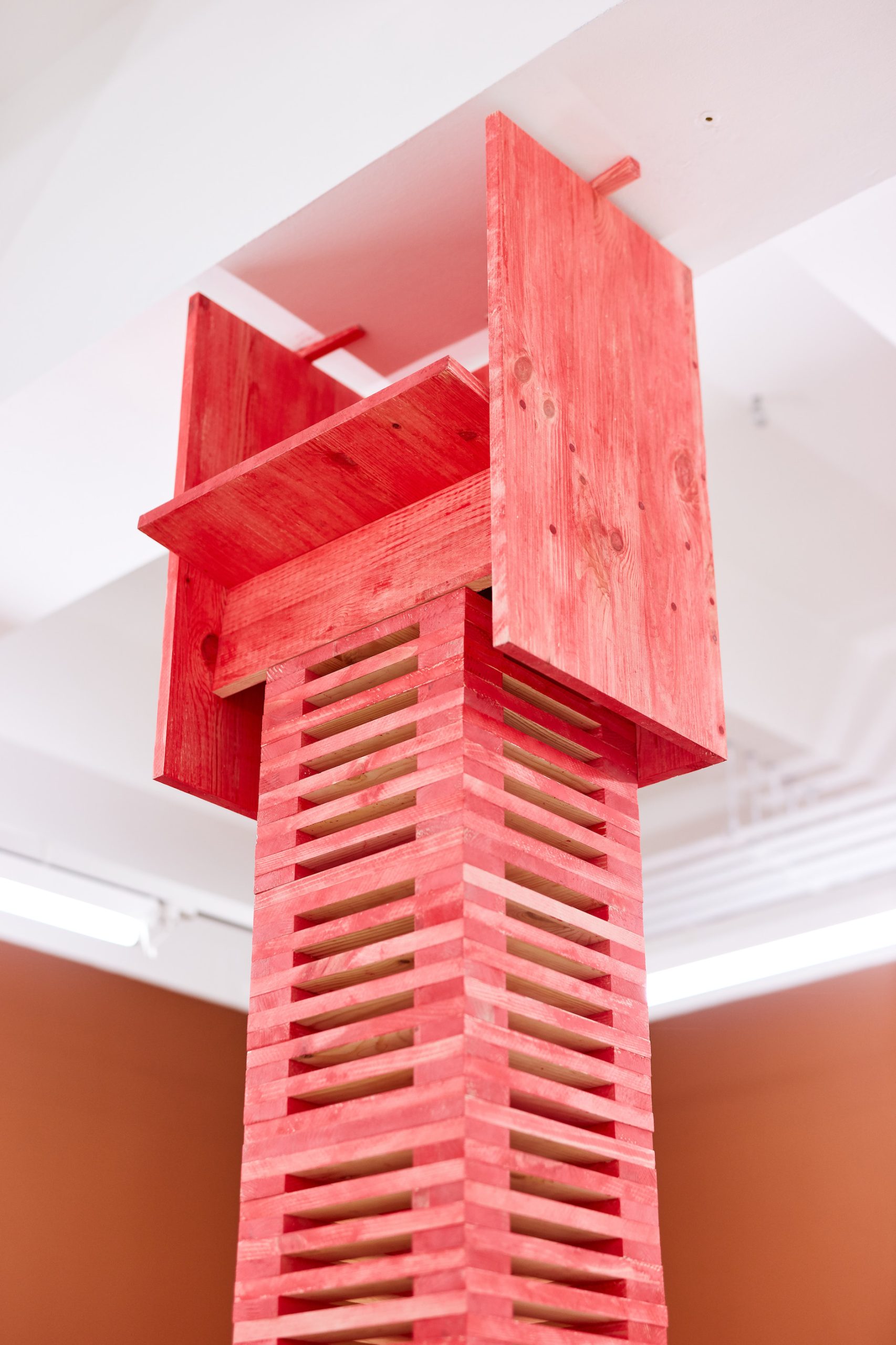
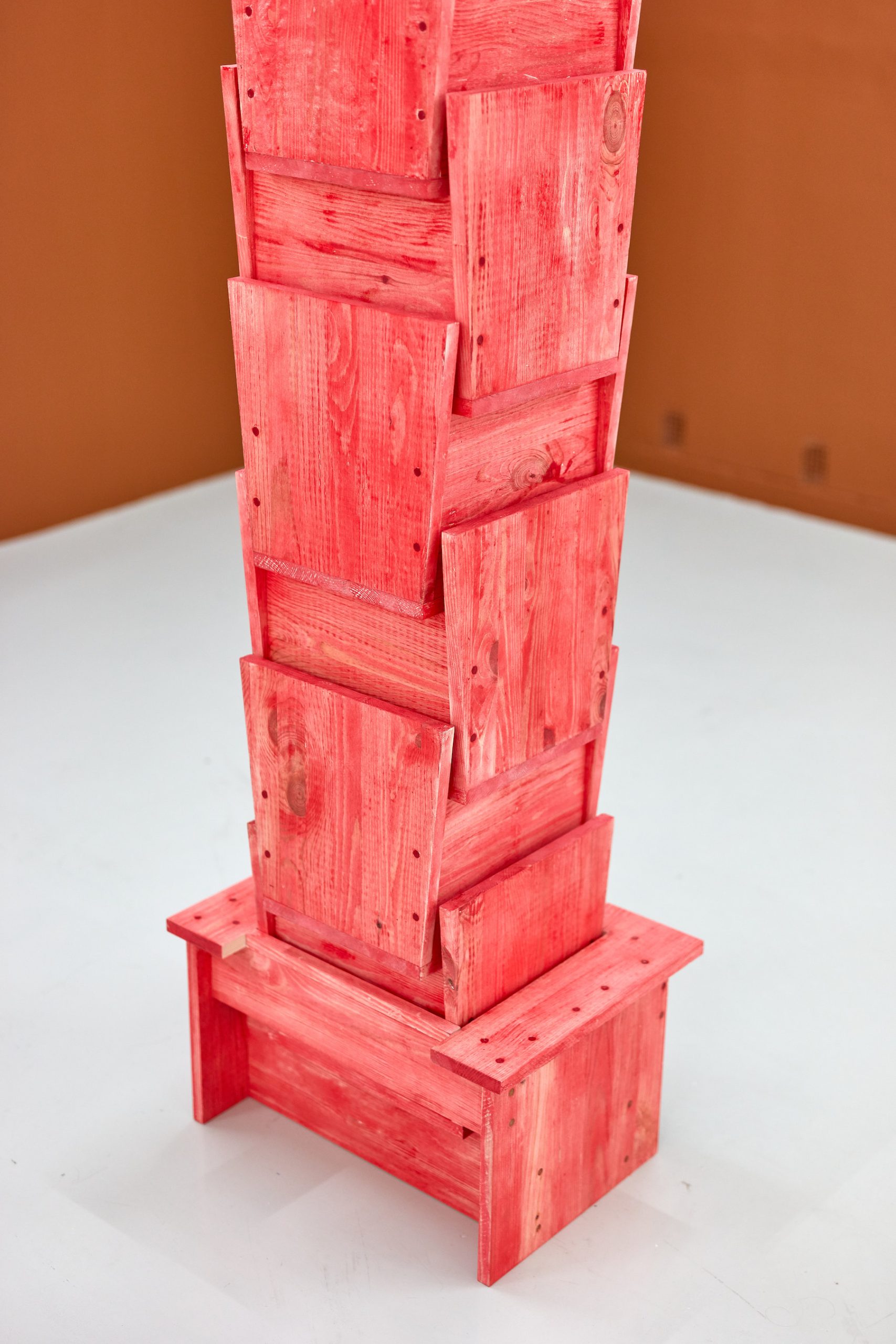
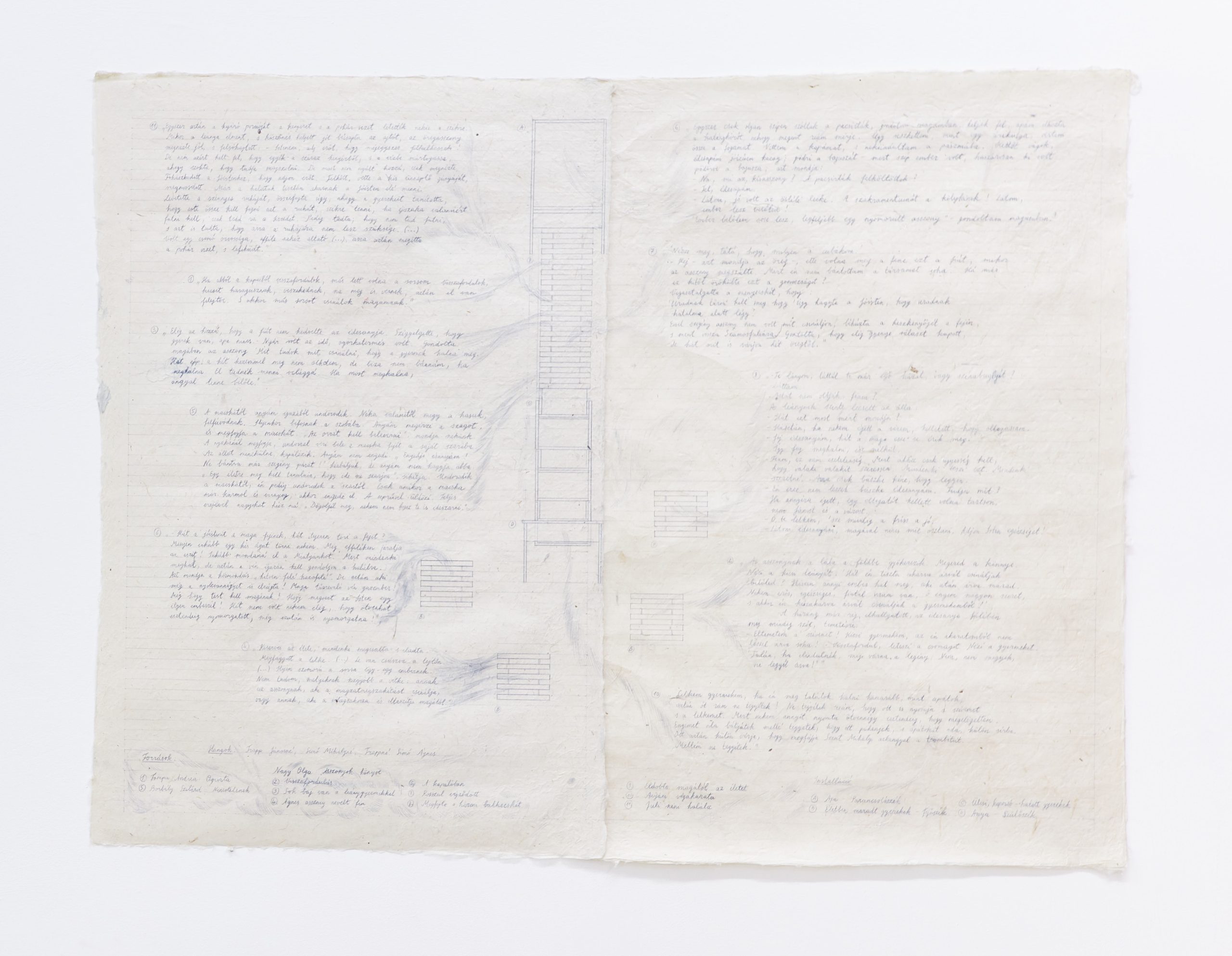
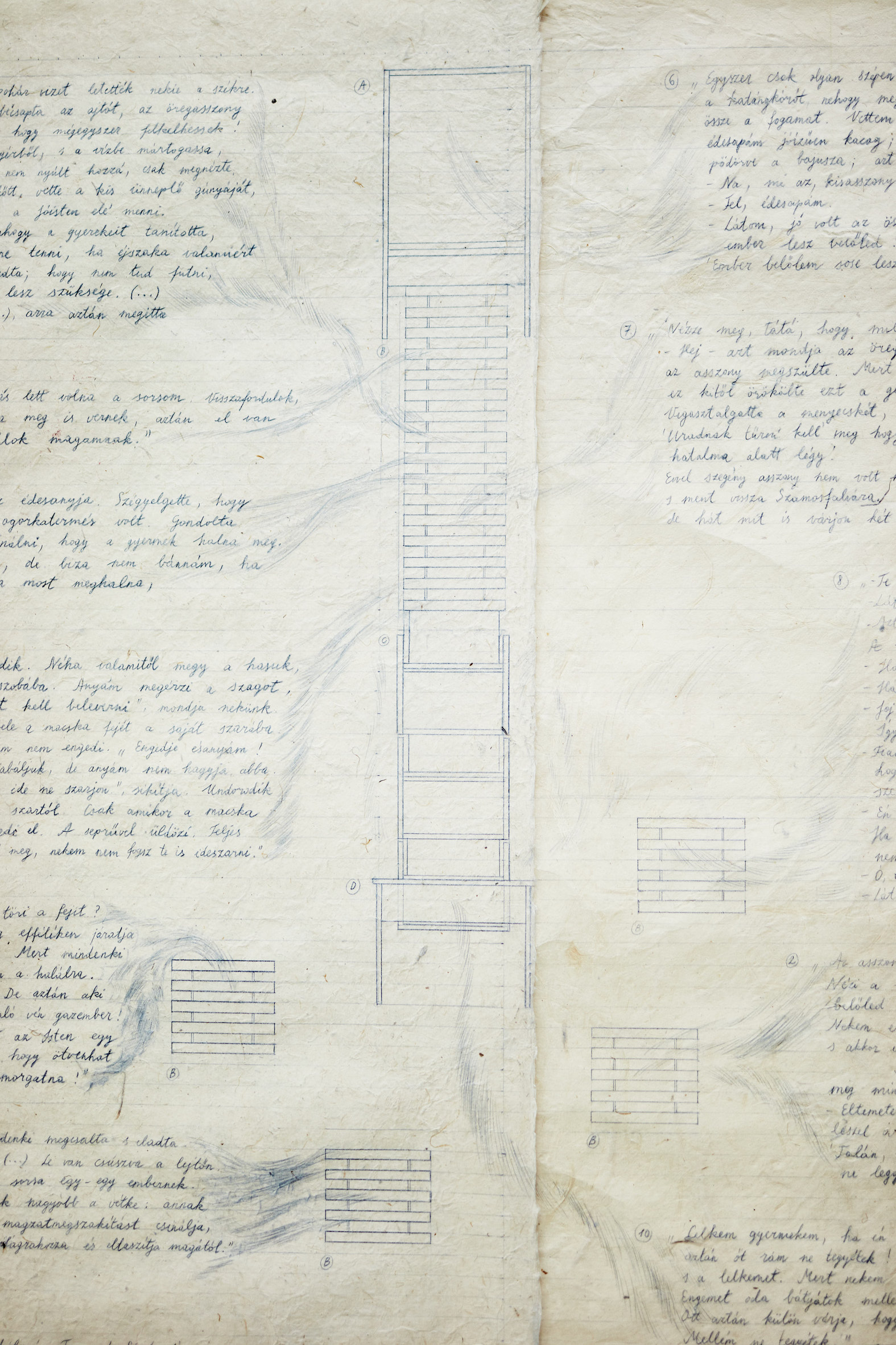
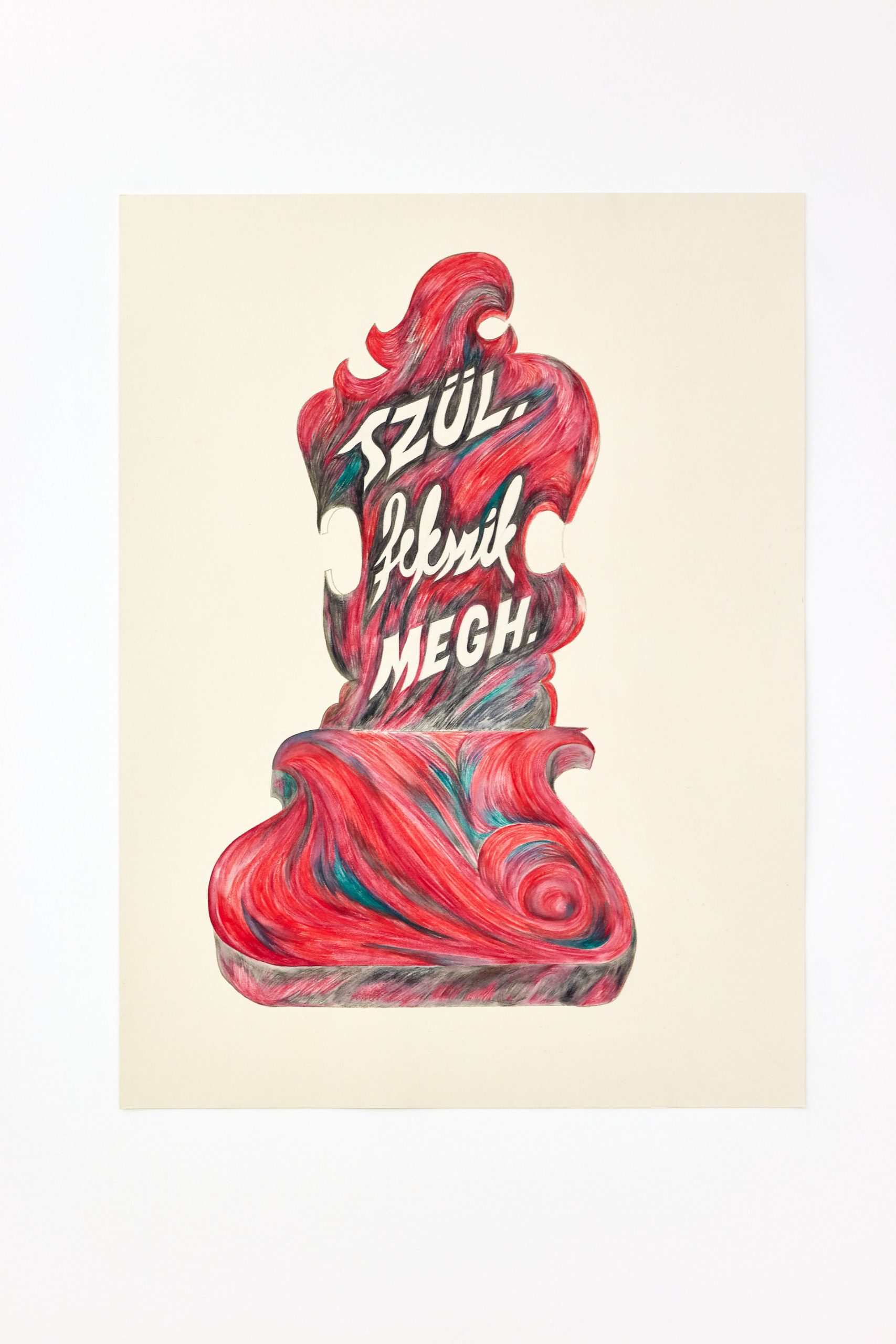
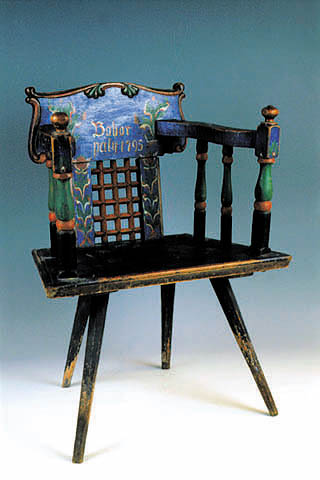
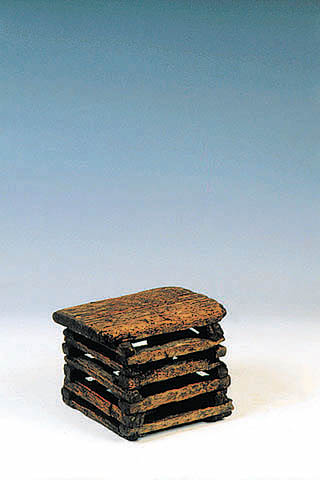
As the central motif of the installation summarizing these life stories, I chose the chair, which beyond its functionality signals its user’s position within the hierarchical order of the peasant community. Drawing on peasant material culture, I collected chair types that could be associated with the selected characters. At the base stood the birthing chair, evoking the mother figure; from it emerged a small stool transformed into a coffin, symbolizing the six deceased children; upon these were placed milking stools representing the surviving descendants; and weighing upon them all was the commanding chair of the tyrannical father. The column consisted of eight chairs; the three omitted milking stools were arranged around it and associated with stories in which the female character succeeded in articulating norm-breaking, self-reflection, or other transgressive intentions. At the top, I wedged the structure into the crossbeam of the exhibition space, symbolically questioning the stability of the family model revealed in the narrative.
The installation evoked a memorial column or grave marker, as well as the “tree of the Blessed Lady” found in traditional peasant architecture—particularly in the clean rooms of Palóc houses—originally intended to support the master beam, later retained for its cultic significance. A hand-drawn explanatory diagram accompanied the installation, which I interpret as a boundary object, given that the exhibition sought to communicate findings of an art research project rooted in ethnography.
The Body of the Female Folk Dancer
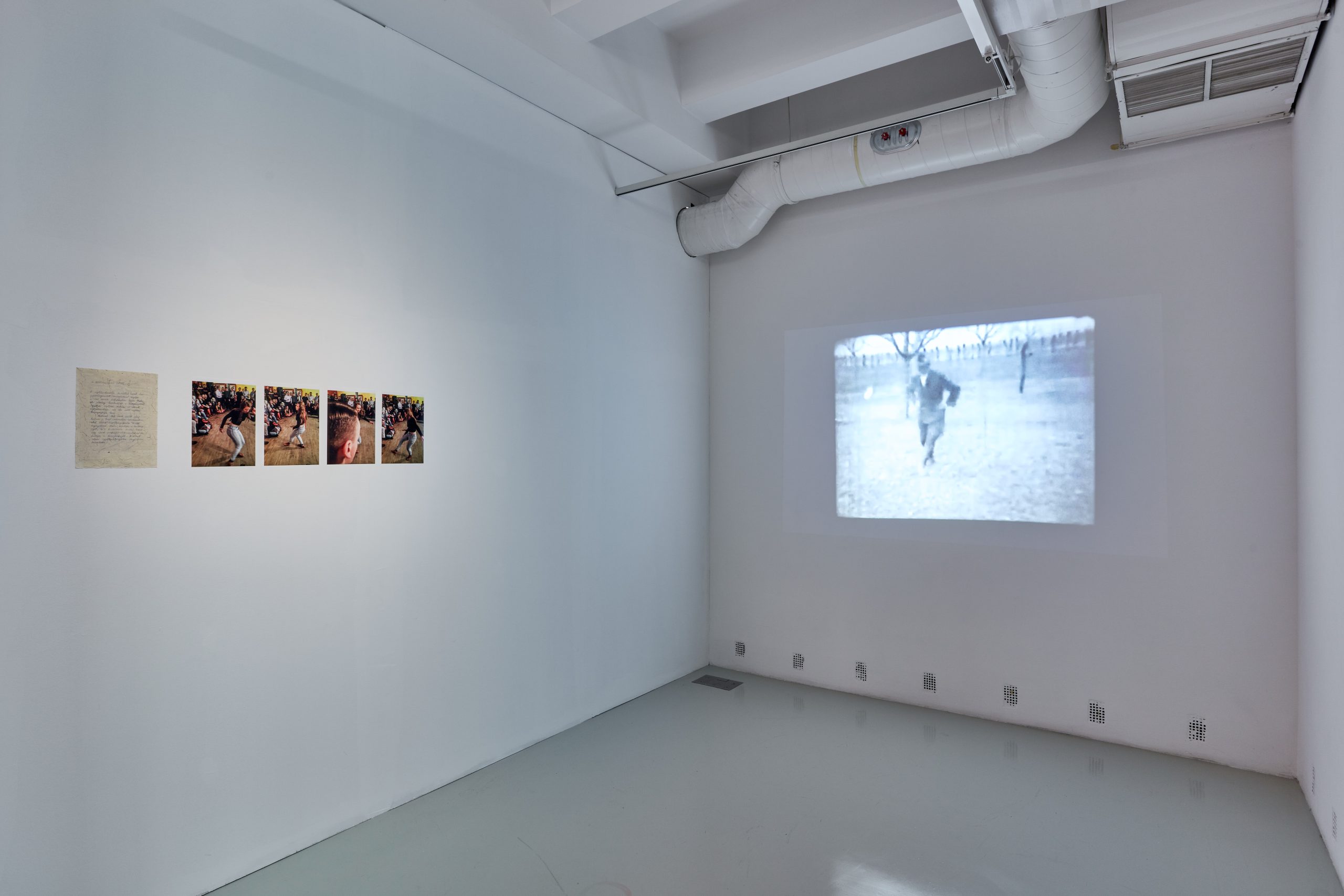
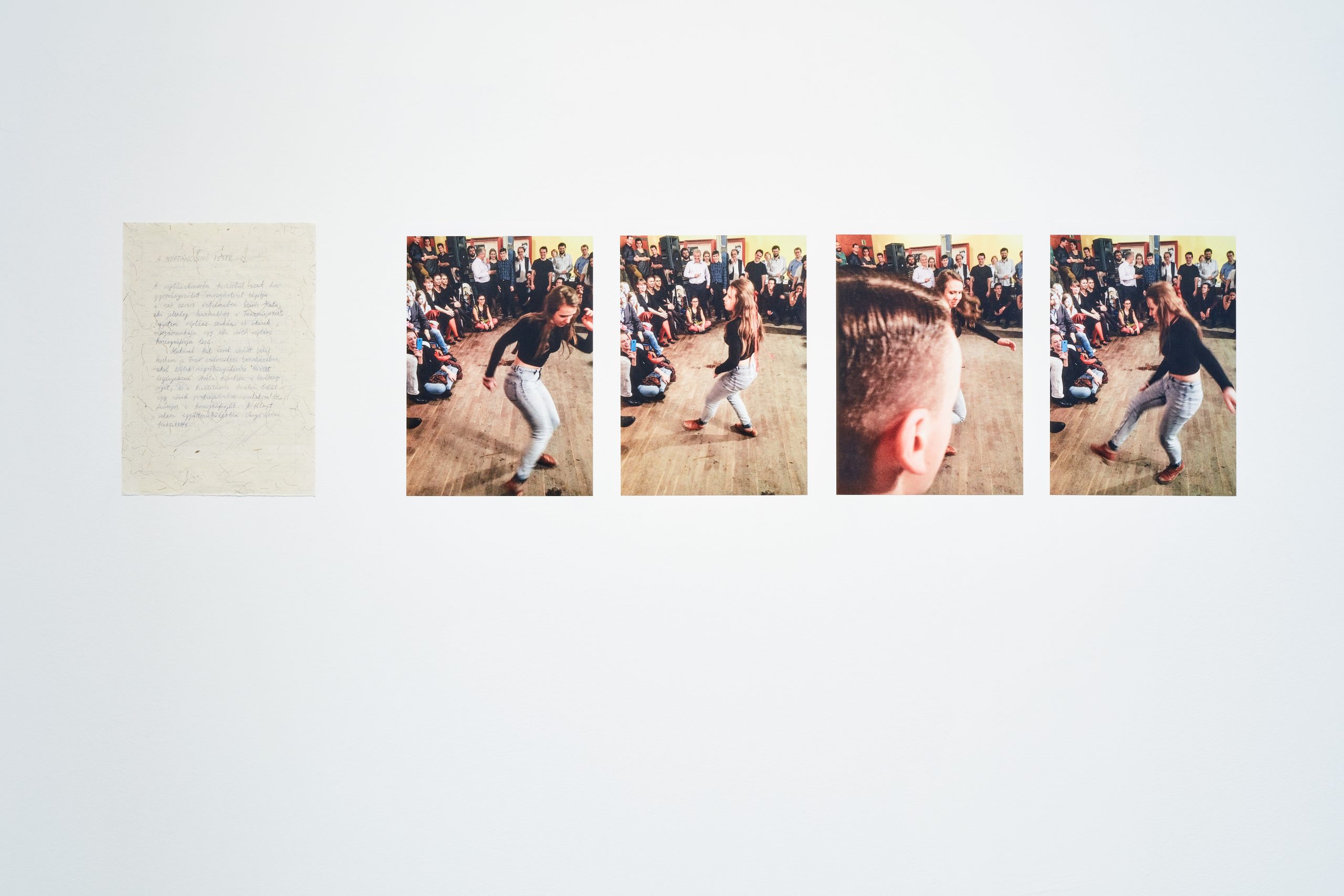
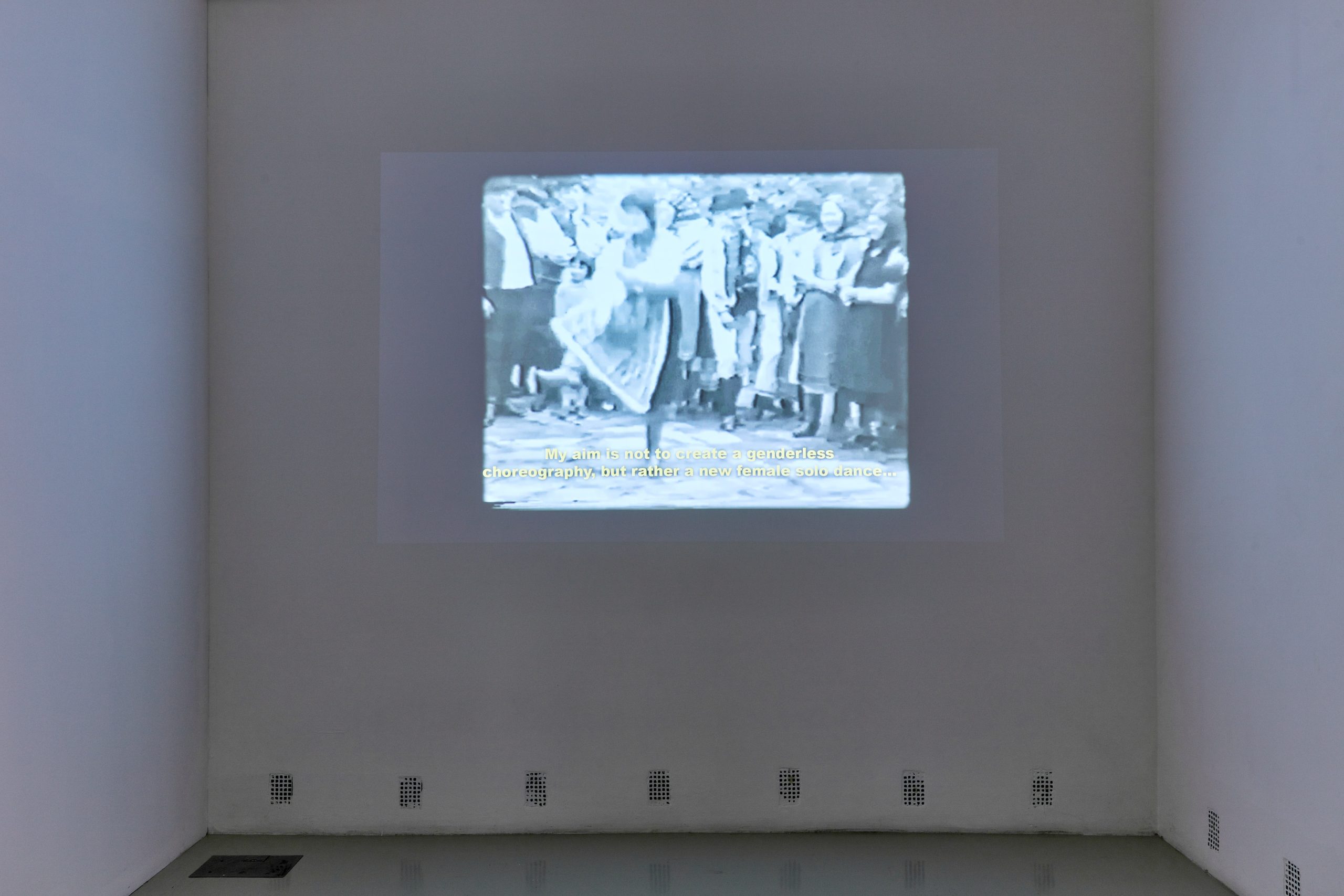
The space for manoeuvre transmitted to us through the heritage of folk dance is expanded in a literal sense by Kata Szívós, who at the time of the exhibition was a graduating student in folk dance at the Hungarian Dance University. As part of her preparation for her final performance, she was working on a solo female choreography of the traditionally male “legényes” dance. An early version of this piece was presented in the exhibition as a video installation within the section examining the present.
I first encountered Kata on New Year’s Eve 2018 at the Fonó dance house, where at one point she stepped forward to dance a legényes—to the astonishment of many present. Although ethnographic collections document exceptional cases of women performing solo male dances, such instances are rare, and in contemporary dance houses they are virtually nonexistent. I inferred the agitation of those around me from the half-whispered remarks questioning Kata’s sexual identity and whether such role reversal was appropriate in a dance-house context.
Following this encounter, I initiated a conversation with her about her experiences and professional plans. Later, when I invited her to collaborate on a joint piece for my exhibition, I was surprised to learn that she was already developing a “female legényes” choreography. Observing her process, it became clear to me that I wished to present the work in its then-current form, accompanied by an interview with her.
A significant development in the professional reception of the exhibition occurred in March 2021, when, at the invitation of ethnographer Ildikó Sándor, Kata spoke about the work created for the exhibition and about the relationship between folk dance and gender roles in a program of the House of Traditions.
The Fetishized Body
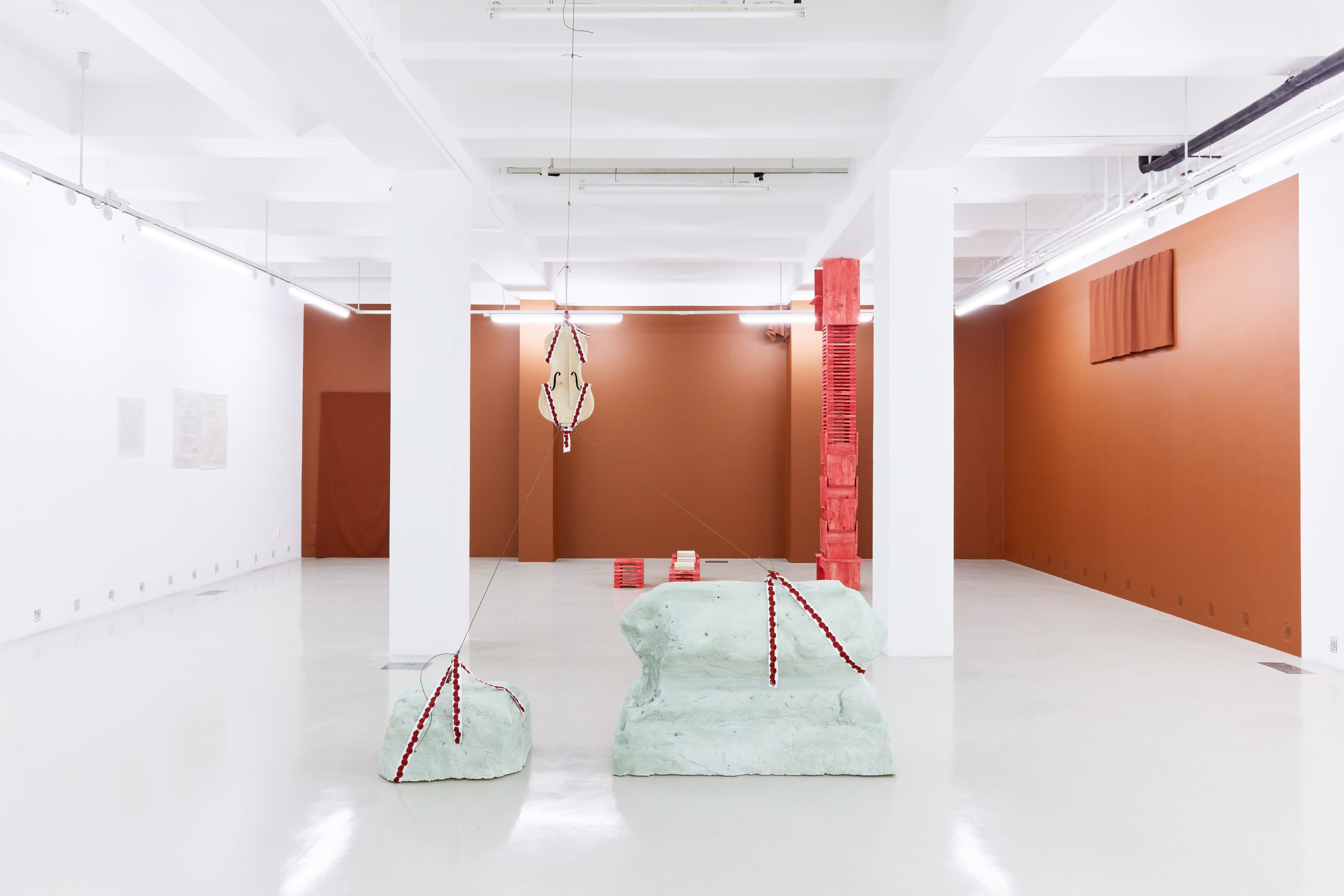
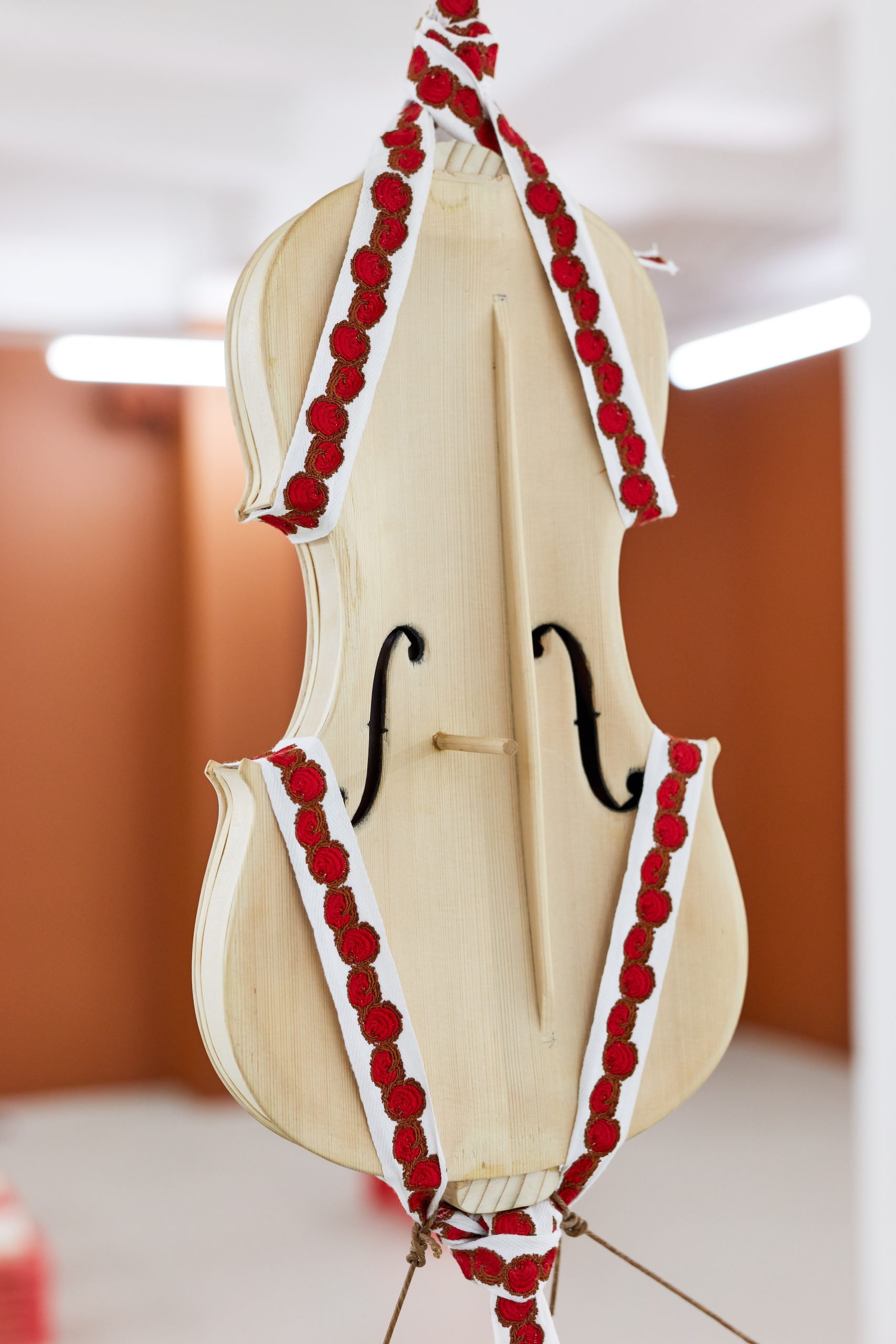
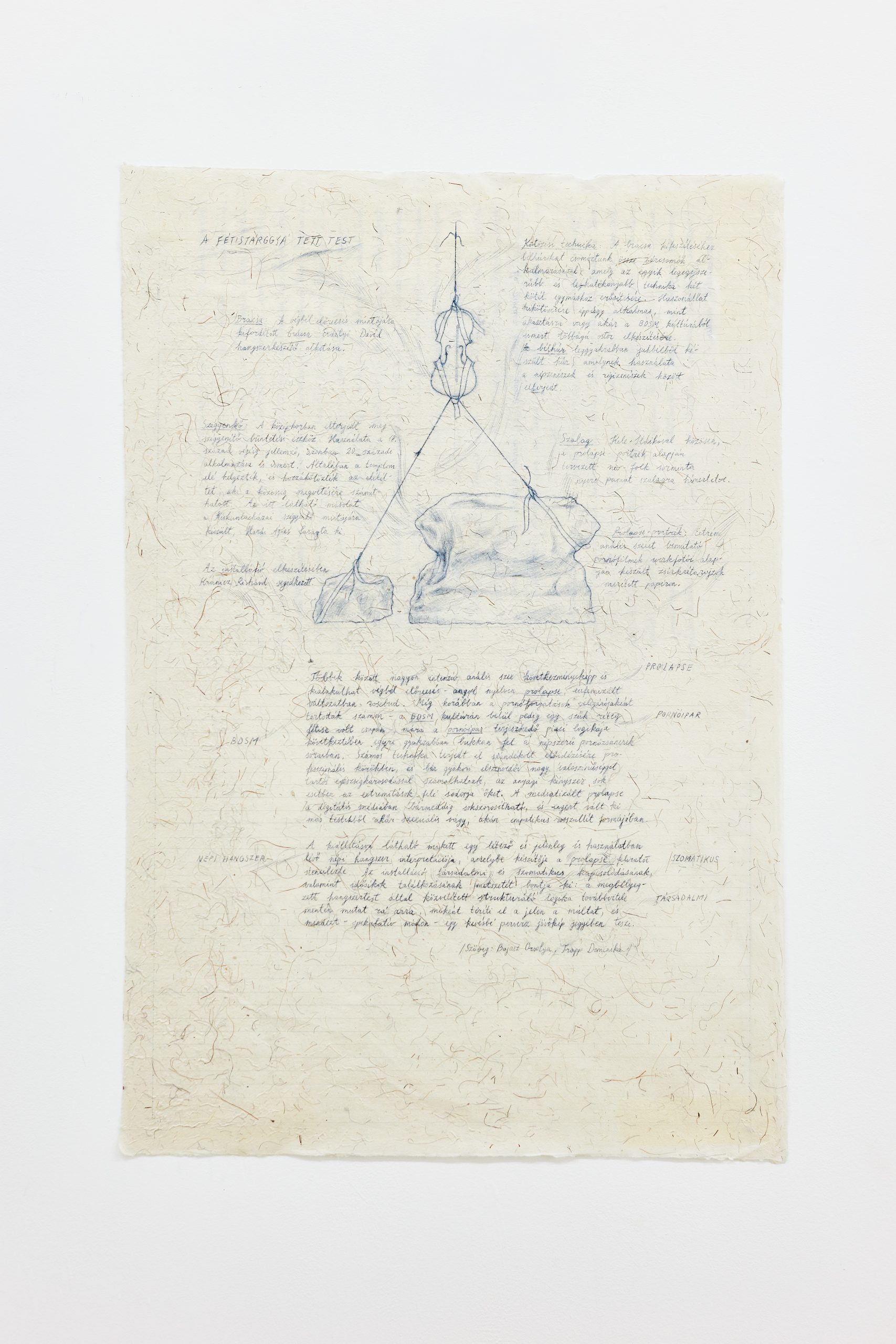
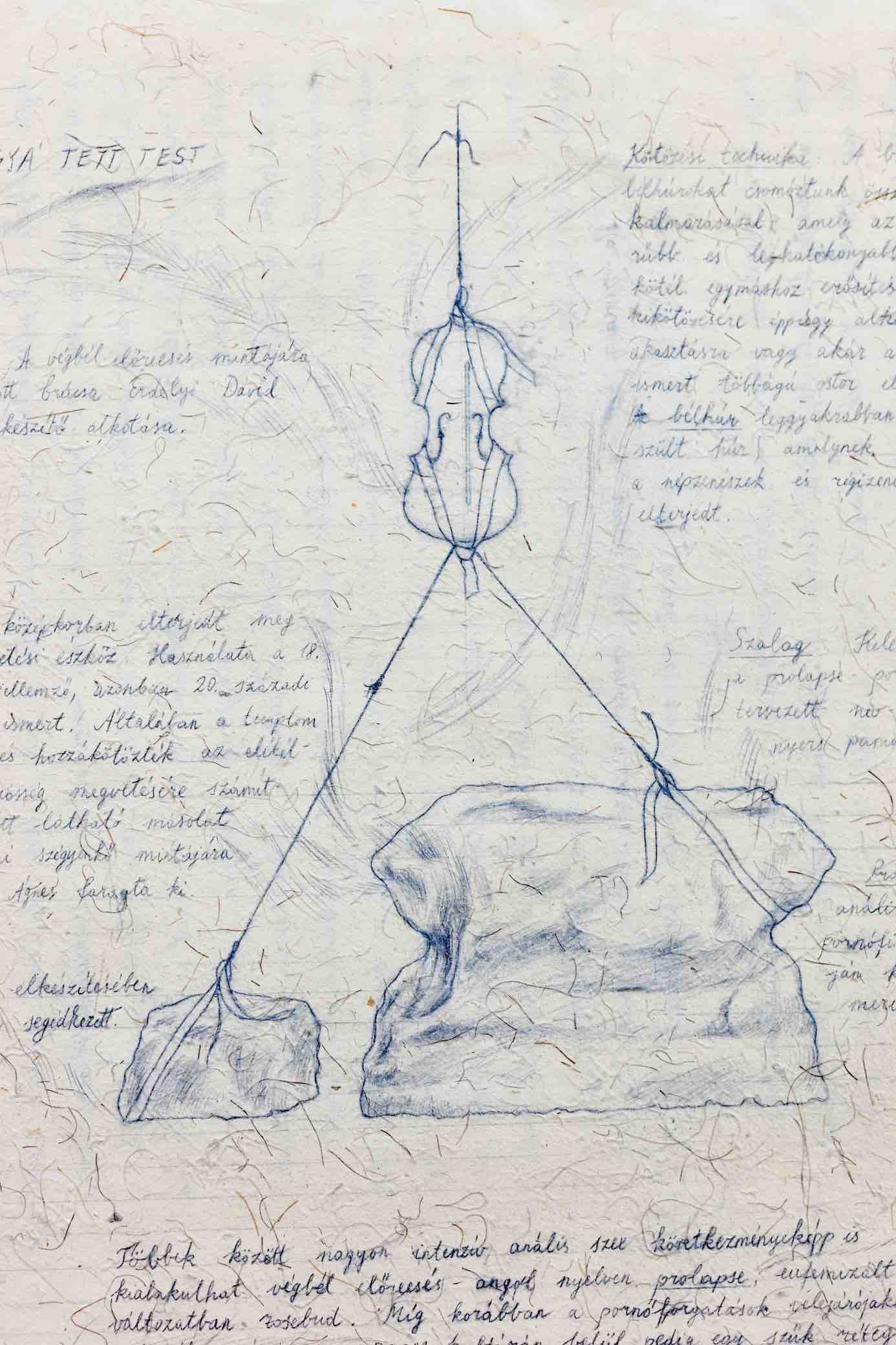
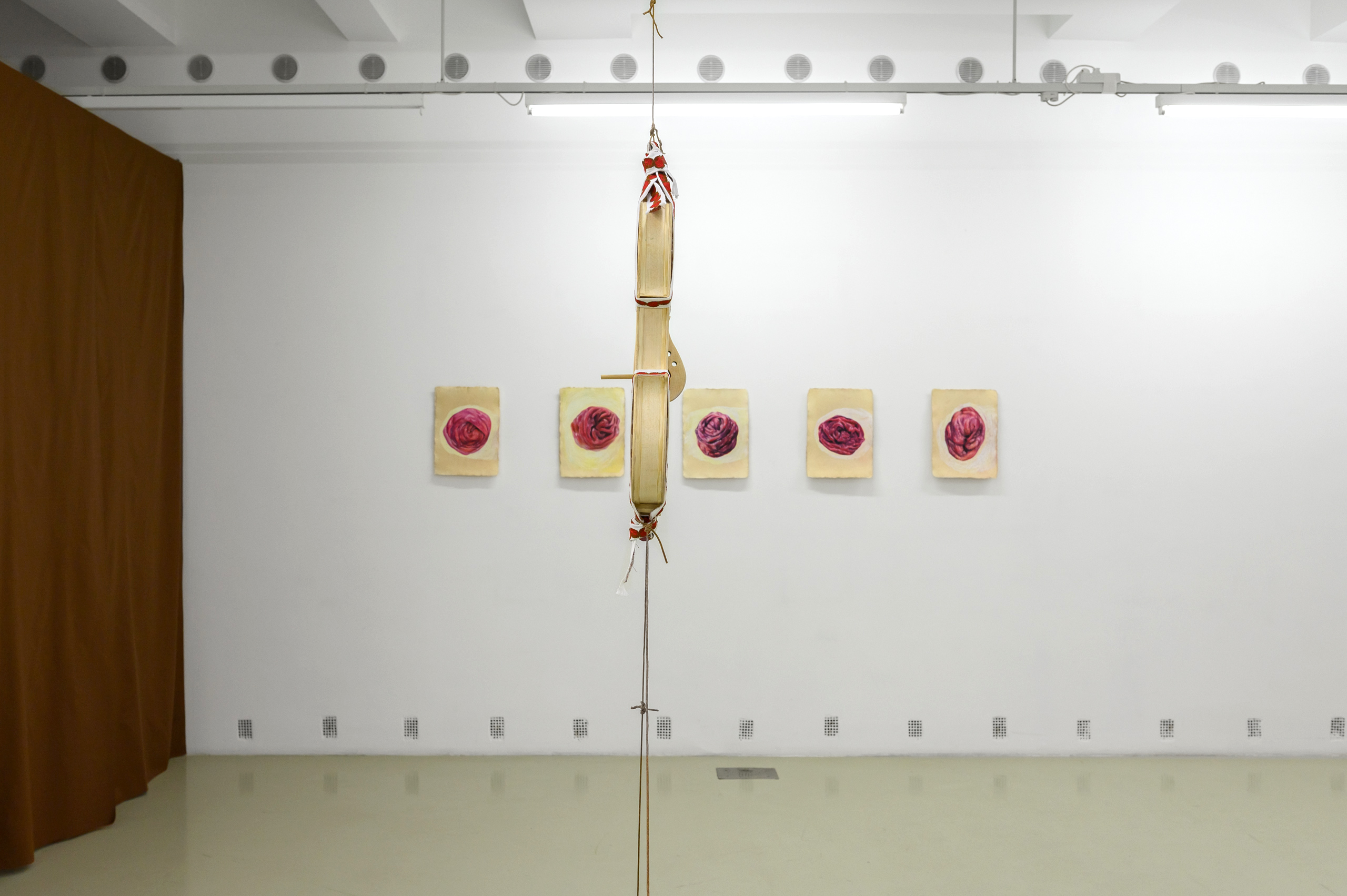
The third installation offered the most extreme example of expanding room for manoeuvre and articulated a critique grounded in a radical anti-porn feminist position. Its point of departure was an anecdote concerning folk instruments into whose interior their young maker had stenciled the word “prolapse.” In this context the inscription referred to an anal fetish known within BDSM culture, associated with a pornographic genre that can result in lasting bodily harm.
By adopting a gesture of over-identification with the stigmatized viola—an object possessing liminal qualities for me—I sought to render visible the bodily suffering entailed in sexual subjugation and to question how a tradition-preserving culture negotiates gender roles and sexuality when pornographic culture that sexualizes inequality coexists alongside peasant tradition.
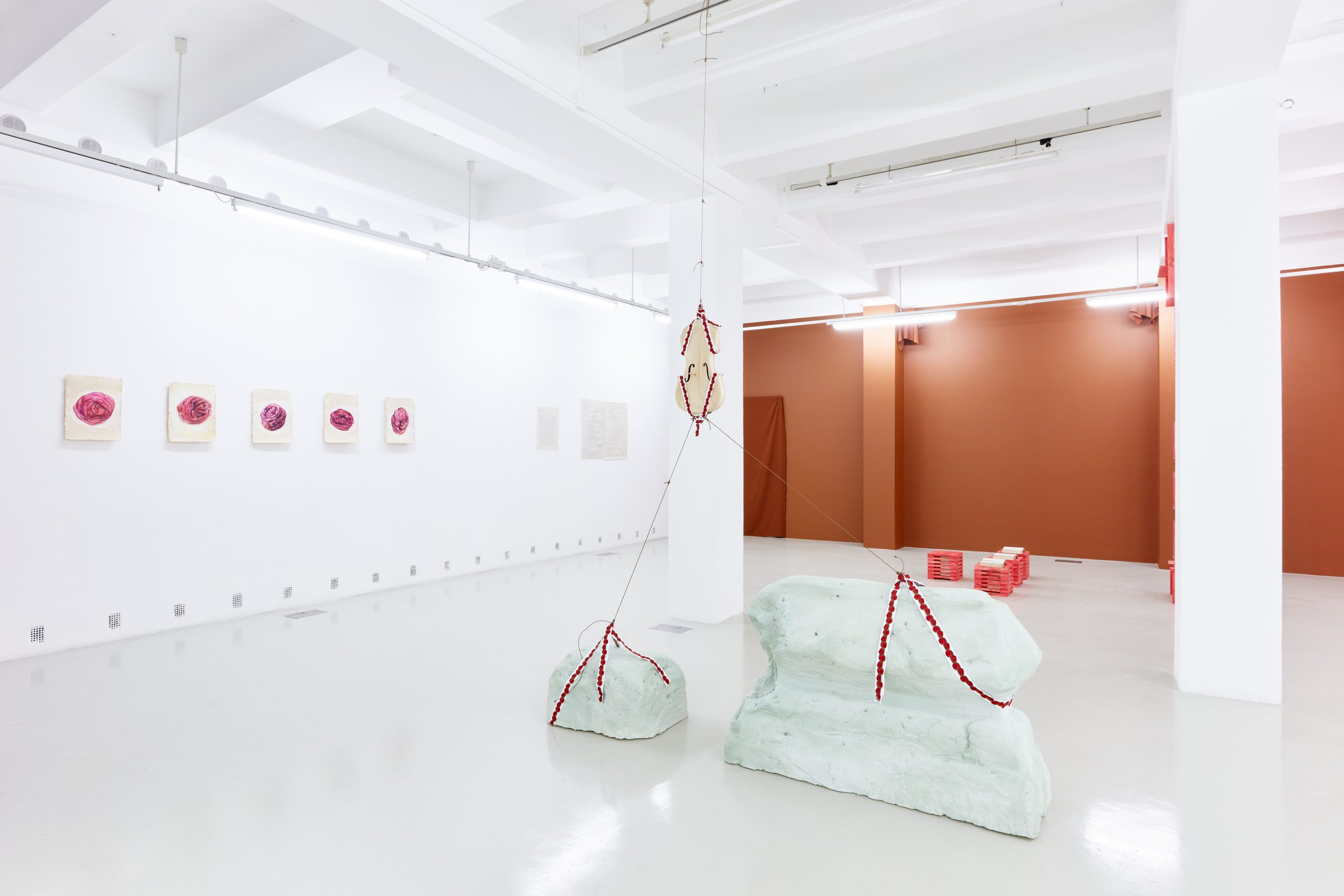
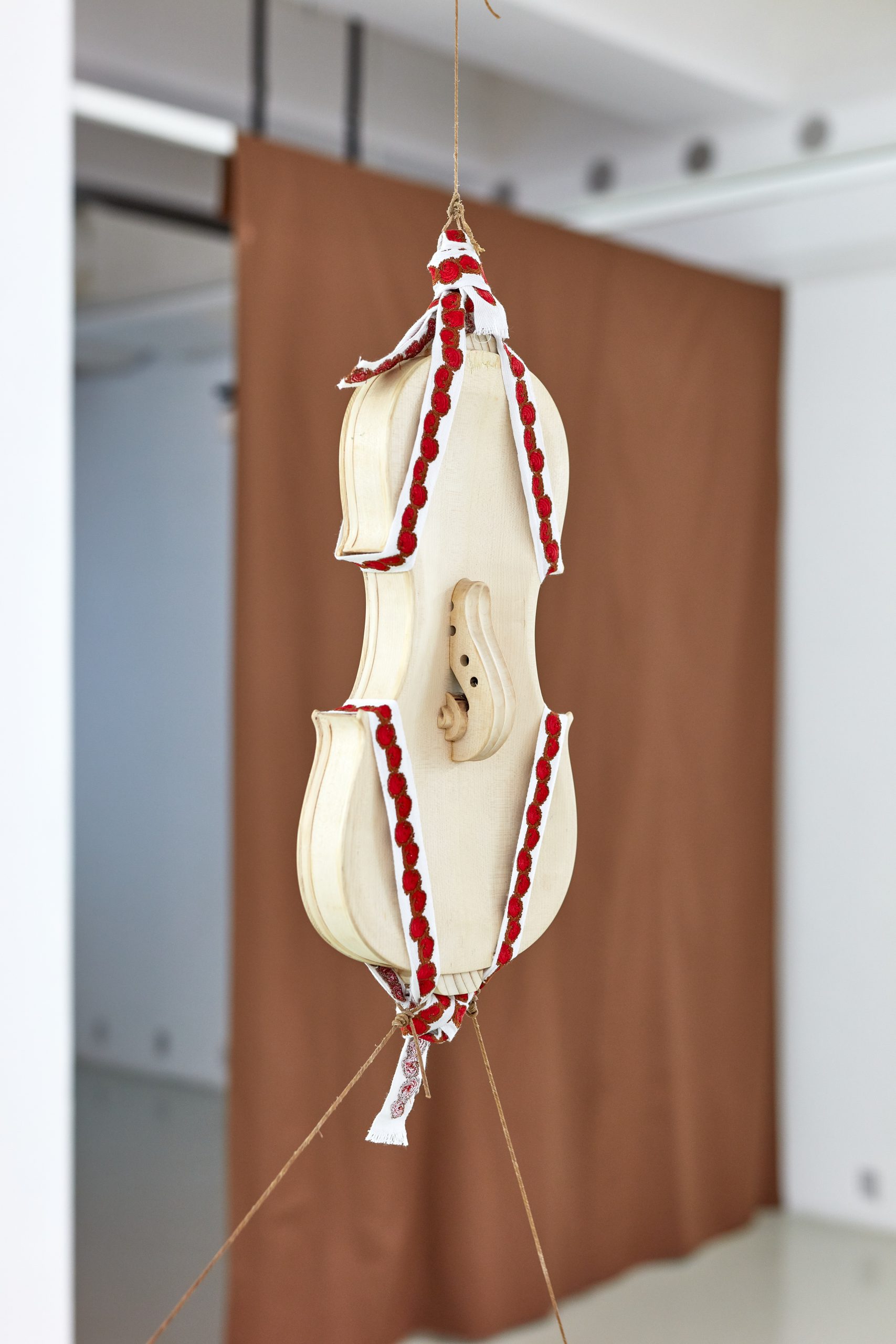
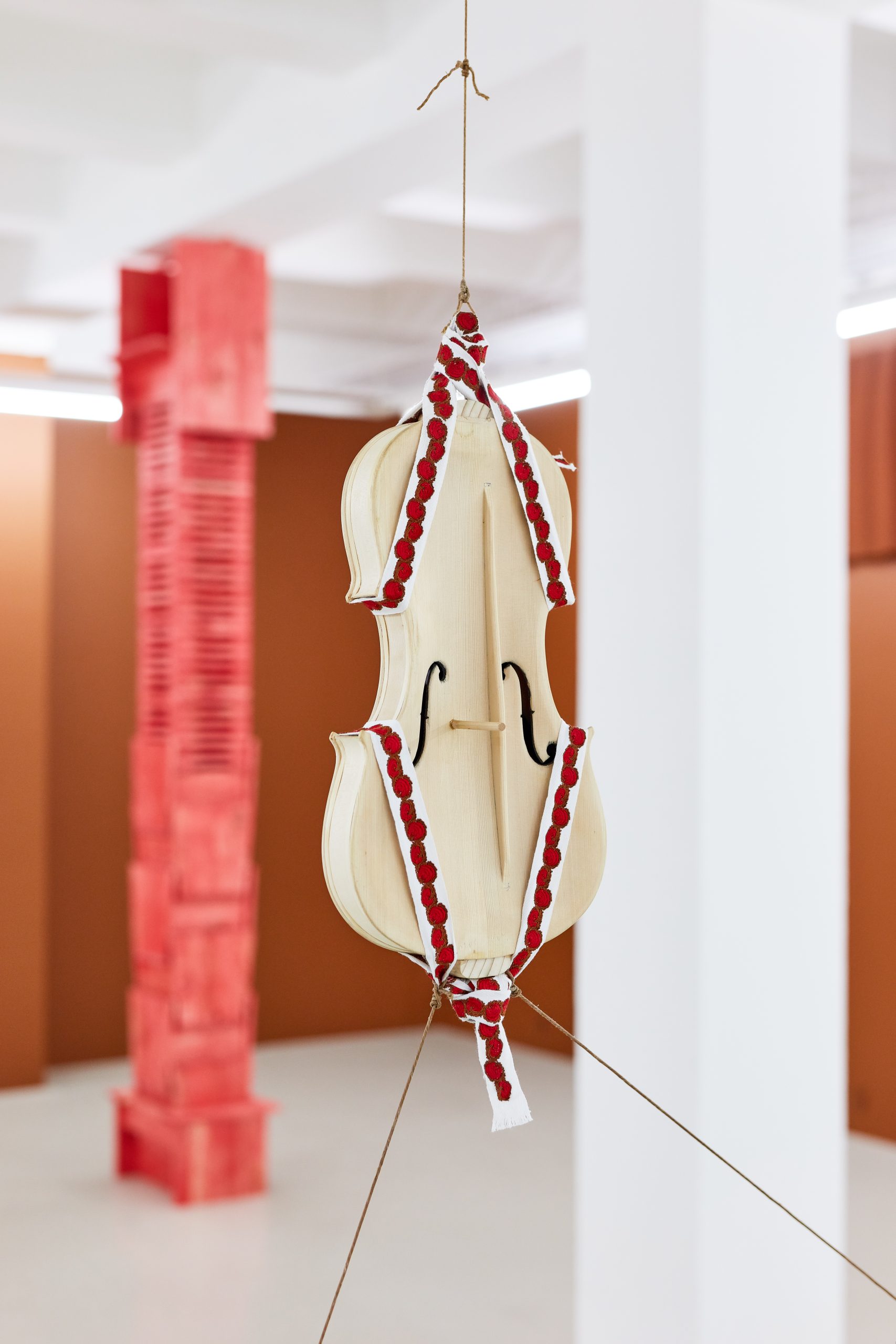
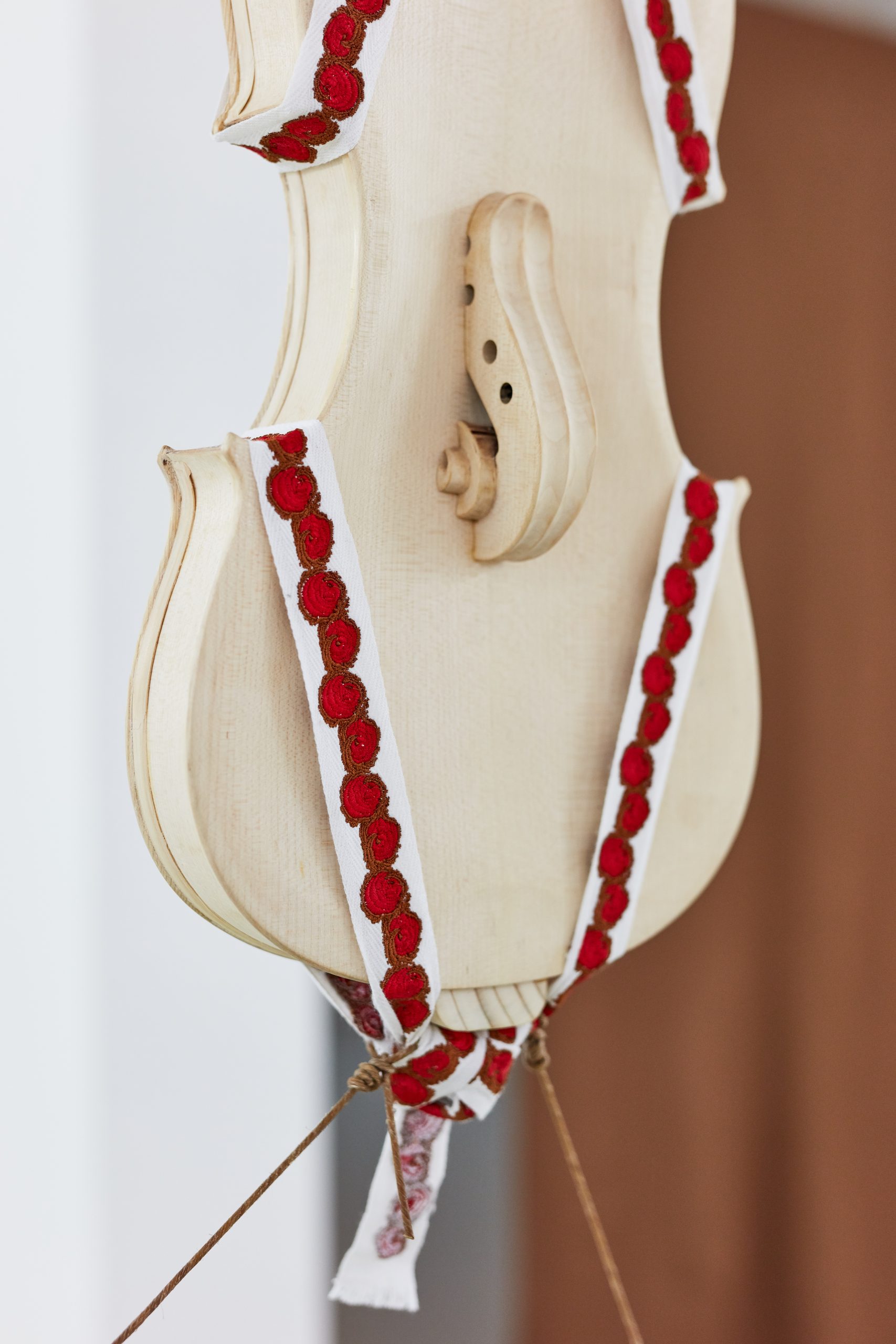
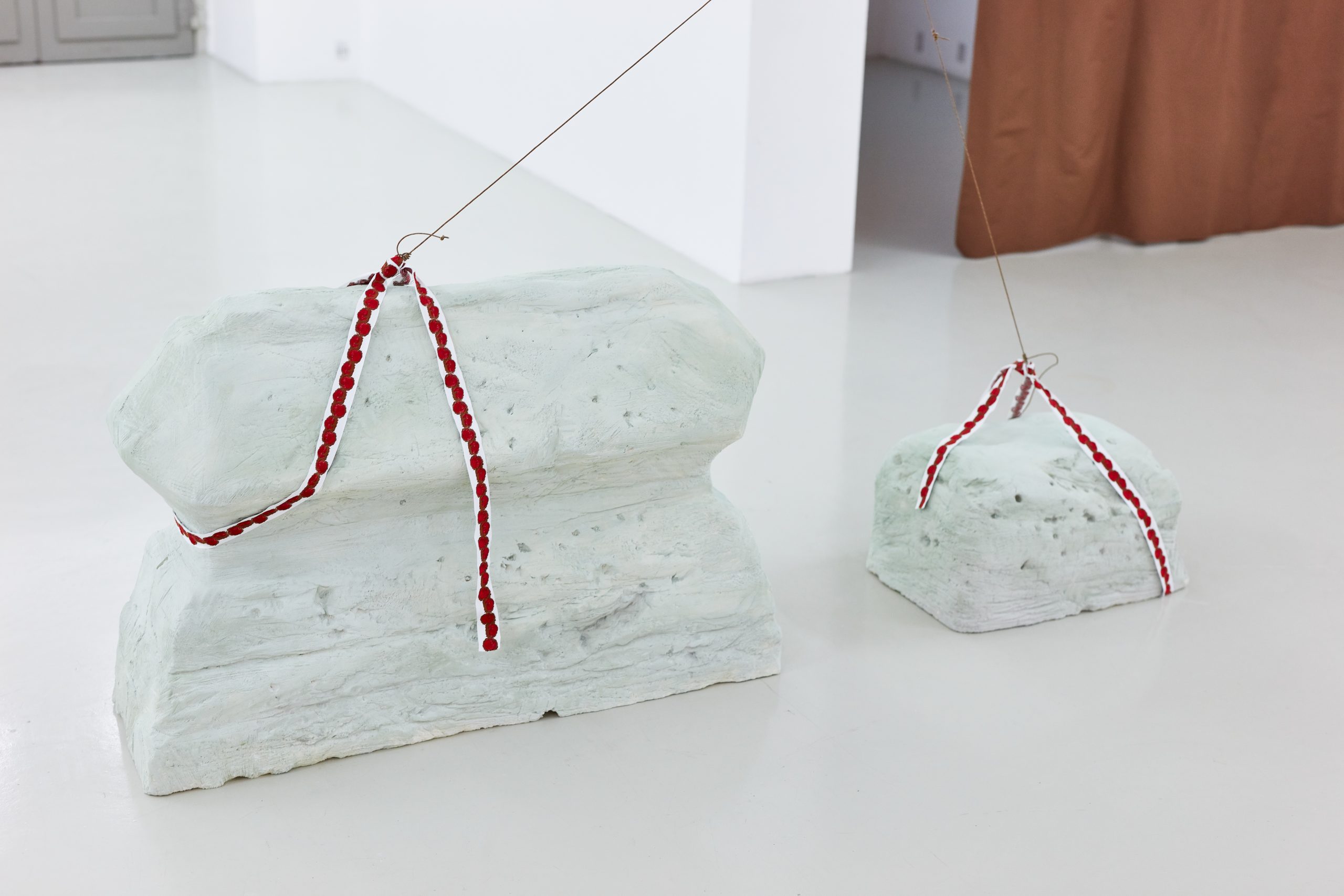
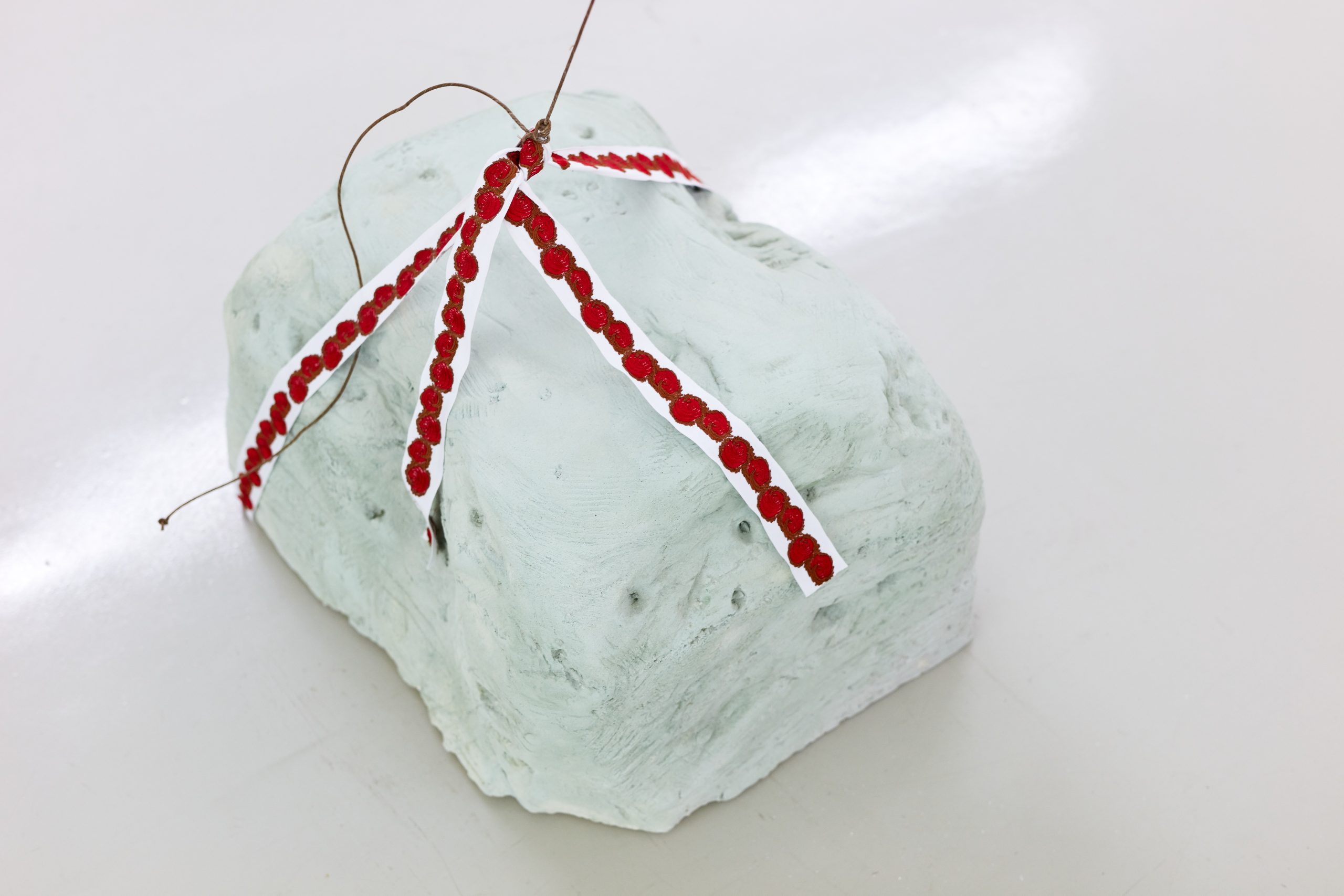
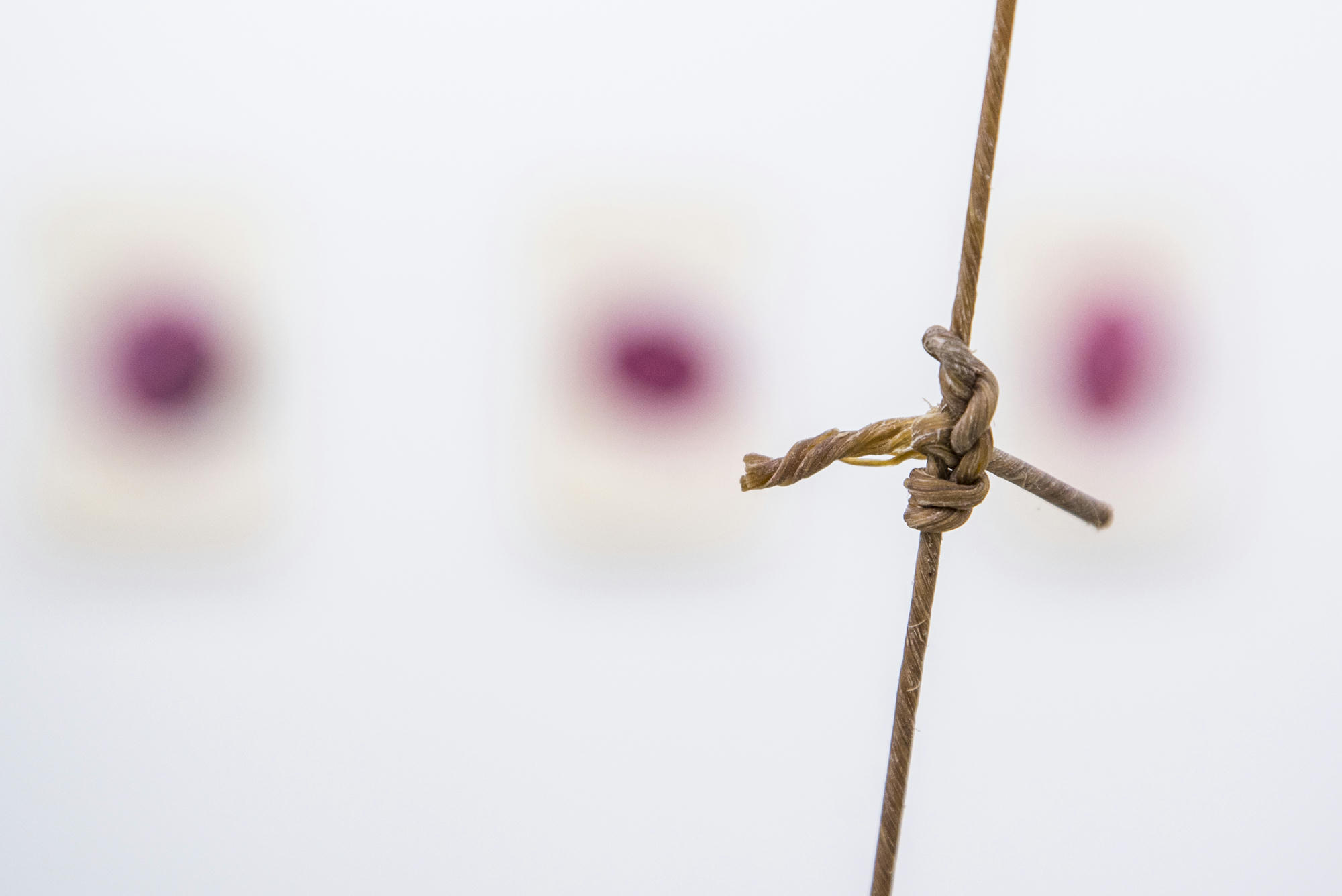
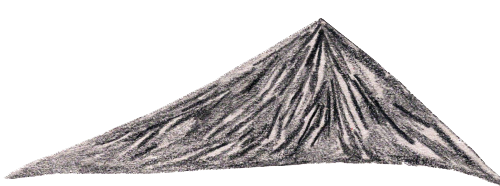
The installation consisted of three spatially separated ensembles. Its central element was a viola constructed by an instrument maker and “turned inside out” in reference to prolapse, suspended and stretched within the space. The stretching was achieved using gut strings and binding techniques inspired by BDSM practices. The viola was attached with one string to a crossbeam and with two others to scale models of shame stones—medieval instruments of public humiliation that remained legally in use in Hungary until the late eighteenth century. The model was based on the shame stone of Kiskunlacháza.
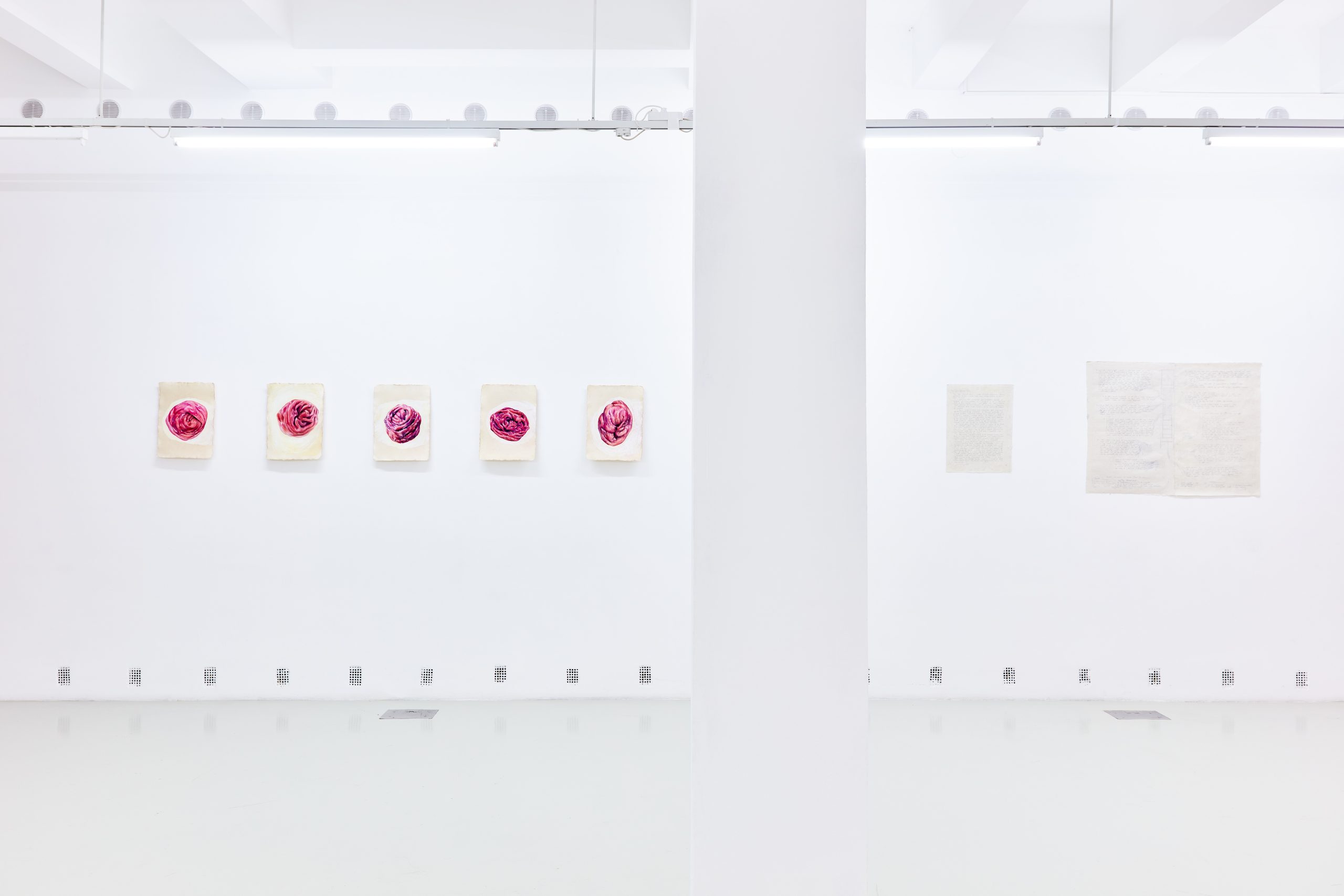
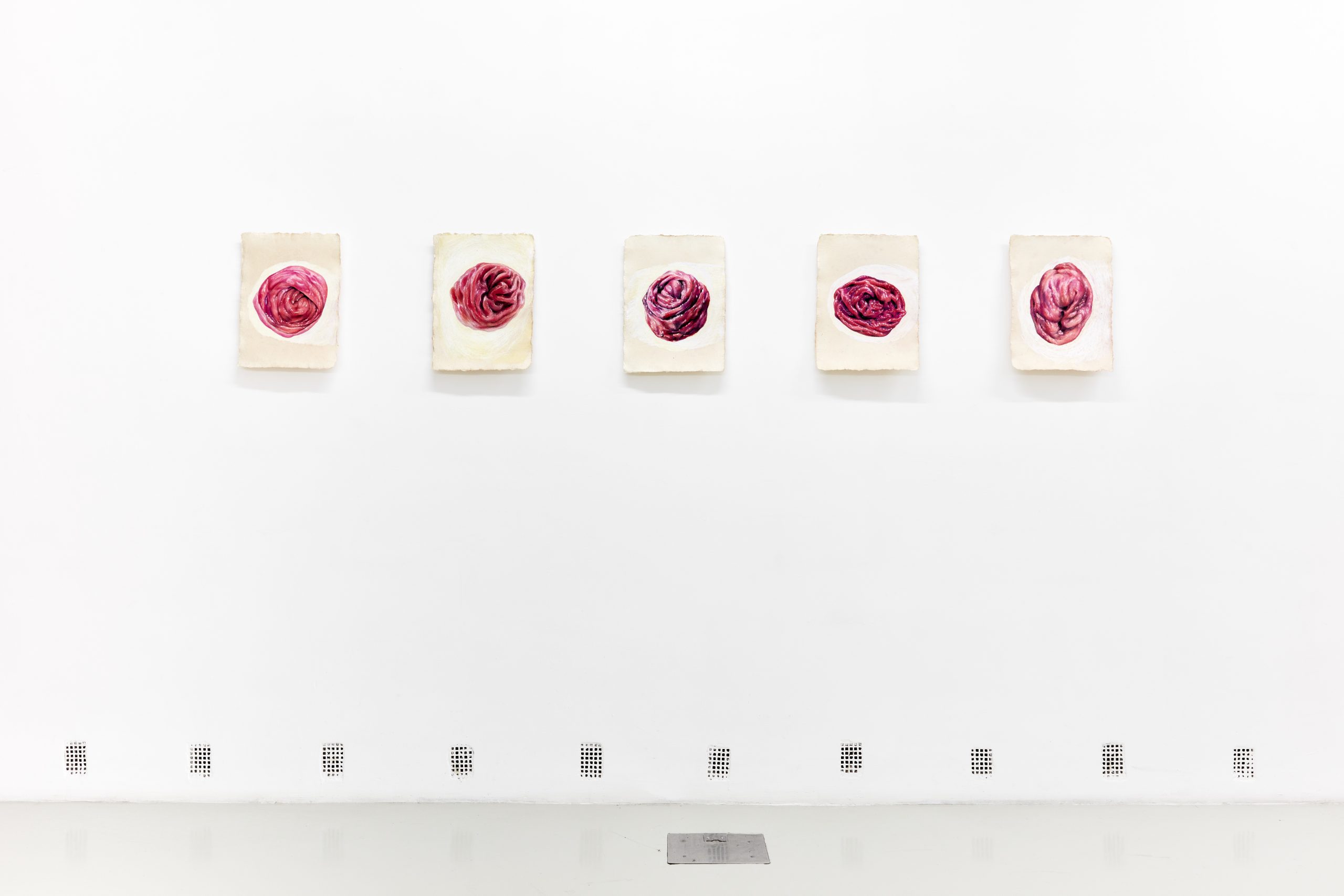
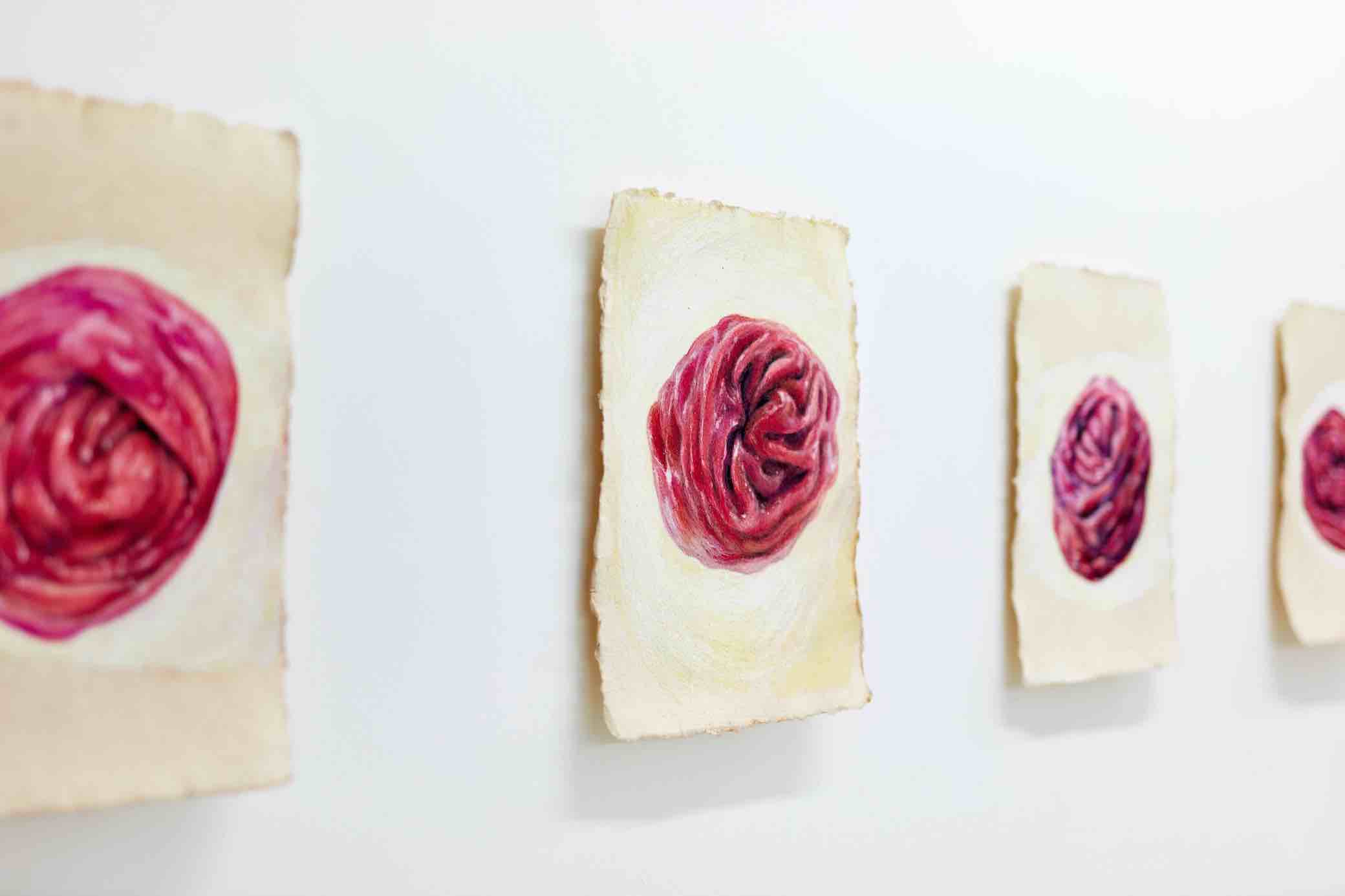
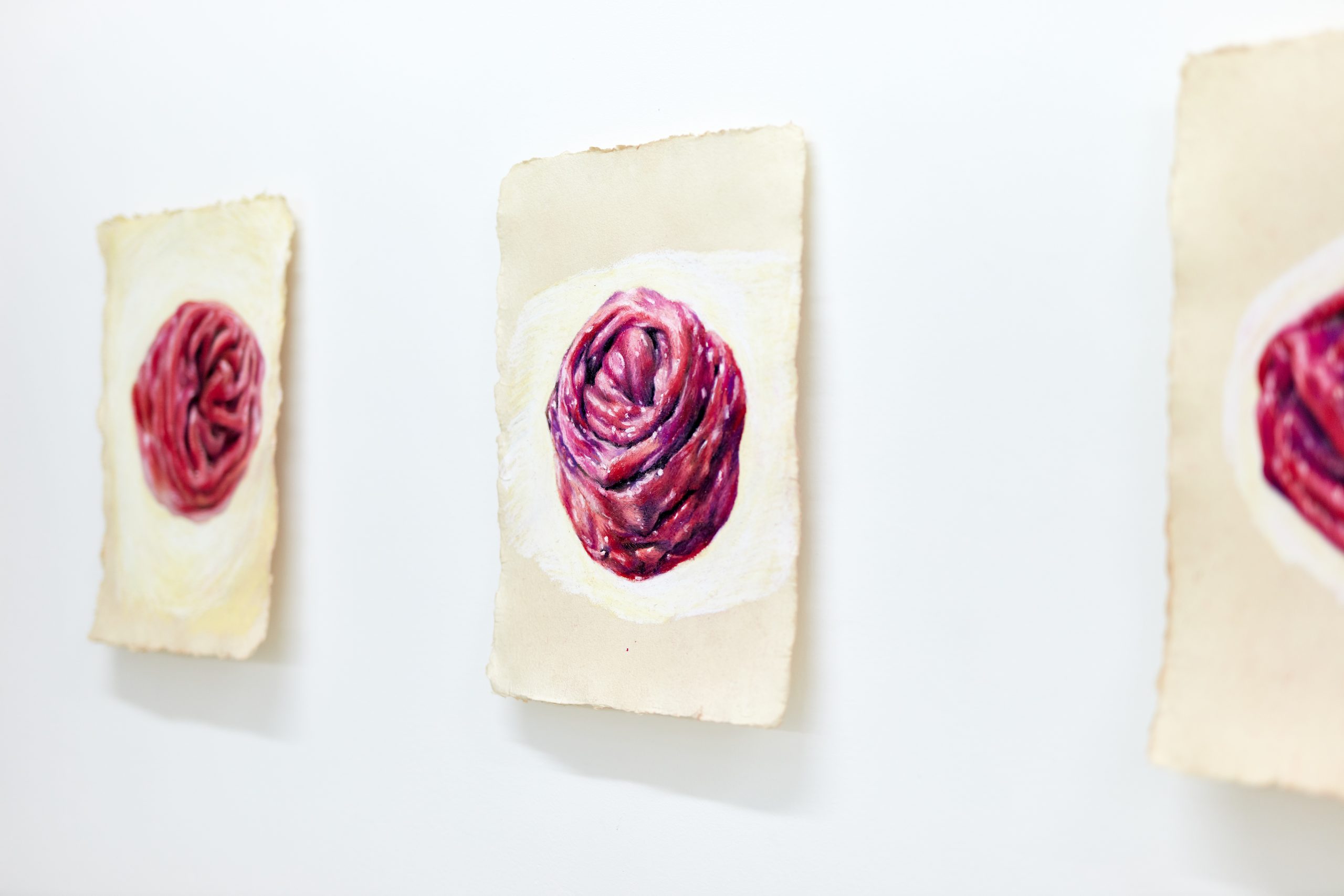
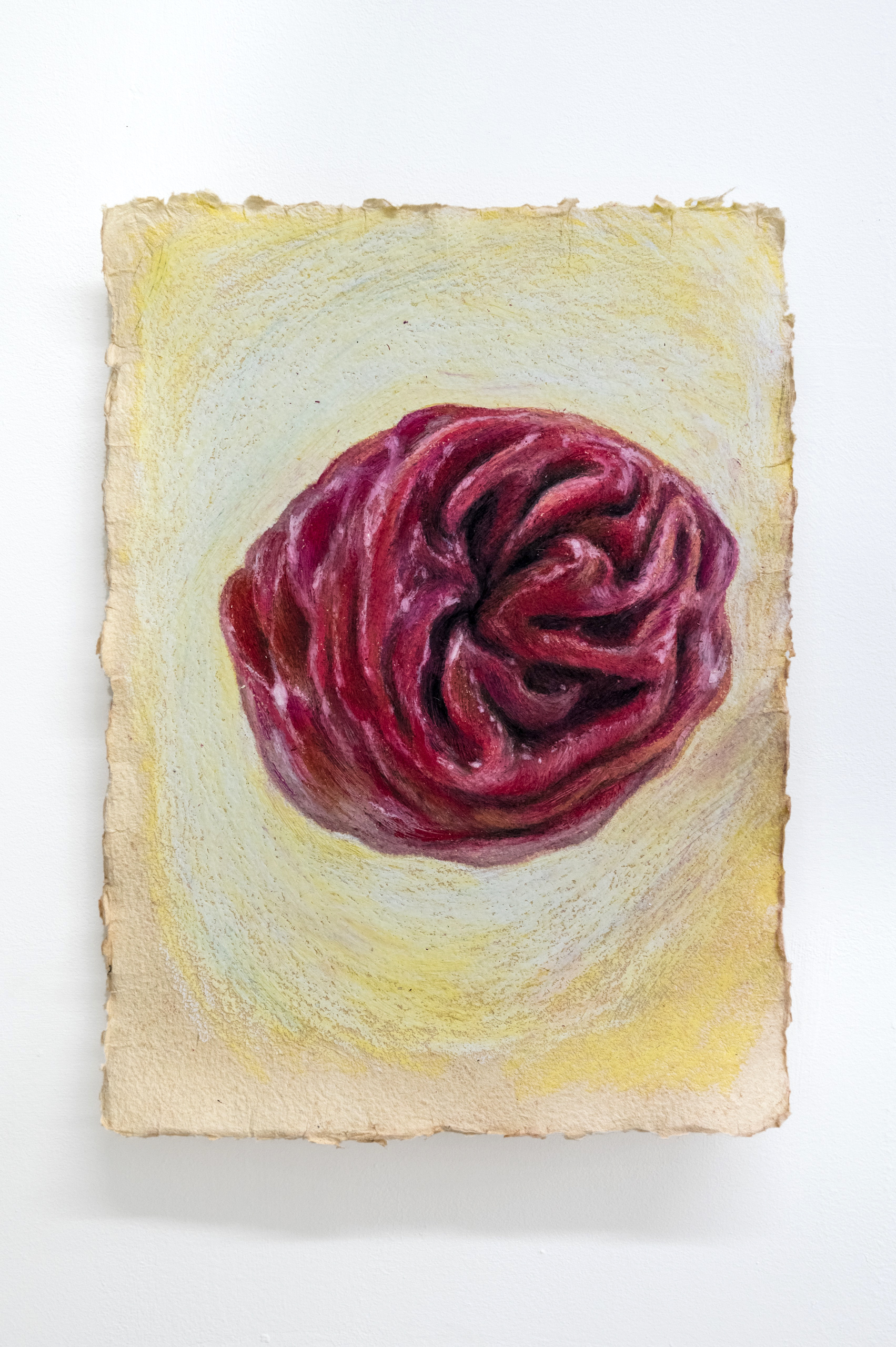
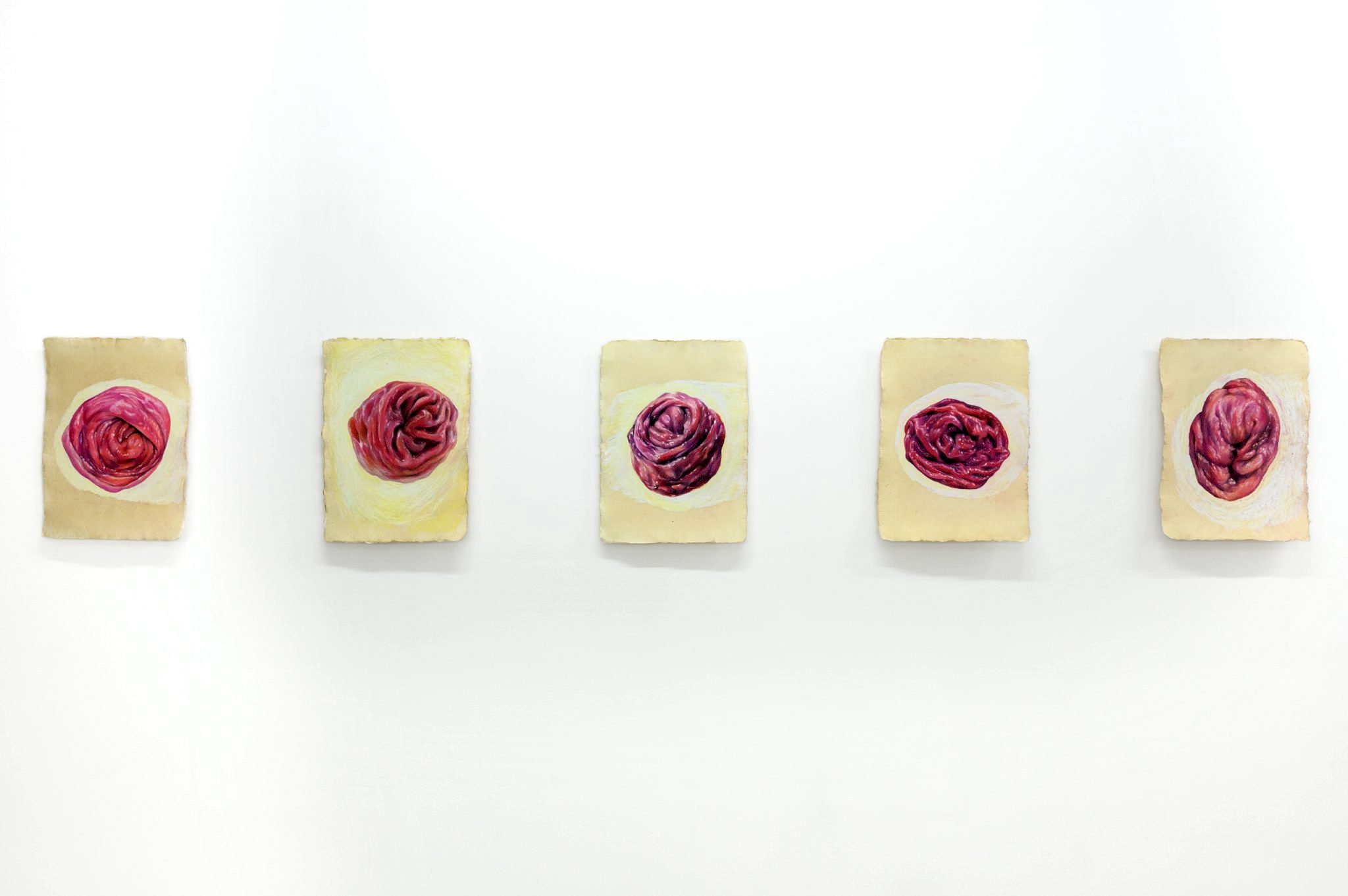
The most personal component was a series of five oil-pastel drawings titled Prolapse Portraits, based on behind-the-scenes photographs found online from various pornographic film shoots. Their extreme detail was not motivated by a desire to shock but emerged from the performative dimension of the process: I found myself unable to view the images from a distance at which the injured body parts were recognizable, and therefore enlarged them hundreds of times until I saw only colored pixels. Only afterward did I realize that in striving for representational accuracy I too was compelled to objectify these female bodies, such that our trajectories intersected, as if through a self-imposed descent into hell, with those of content producers in the porn industry.
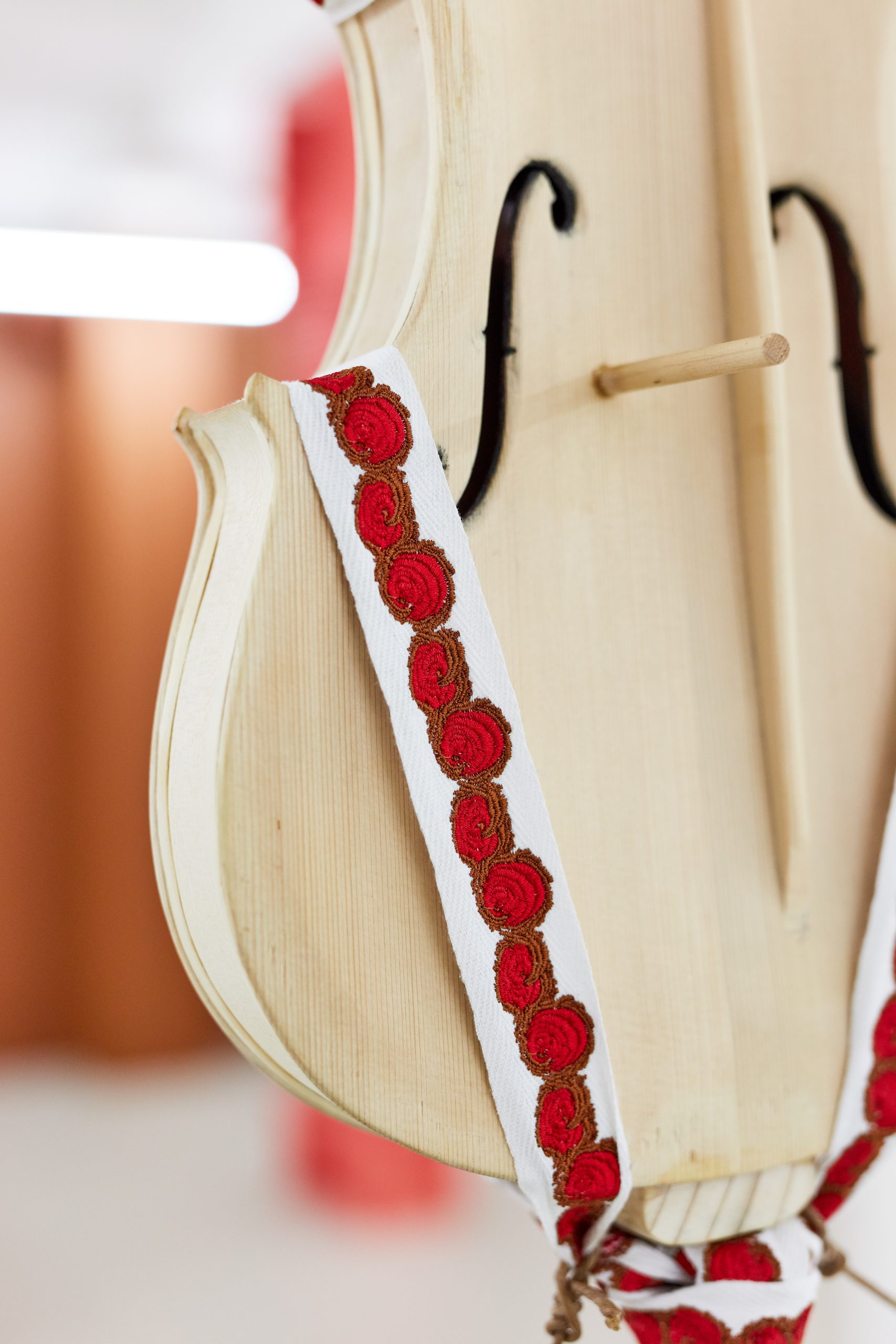
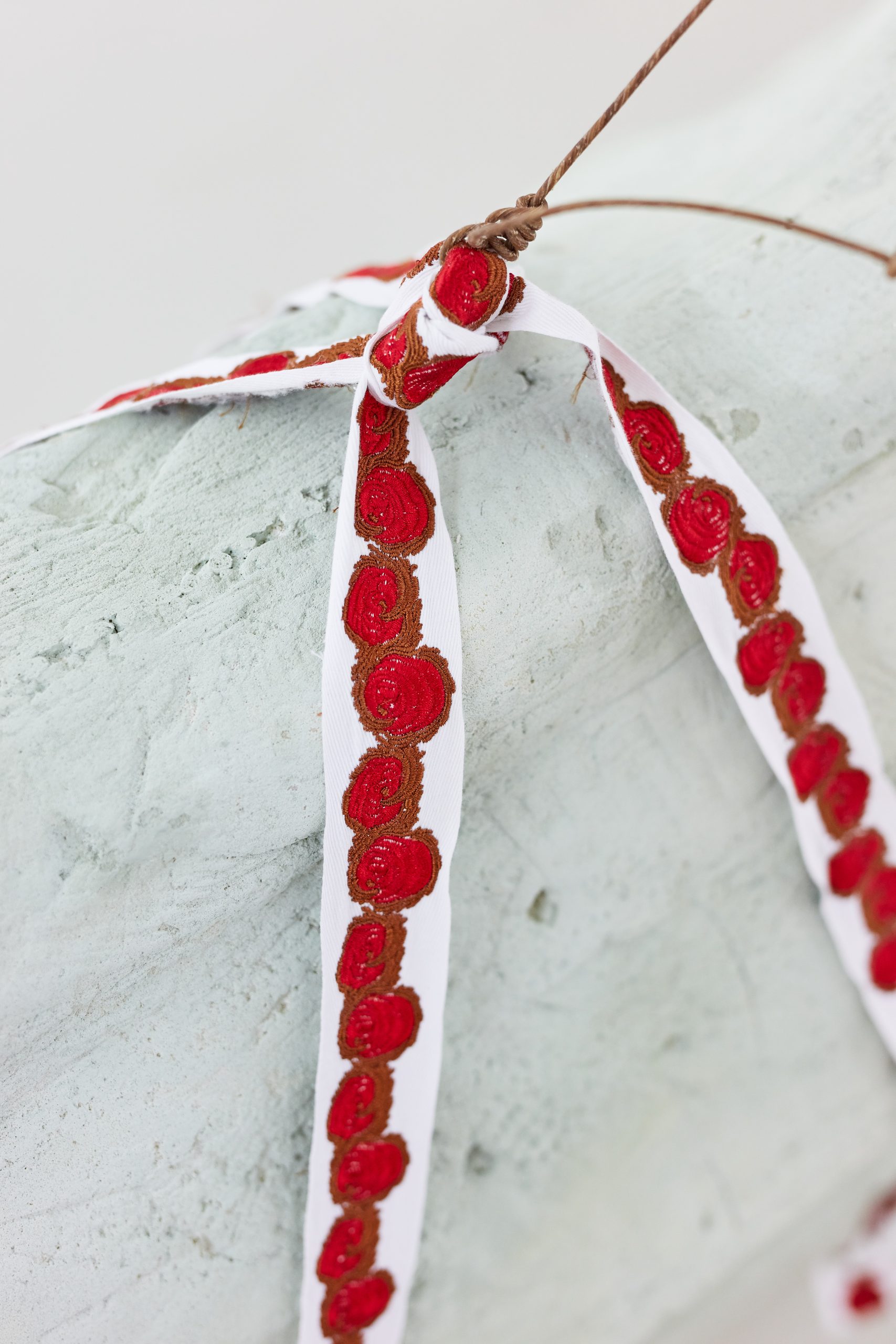
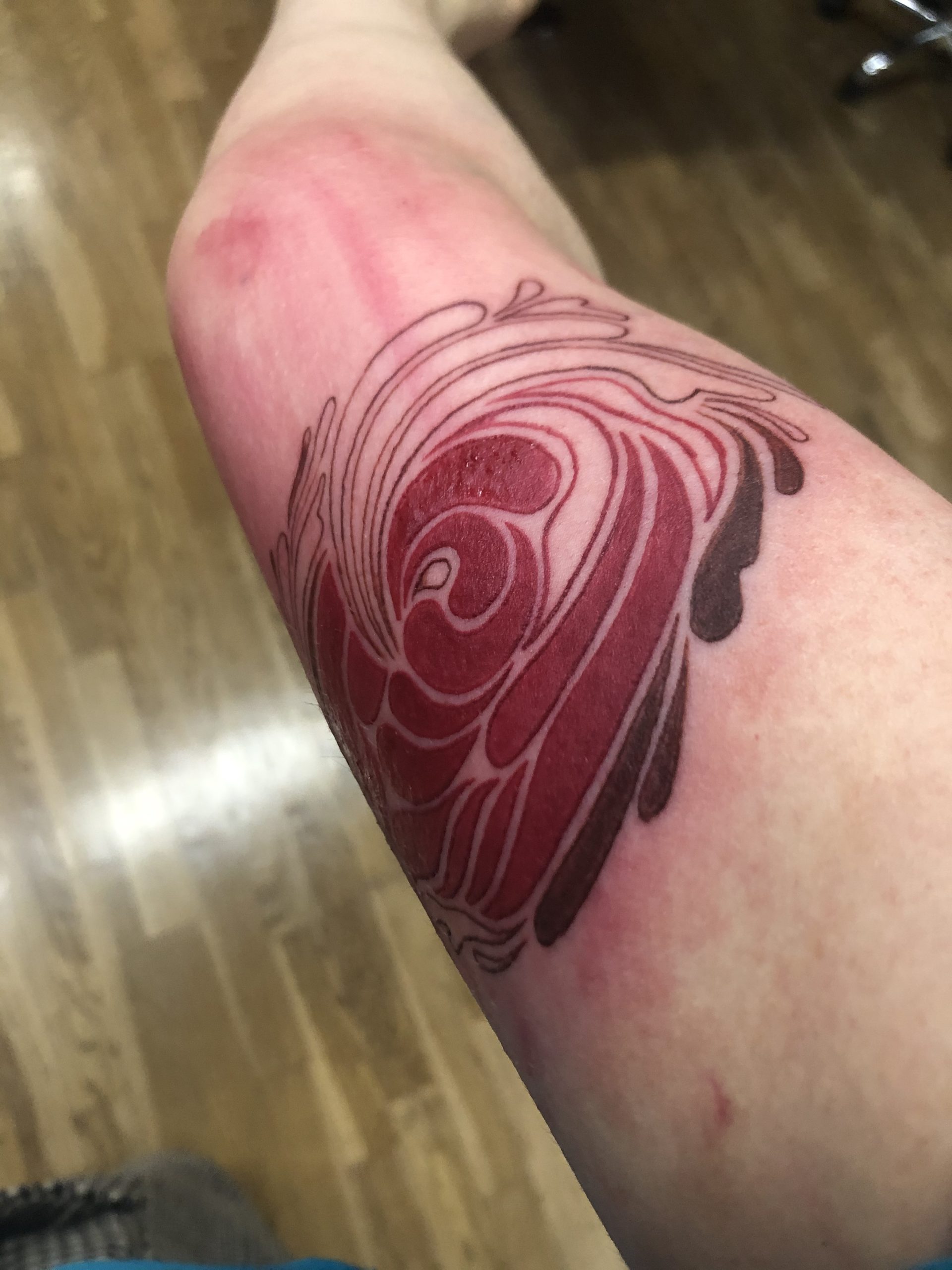
The prolapse motif reappeared on ribbons binding the viola and the shame stones, modeled after BDSM harnesses. The euphemistic English term “rosebud” inspired me to design a fictive folk ornamental pattern referencing floral motifs in traditional folk art that carry sexual connotations. The embroidery was produced by a craftswoman who regularly works for tradition-preserving folk dance groups.
Perhaps the most provocative gesture of the exhibition was the normalization of prolapse as a potential site of penetration through its domestication into a folk motif, thereby examining the interrelations between the male-centered power logic of the porn industry, patriarchal peasant communities, and contemporary communities preserving peasant traditions.
The use of the anecdote had serious consequences: friends from the dance-house community accused me of betrayal for leaking what they considered “insider” information. In retrospect, I recognize that my artistic vision—centered on the stigmatized instrument—was stronger than an ethically cautious research attitude open to redirection. This situation also foregrounded the figure of the insider researcher and, eventually, led my practice toward autoethnography. The self-reflexive turn, however, emerged only after distancing myself from the field. While the exhibition itself was driven by unprocessed emotion, a subsequent exhibition was devoted entirely to self-examination, ultimately maturing into methodological reflection.